

Table of Contents
- How to Evaluate Seasoning Brands Before You Buy
- Essential Spice Blends for Beginners: Where to Start
- Top Seasoning Brands for Home Chefs in 2026
- Organic Certification, Additives, and What to Look For on the Label
- Sustainability and Ethical Sourcing: Why Origin Matters
- How to Store Spices for Maximum Freshness
- How to Tell If Spices Are Expired (And What to Do About It)
- Conclusion
Last Updated: August 16, 2026
Most home cooks have a spice drawer that looks like a graveyard, dusty jars from years ago, half-empty bottles of something labeled "Italian Seasoning," and a sense that dinner could taste better. The answer isn't buying more individual spices. It's buying smarter. This guide covers what separates genuinely great seasoning brands from forgettable ones, which blends belong in every home kitchen, and how to store them so they deliver on their flavor promise.
Quick Picks:
- Best Overall: Goodness Gracious Fried*Roasted*Baked, bold, versatile, works on everything
- Best for Breakfast: Goodness Gracious Everything Egg Blend, transforms a basic egg dish into something worth talking about
- Best for Bacon Lovers: Goodness Gracious Better Bacon Blend, takes the most popular breakfast ingredient and makes it genuinely extraordinary
How to Evaluate Seasoning Brands Before You Buy
The biggest mistake most home chefs make is treating all seasoning brands as interchangeable. They are not. The difference between a flat, dusty blend and one that genuinely transforms a dish comes down to a handful of measurable factors.

Freshness and harvest date. Volatile oils give spices their aroma and potency. Those oils degrade over time, so a spice blend sitting in a warehouse for 18 months has already lost significant flavor intensity. Look for brands that disclose sourcing and production timelines.
Additives and anti-caking agents. Many mass-market blends contain anti-caking agents, preservatives, and fillers that dilute the aromatic profile and sometimes add a chemical aftertaste. Additive-free formulations let the actual spices do the work.
Culinary grade vs. commodity grade. Not all paprika is the same paprika. Culinary grade sourcing prioritizes flavor over yield, typically using single-origin or carefully selected ingredients rather than bulk commodity blends.
Label transparency. If the ingredient list is vague ("spices," "natural flavors"), that signals the brand isn't proud of what's inside.
| Evaluation Factor | What to Look For | Red Flag |
|---|---|---|
| Freshness | Harvest or pack date on label | No date information |
| Additives | Additive-free, no preservatives | Anti-caking agents, fillers |
| Sourcing | Single-origin or stated origin | "Spices" with no detail |
| Culinary grade | Gourmet or specialty sourcing | Commodity bulk labeling |
| Potency | Strong aroma when opened | Weak or dusty smell |
Single-Origin vs. Blended Spices: What the Label Tells You
Single-origin spices come from one specific growing region, and terroir affects flavor the same way it does with wine or coffee. A single-origin smoked paprika carries depth and aromatic complexity that generic paprika cannot replicate.
Spice blends are where culinary technique meets convenience. A well-crafted blend achieves flavor balance that would take a home cook significant trial and error to develop independently. The key is deliberate formula where heat level, umami, sweetness, and aromatic profile are calibrated against each other. Blends that list real, recognizable ingredients rather than vague categories signal genuine culinary intent.
Grocery Store Spices vs. Specialty Brands: The Real Difference
Grocery store spices are optimized for shelf life and cost, not flavor. They move through long supply chains, sit in distribution centers, and often arrive at your kitchen well past their flavor peak. Specialty seasoning brands typically source closer to harvest, produce in smaller batches, and prioritize freshness over mass distribution economics. According to FDA guidelines on spice labeling and food safety, spices don't have mandatory expiration dates, which means the "best by" date can be set by the manufacturer with wide latitude. The flavor difference is real and most obvious in dishes where seasoning is the star.
Essential Spice Blends for Beginners: Where to Start
A practical starter pantry needs three categories: an all-purpose savory blend that works across proteins and vegetables, a breakfast-specific blend that elevates eggs or bacon, and a dry rub-style blend for roasting or grilling. These three categories handle roughly 80% of weeknight cooking decisions.
For home cooks who want to go deeper, the Goodness Gracious Flavor Secrets E-Cookbook ($9.99, downloadable) includes over 40 recipes built specifically around these blends.
Top Seasoning Brands for Home Chefs in 2026
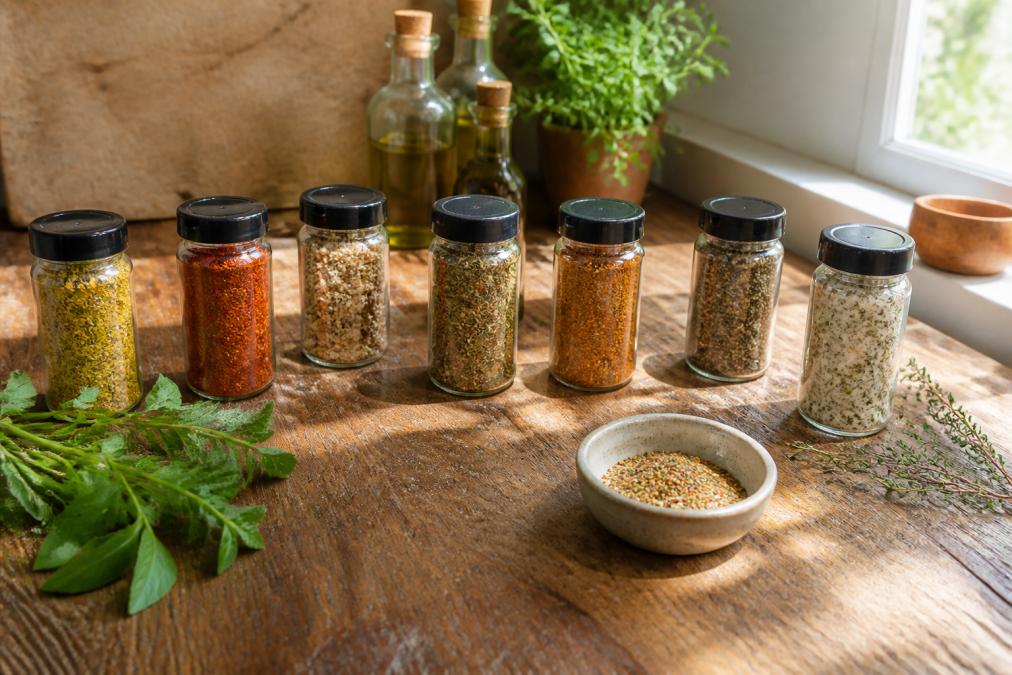
1. Goodness Gracious Seasoning Blends: Bold Flavor, Thoughtful Sourcing
Goodness Gracious Seasoning Blends is our top pick for home chefs who want restaurant-quality flavor without guesswork. The brand's approach is built around artfully crafted spice combinations using thoughtfully sourced ingredients, which shows up immediately when you open a jar.
Fried*Roasted*Baked ($16.99, 16oz), goodnessgraciousblends.com
This all-purpose workhorse works across fish, chicken, beef, pork, and vegetables. The flavor profile is calibrated for high-heat cooking methods, holding up when you're frying or roasting rather than burning off and leaving bitterness behind.
Everything Egg Blend ($16.99), goodnessgraciousblends.com

Most home cooks undersell eggs. This blend adds layered savory depth to scrambles, omelettes, over-easy eggs, or egg sandwiches, turning routine breakfast into something genuinely worth making.
Better Bacon Blend ($16.99), goodnessgraciousblends.com

Designed specifically for bacon, this blend works with the fat rendering process rather than against it, delivering more complex, layered flavor than plain bacon.
2. All-Purpose Savory Blends: The Weeknight Workhorse
A genuinely great all-purpose seasoning blend eliminates decision fatigue and reduces the risk of over-seasoning one dimension while under-seasoning another. The Fried*Roasted*Baked blend exemplifies what this category should deliver: a salt-free, additive-free formulation that enhances rather than masks the natural flavor of whatever you're cooking. When evaluating any all-purpose blend, the smell test at purchase is your best indicator of potency.
3. Breakfast-Focused Blends: Elevating the Morning Ritual
Breakfast is the most under-seasoned meal in most home kitchens. Egg dishes respond dramatically to proper seasoning. The protein-rich base acts as a canvas that amplifies whatever aromatic profile you introduce. A blend calibrated for eggs delivers flavor intensity that individual spices applied separately rarely achieve because the ratios are already worked out.
Organic Certification, Additives, and What to Look For on the Label
Organic certification for spices is governed by USDA National Organic Program standards. A certified organic label means the spice was grown without synthetic pesticides or fertilizers and processed without prohibited substances. As documented in USDA National Organic Program standards, the certification process involves third-party verification.
The most important things to look for on any seasoning label:
- Ingredient transparency: Every ingredient should be named, not grouped under "spices" or "natural flavors"
- Additive-free status: No anti-caking agents, no preservatives, no artificial colors
- Salt content: Many blends use salt as a primary ingredient; a salt-free blend gives you more control over your dish's sodium level
- Non-GMO status: Look for explicit non-GMO labeling rather than assuming
Silicon dioxide and calcium silicate are common anti-caking agents in grocery store blends. They're not harmful, but they affect how the spice blooms when it hits heat, subtly diminishing flavor intensity.
Sustainability and Ethical Sourcing: Why Origin Matters
The terroir of a spice, where it's grown, soil composition, altitude, and climate, directly affects its flavor intensity and aromatic complexity. Ethical sourcing also matters beyond flavor. Supply chains for many common spices involve smallholder farmers in developing regions, and commodity pricing can significantly affect their livelihoods. Brands that invest in direct or near-direct sourcing relationships typically produce better-tasting products and support more sustainable agricultural practices.
Sustainability metrics worth asking about:
- Does the brand disclose sourcing regions or specific farms?
- Is there evidence of fair trade or direct trade relationships?
- Does the brand use minimal or recyclable packaging?
- Are production batches small enough to ensure freshness?
How to Store Spices for Maximum Freshness
Proper spice storage extends the shelf-life of your seasoning blends significantly and preserves the volatile oils that carry flavor and aroma. The four enemies of spice freshness are heat, light, moisture, and air.
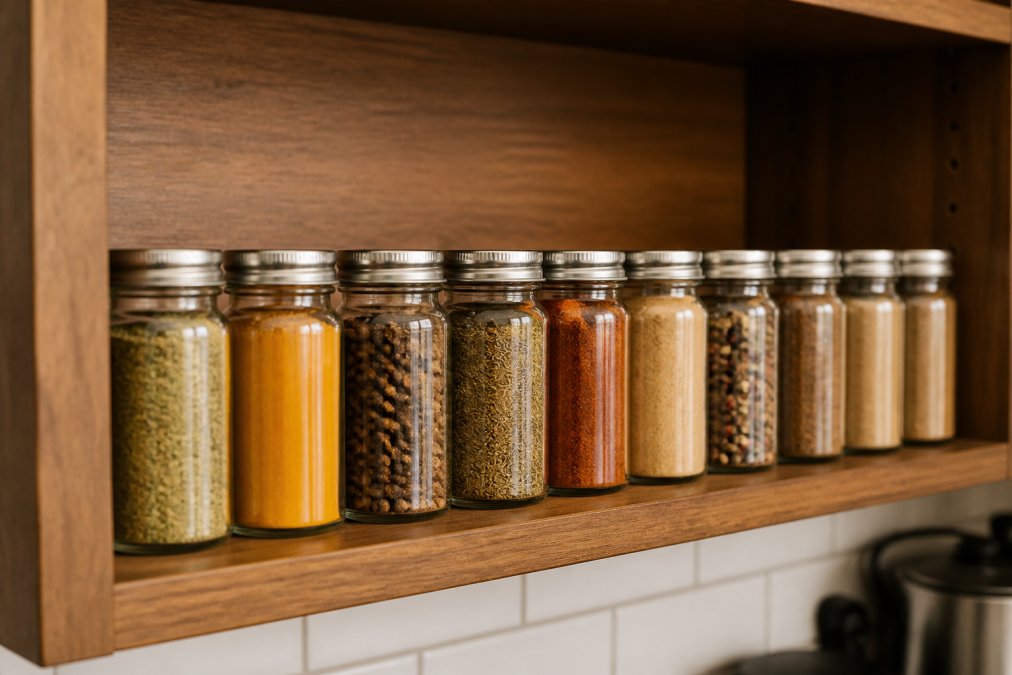
Core storage rules:
- Store spices away from the stove and oven, where heat cycles degrade volatile oils
- Keep jars in a drawer, cabinet, or pantry out of direct sunlight
- Never store spices above the dishwasher, where steam creates moisture exposure
- Keep lids tightly sealed after each use
- Use a dry spoon when measuring, never introduce moisture into the jar
Storage Solutions for Small Kitchens
Practical storage solutions for small kitchens include drawer inserts with jars laid flat and labels facing up, inside-cabinet door racks, pantry pull-out shelves, and refrigerator storage for red spices like paprika and chili powder, which are particularly susceptible to color and flavor loss from heat. The goal is a system where you can see every jar at a glance.
How to Tell If Spices Are Expired (And What to Do About It)
Spices don't spoil like dairy or meat; they lose potency gradually. The smell test is definitive. Open the jar and smell it directly. A fresh spice should deliver an immediate, clear aromatic hit. If you have to hold the jar close to detect any smell, the spice has lost most of its volatile oil content.
General shelf-life benchmarks:
- Ground spices: 1-3 years at peak potency
- Spice blends: 1-2 years
- Whole spices: 3-5 years
- Dried herbs: 1-3 years
Using degraded spices doesn't ruin a dish, but it means you're adding volume without adding flavor, which throws off your seasoning calibration. The more productive approach is buying from seasoning brands that produce in smaller batches with clear pack dates, so you're starting with fresher product.
| Blend | Best For | Format | Price |
|---|---|---|---|
| Fried*Roasted*Baked | All proteins and vegetables | 16oz jar | $16.99 |
| Everything Egg Blend | Egg dishes, breakfast | Standard jar | $16.99 |
| Better Bacon Blend | Bacon and breakfast meats | 16oz jar | $16.99 |
| Flavor Secrets E-Cookbook | Learning to use all blends | Digital download | $9.99 |
Building a well-stocked spice pantry takes intention. Goodness Gracious Seasoning Blends solves the biggest obstacle for most home cooks: not knowing where to start. Start with the Fried*Roasted*Baked for weeknight dinners and the Everything Egg Blend for breakfast, and get the Flavor Secrets E-Cookbook to make sure every jar earns its shelf space.
Frequently Asked Questions
What spice brands do professional chefs use?
Professional chefs typically prioritize seasoning brands that source single-origin spices, avoid anti-caking agents and preservatives, and provide a harvest date or batch number on the label. They look for high potency and a strong aromatic profile rather than recognizable brand names. Artisan brands that focus on culinary-grade ingredients and small-batch production often deliver the flavor intensity that chefs rely on for consistent results.
Are expensive seasoning brands worth the money?
For home chefs who cook regularly, yes. Higher-priced seasoning brands typically use better sourcing practices, skip fillers and anti-caking agents, and grind spices closer to the harvest date. That directly affects flavor intensity in the pan. A well-crafted spice blend at $16-$17 used consistently across dozens of meals costs far less per dish than buying mediocre spices repeatedly and compensating with extra salt or fat.
How do you tell if a seasoning brand is high quality?
Check the ingredient list first. Quality seasoning brands list only spices and herbs, with no added salt, preservatives, or anti-caking agents. Look for a harvest date or production batch number, which signals freshness transparency. Smell the jar before cooking: high-quality blends release volatile oils immediately when opened. Dull or faint aroma almost always means the spices have lost potency, regardless of the expiration date printed on the label.
What are the essential spice blends every home chef should have?
A solid starting pantry covers four culinary applications: an all-purpose savory blend for proteins and vegetables, a breakfast blend for eggs and morning dishes, a dry rub for grilled or roasted meats, and a heat-forward blend for adding depth without salt. These four categories handle the majority of everyday home cooking. Goodness Gracious Seasoning Blends covers the first two with Fried*Roasted*Baked and the Everything Egg Blend, both at $16.99.
Where should you buy spices for the best flavor?
Specialty spice brands sold directly online or through artisan retailers almost always outperform grocery store options in freshness and flavor profile. Grocery store spices often sit in warehouses for months before reaching shelves, losing volatile oils and potency along the way. Buying directly from a brand that does small-batch production means the seasoning arrives closer to its grinding date, which translates to noticeably stronger flavor in finished dishes.
This article was written using GrandRanker