

Table of Contents
- What It Really Means to Season Food Like a Chef
- How to Use Salt Properly at Every Cooking Stage
- Acid in Cooking for Flavor Enhancement
- When to Add Herbs During Cooking
- Seasoning Non-Meat Items and Special Dietary Needs
- Common Seasoning Mistakes to Avoid
- How to Season Food Like a Chef Using Spice Blends
- Conclusion
Last Updated: August 14, 2026
What It Really Means to Season Food Like a Chef
Most home cooks think seasoning means sprinkling salt at the end. Chefs think about it from the moment they pick up an ingredient. That gap explains why restaurant food tastes the way it does.
At Goodness Gracious Seasoning Blends, we work with home cooks every day who are trying to close that gap. The good news: the techniques are learnable and don't require professional training, just a shift in how you think about flavor and a commitment to tasting your way through every stage of cooking.
Seasoning is the practice of enhancing and balancing the natural flavors already present in food. It is not the same as flavoring, and that distinction changes everything about how you cook.
Seasoning vs. Flavoring: A Critical Distinction
Seasoning and flavoring are not interchangeable. Seasoning draws out what's already there. Flavoring adds something new.
When you season a tomato with kosher salt, you're not making it taste salty. You're amplifying its acidity, sweetness, and umami so it tastes more like itself. Flavoring, by contrast, is what happens when you add basil or cumin, you're introducing an entirely new element. Understanding this distinction shapes every decision you make at the stove: season first to build a foundation, then flavor to add character.
The Science of Taste Buds and Why It Matters
Your palate doesn't experience flavors in isolation. Taste buds detect five primary sensations: sweet, salty, sour, bitter, and umami. Great seasoning works by manipulating the relationships between these sensations rather than cranking up any single one.
A pinch of salt in a dessert doesn't make it salty, it suppresses bitterness and amplifies sweetness. A squeeze of lemon over a fatty dish doesn't make it sour, it cuts through richness and makes the whole dish feel lighter. As documented in research on taste perception from Harvard Medical School, the brain interprets flavor as a composite signal, which is why balance matters far more than intensity. You're not seasoning to taste. You're seasoning to balance.
How to Use Salt Properly at Every Cooking Stage
Salt behaves differently depending on when and how you apply it. Timing is everything.
Salt added at the beginning penetrates food and seasons it from within. Salt added at the end sits on the surface and delivers immediate, sharp impact. Here's a practical framework:
- Before cooking: Salt vegetables before roasting to draw out moisture and encourage browning. Salt pasta water generously so the pasta absorbs seasoning as it cooks.
- During cooking: Add salt in layers as you build a dish rather than waiting to season the finished plate.
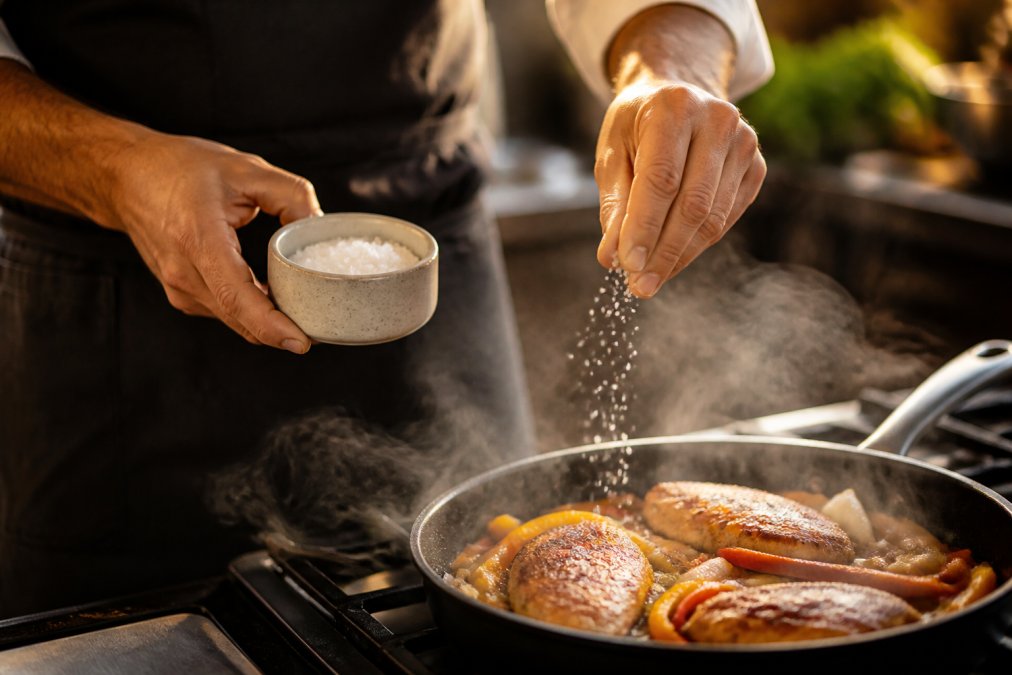
- After cooking: Use finishing salt for texture and visual contrast. A flake of sea salt on a seared steak creates a burst of flavor that pre-dissolved salt cannot replicate.
- Resting: After salting meat, allow time for the salt to work before applying heat.
Kosher Salt, Sea Salt, and Table Salt: Which to Reach For
The type of salt matters more than most home cooks realize.
Kosher salt is the workhorse. Its coarse, flaky crystals are easy to pinch and distribute, making it harder to over-salt accidentally. Most professional kitchens use it for everything from brining to general seasoning.
Sea salt varies widely depending on its source. Coarse sea salt works well for dry brines and crusts. Flaky sea salt is best used as a garnish, dissolving quickly on contact with warm food to deliver a clean, bright hit of salinity.
Table salt is fine-grained and often contains anti-caking agents that can impart a faint metallic taste. It also measures differently by volume than kosher salt. Reserve it for baking, where precise sodium levels matter. According to culinary science guidance from the Institute of Food Technologists, the crystal structure of salt affects how quickly it dissolves and how intensely it seasons, which is why professional kitchens rarely use table salt for anything other than pastry work.
Dry Brining Meat for Deeper Flavor
Dry brining is one of the most effective techniques in any cook's repertoire. Apply salt directly to the surface of meat and let it rest, uncovered, in the refrigerator before cooking.
The salt draws moisture to the surface, which then dissolves the salt and is reabsorbed into the meat, carrying seasoning deep into the muscle fibers. The result is meat seasoned throughout, not just on the surface, with noticeably better texture. For most cuts, 24 hours is ideal. Thinner cuts benefit from as little as one hour. This technique alone will change how your roasts and steaks taste.
Using a Salt Cellar for Culinary Precision
A salt cellar is a small, open container kept near the stove for easy access. When salt is in a shaker, you can't feel how much you're adding. When you pinch from a salt cellar, you develop a tactile sense of quantity that builds into genuine culinary precision.
Start with a wide, shallow ceramic dish filled with kosher salt. Within a few weeks, you'll instinctively know what a "correct" pinch looks and feels like for different applications.
Acid in Cooking for Flavor Enhancement
Acid is the most underused tool in the home cook's arsenal. It brightens other flavors and cuts through richness. It also suppresses bitterness, which is why a splash of lemon juice transforms a bitter green into something palatable. Common acidic ingredients include lemon juice, lime juice, white wine, red wine vinegar, apple cider vinegar, and tomatoes.
The key rule: add acid at the end. Heat diminishes the brightness of acidic ingredients, so adding lemon juice to a finished dish delivers far more impact than adding it early. A few drops of acid can rescue an entire pot that tastes dull or heavy. Salt seasons. Acid balances. Together, they create the flavor contrast that makes food taste dimensional.
| Acid Source | Flavor Profile | Best Used With |
|---|---|---|
| Lemon juice | Bright, citrusy | Seafood, vegetables, dressings |
| Red wine vinegar | Sharp, fruity | Braised meats, strong sauces |
| Apple cider vinegar | Mellow, slightly sweet | Slaws, marinades, pork |
| White wine | Delicate, dry | Cream sauces, fish, chicken |
| Tomatoes | Rich, tangy | Braises, soups, stews |
When to Add Herbs During Cooking
Timing herb additions is one of the most practical culinary fundamentals you can master. Hardy herbs go in early, delicate herbs go in at the end. This is the difference between a herb that contributes deep, integrated flavor and one that turns gray and bitter.
Layering Aromatics, Spices, and Herbs at Different Stages
Layering flavors is the professional approach to building complexity. Rather than adding everything at once, you're building the dish's flavor profile in stages.
Early stage (building the base): Add whole spices to hot oil before anything else. Cumin seeds, mustard seeds, and whole peppercorns bloom in fat and release fat-soluble flavor compounds. Add aromatics like garlic, onion, and ginger here. Hardy herbs like thyme, rosemary, and bay leaf go in early and can withstand long cooking times.
Middle stage (developing depth): Add ground spices after aromatics have softened. This is also the moment to deglaze with wine or stock, which picks up fond from the pan and adds another layer of flavor development.
Final stage (finishing and brightening): Add delicate herbs like basil, cilantro, parsley, and tarragon off the heat or in the last 60 seconds. Finish with acid and a final taste. A drizzle of high-quality oil or a knob of butter added at the end rounds out the flavor and adds a glossy finish.
Seasoning Non-Meat Items and Special Dietary Needs
Most seasoning guides focus on meat. Vegetables, grains, legumes, and eggs all require their own approach, and many home cooks significantly under-season them.
Vegetables need more salt than most people expect, especially when roasting. Salt them before they go in the oven. Pasta and grains must be seasoned in their cooking water, a grain cooked in unsalted water cannot be rescued at the plate. Legumes benefit from salting from the start, which actually improves their texture and flavor according to food science research from Serious Eats. Eggs benefit from salting immediately before cooking, as salt breaks down proteins over time.
For dietary restrictions: Those managing sodium levels don't need to abandon seasoning. Acid becomes even more important when salt is reduced, because it compensates for some of the brightness that salt would otherwise provide. Herbs, spices, and umami-rich ingredients like mushrooms and tomatoes also carry more weight when sodium is limited.
Common Seasoning Mistakes to Avoid
The most common seasoning mistakes aren't dramatic, they're subtle habits that compound over time.
1. Seasoning only at the end. This produces food that tastes seasoned on the surface but flat underneath. Season at every stage.
2. Using table salt for everything. Its fine grain makes it easy to over-salt, and its flavor is noticeably harsher than kosher or sea salt.
3. Forgetting acid. A dish that tastes dull is often missing acid, not salt. Before you add more salt, try a squeeze of lemon.
4. Adding delicate herbs too early. Basil, cilantro, and parsley lose their brightness quickly under heat. Add them at the end.
5. Not tasting as you go. Gradual seasoning requires gradual tasting.
6. Over-seasoning and not knowing how to fix it. If a dish is too salty, add starch (a peeled potato simmered in the liquid), add bulk (more unseasoned vegetables or protein), or add acid to shift the perception of saltiness.
7. Treating all proteins the same. Fish needs far less seasoning time than beef. Poultry benefits from overnight dry brining. Pork can handle bold spice blends.
How to Season Food Like a Chef Using Spice Blends
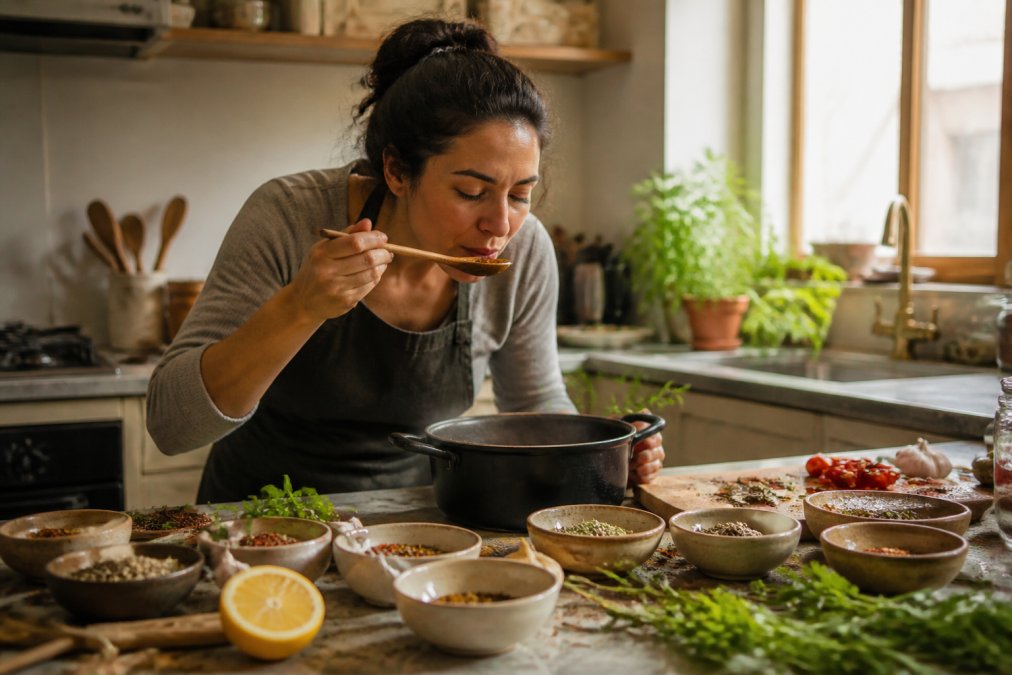
Learning to season food like a chef takes time when building from scratch. A well-crafted spice blend compresses that learning curve significantly. Instead of balancing six individual spices, a thoughtfully composed blend does the balancing for you.
Each Goodness Gracious Seasoning Blend is artfully composed from thoughtfully sourced ingredients, designed so that the flavor relationships are already calibrated.
The practical advantage for home cooks is real. A blend that combines aromatics, spices, and herbs in tested proportions means you can achieve layered, complex flavor without years of trial and error. It also means consistency: the same result every time you reach for the same jar.
Blends work best when you still apply the underlying techniques. Use a Goodness Gracious blend the same way you'd use individual spices: bloom it briefly in fat before adding other ingredients, build it into the dish during cooking rather than sprinkling it on at the end, and finish with acid and a taste check.
The free downloadable cookbook on the Goodness Gracious Seasoning Blends website includes over 40 recipes with specific guidance on how to use each blend, which removes the guesswork entirely for cooks who want results without the experimentation.
Frequently Asked Questions
How do you know when a dish is perfectly seasoned?
A perfectly seasoned dish hits every part of your palate without any single element dominating. Salt should bring out the other flavors, not taste salty on its own. Acid should brighten rather than pucker. The clearest test is to taste a small spoonful and notice whether anything feels flat, sharp, or one-dimensional. If you want more of the dish after the first bite, the seasoning is working. Gradual seasoning throughout cooking makes this easier to achieve than correcting at the end.
Why do chefs salt their food in layers instead of all at once?
Salting in layers gives each ingredient time to absorb sodium and release moisture at the right moment. When you season as you go, salt penetrates proteins during dry brining, draws out flavor from aromatics as they soften, and integrates into sauces as they reduce. Adding all the salt at the end means it sits on the surface and your palate registers it as sharp rather than as part of the overall flavor profile. Layering also lowers the risk of over-seasoning any single component.
What is the difference between seasoning and flavoring?
Seasoning means adjusting a dish so its existing flavors come through more clearly, primarily through salt and acid. Flavoring means adding something new to the dish, such as spices, herbs, umami-rich ingredients, or aromatics that weren't there before. Both matter, but seasoning comes first. A beautifully flavored dish that isn't properly seasoned will still taste flat. Most home cooks focus on flavoring when the real gap in their cooking is seasoning technique.
How can I fix an over-seasoned dish?
The approach depends on what went wrong. Too much salt? Add starchy ingredients like potato, extra grains, or unsalted pasta to absorb some sodium, or increase the volume of the dish with unsalted liquid. Too acidic? A small amount of fat, such as butter, cream, or olive oil, softens acidity without masking flavor. Too bitter? A pinch of salt or a touch of sweetness can counteract bitterness. Taste after each adjustment and add in small increments to avoid swinging the flavor profile in the opposite direction.
What essential seasonings do professional chefs keep in their pantry?
Most professional kitchens rely on kosher salt for cooking and a finishing salt like flaky sea salt for the plate. Beyond salt, chefs keep a quality acid on hand, typically lemon juice and a good vinegar. Aromatics like garlic, onion, and fresh herbs are staples. For spices, black pepper, cumin, smoked paprika, and red pepper flakes cover a broad range of flavor profiles. Pre-blended spice combinations are increasingly common because they cut prep time while delivering consistent, layered flavor in one step.
How do I season vegetables and grains the way chefs do?
Salt the cooking water generously for grains and pasta, it should taste pleasantly seasoned, not like seawater. For roasted vegetables, season before they go into the oven so the salt draws out moisture and promotes browning. Add a finishing salt and a squeeze of lemon or a splash of vinegar after roasting to brighten the flavor. Grains benefit from being seasoned while still warm so the salt absorbs rather than sitting on the surface once they cool.
The biggest obstacle to cooking like a chef isn't skill. It's the habit of treating seasoning as an afterthought. Goodness Gracious Seasoning Blends was built for cooks who want to change that habit, with artfully crafted blends that bring culinary precision within reach of any home kitchen. Visit the website to explore the full collection and download the recipe cookbook to see exactly how each blend performs in practice.
This article was written using GrandRanker