

Table of Contents
- Why Seasoning Root Vegetables Matters
- The Best Herbs for Roasted Root Vegetables
- How to Get Crispy Roasted Root Vegetables
- When to Add Seasoning to Roasted Vegetables
- Acid, Umami, and Finishing Touches
- A Simple Seasoning Method to Follow
- Common Seasoning Mistakes to Avoid
- Conclusion
- Frequently Asked Questions
Last Updated: September 7, 2026
Roasted root vegetables are one of the most forgiving dishes in the kitchen, yet many home cooks undersell them with a careless shake of salt and a glug of oil. Learning how to season roasted root vegetables properly transforms a humble sheet pan into the most anticipated part of the meal. At Goodness Gracious Seasoning Blends, we believe seasoning is the difference between a side dish and a memory. You don't need a culinary degree to get deeply flavored, caramelized results, just a few principles about when to season, what to use, and how to build layers of flavor.
Why Seasoning Root Vegetables Matters
Root vegetables share a common trait: natural sweetness and earthy density. Carrots, parsnips, sweet potatoes, and beets all carry sugars that need coaxing. Seasoning is the counterbalance that prevents a tray from tasting like dessert or, worse, like nothing at all.
Salt draws out moisture, which concentrates flavor and helps browning. Herbs and spices add aromatic complexity that plain roasting never achieves. Without deliberate seasoning, you are left with texture only; with it, the exterior caramelizes while the interior stays tender and sweet.
A common mistake is treating all root vegetables the same. Beets need bolder partners like cumin or ginger. Delicate parsnips shine with thyme and a hint of nutmeg. Matching the seasoning to the vegetable is the first step toward a memorable tray.
The Best Herbs for Roasted Root Vegetables
The best herbs for roasted root vegetables aren't a one-size-fits-all list. Matching the herb to the vegetable's density and sugar content is the difference between a harmonious tray and a muddled one.
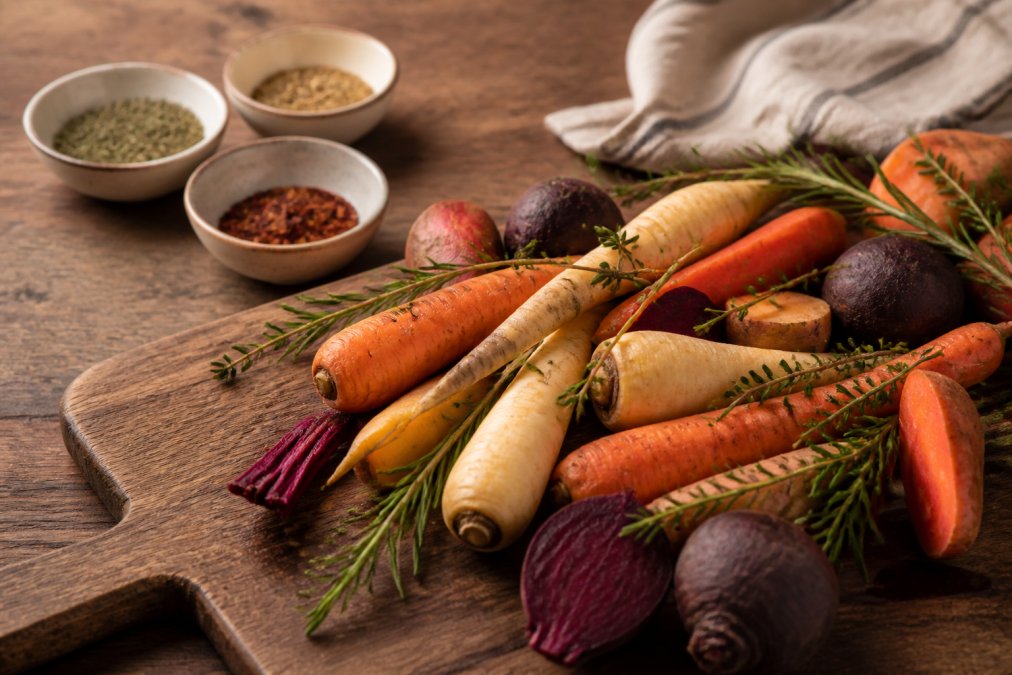
Pairing Herbs by Vegetable Density
Dense, high-sugar roots (beets, carrots, sweet potatoes): These vegetables can handle bold, woody herbs that stand up to long roasting. Rosemary and thyme are the classics, but their oils release slowly, so they infuse the vegetable's interior as it caramelizes. Sage cuts through the natural sweetness of beets and sweet potatoes. For a less common but highly effective pairing, try tarragon with carrots; its anise-like flavor brightens their sweetness without overpowering it.
Medium-density roots (parsnips, turnips, rutabagas): These roots have a more delicate sweetness and a slight peppery bite. They benefit from herbs that complement rather than dominate. Thyme is a safe bet, but consider marjoram, which is sweeter and more floral than oregano. Dill, added in the last few minutes of roasting or as a fresh finish, pairs exceptionally well with parsnips and turnips.
Soft, quick-cooking roots (potatoes, celery root): These vegetables have a milder flavor and a starchier texture, making them a blank canvas. Parsley, both in the toss and as a fresh finish, is a natural fit. For a more assertive profile, a blend of chives and chervil added after roasting provides a gentle onion-garlic note that doesn't mask the vegetable's own character.
The Two-Stage Fresh Herb Method
Fresh herbs are two different tools depending on when you add them. The key is understanding the difference between woody stems and tender leaves.
Stage 1: Before Roasting (Hardy Herbs)
Rosemary, thyme, and sage have woody stems that can withstand the heat. Strip the leaves from the stems and chop them finely. Toss them with the vegetables and oil before roasting. The heat will gently release their essential oils, infusing the vegetables from the outside in. A general ratio is 1 tablespoon of chopped fresh rosemary or thyme per 2 pounds of vegetables.
Stage 2: After Roasting (Tender Herbs)
Tender herbs like parsley, chives, dill, and cilantro have fragile leaves that wilt and turn bitter at 425°F (peer-reviewed research). They should never go into the oven. Instead, chop them and toss them with the hot vegetables immediately after they come out. The residual heat will slightly wilt them, releasing their bright, fresh aroma without destroying it. Use about 2 tablespoons of chopped tender herbs per 2 pounds of vegetables.
Dried Herb Conversions and Technique
Dried herbs are more concentrated than fresh. The standard conversion is 1 teaspoon of dried herbs for every 1 tablespoon of fresh (culinaryarts.edu). But the technique matters more than the ratio. Dried rosemary and thyme can be sharp and needle-like; grind them in a mortar and pestle or crush them between your fingers before adding. This breaks down the cell walls, releasing volatile oils. For dried oregano or marjoram, rub them between your palms to awaken their aroma before tossing.
How to Get Crispy Roasted Root Vegetables
Crispy roasted root vegetables come down to three factors: heat, space, and surface moisture. Roast at 425°F or higher (the FDA). Crowding the pan causes steam, which prevents browning. Use a large sheet pan and arrange the vegetables in a single, even layer with space between each piece.
Cut sizes matter for texture. Smaller pieces crisp faster but can dry out. Larger chunks stay tender inside but need more time to brown. Aim for uniform one-inch pieces so everything cooks at the same rate.
Pat the vegetables dry before seasoning. Surface moisture is the enemy of caramelization. After washing, spread them on a clean kitchen towel and let them air dry for a few minutes. Toss them with oil and seasoning only when they are dry to the touch.
When to Add Seasoning to Roasted Vegetables
Knowing when to add seasoning to roasted vegetables is the difference between flavor that coats and flavor that penetrates. Salt and oil go on before roasting; salt draws out moisture and seasons the vegetable from within.
Dried herbs and ground spices can go on before roasting, but be careful with delicate ground spices like paprika or chili powder. They can burn at high heat and turn bitter. If you are roasting above 425°F, add these in the last ten minutes of cooking.
Fresh herbs and acidic elements like lemon juice or vinegar always go on after roasting. Heat destroys their bright character. Toss the hot vegetables with fresh herbs, a squeeze of citrus, or a drizzle of balsamic glaze right before serving.
Acid, Umami, and Finishing Touches
Most guides stop at herbs and salt. Acid and umami are the two elements that make roasted root vegetables taste complete rather than just seasoned. They are not optional garnishes; they are structural components of a well-balanced dish.
The Role of Acid: Balancing Sweetness and Fat
Roasted root vegetables are a study in contrasts: high natural sugar content and a coating of oil. Without acid, the dish can taste cloying and heavy. Acid cuts through the fat and counterpoints the sugar, making the vegetables taste more vibrant.
Types of Acid and How to Use Them:
- Citrus Juice: Lemon is the most versatile. Its bright, sharp acidity works with nearly every root vegetable. Lime is a better match for sweet potatoes and carrots, especially when paired with cumin or chili. Orange juice is less acidic and sweeter; use it sparingly with beets or parsnips.
- Vinegar: Not all vinegars are created equal. Apple cider vinegar has a fruity tang that pairs well with carrots and sweet potatoes. Sherry vinegar adds a nutty, complex note that elevates turnips and rutabagas. Red wine vinegar is sharper and more assertive; use it in small amounts with hearty vegetables like beets. White balsamic vinegar is milder than traditional balsamic and won't discolor lighter vegetables like parsnips.
- Balsamic Glaze: This is a reduced balsamic vinegar with a syrupy consistency. It adds both acidity and sweetness. Drizzle it over the vegetables after roasting, not before, to prevent it from burning and turning bitter. It is particularly good with beets and red onions.
How to Apply Acid:
The key is to add acid after roasting. Heat destroys the volatile compounds that give citrus and vinegar their bright character. Toss the hot vegetables with the acid in the last minute before serving. A general starting point is 1 to 2 teaspoons of vinegar or 1 tablespoon of lemon juice per 2 pounds of vegetables. Taste and adjust from there.
Umami Boosters: Deepening the Savory Profile
Umami is the fifth taste, often described as savory or meaty. Root vegetables have some natural umami, but it is subtle. Adding an umami booster amplifies their savory depth and makes them taste richer.
Umami-Boosting Ingredients and Their Applications:
- Miso Paste: White or yellow miso is milder and sweeter than red miso. Whisk 1 to 2 teaspoons of miso into the olive oil before tossing with the vegetables. It dissolves during roasting and creates a deeply savory, slightly salty crust. It is exceptional with carrots and sweet potatoes.
- Soy Sauce or Tamari: A splash of soy sauce (1 to 2 teaspoons per 2 pounds of vegetables) mixed into the oil before roasting adds a salty, savory depth without making the vegetables taste Asian. It is a secret weapon for parsnips and celery root. For a gluten-free option, use tamari or coconut aminos.
- Nutritional Yeast: This deactivated yeast has a cheesy, savory flavor. Sprinkle 1 to 2 tablespoons over the vegetables before roasting. It clings to the oil and creates a crispy, umami-rich coating. It works well with nearly any root vegetable, especially potatoes and turnips.
- Fish Sauce: This is a potent, salty liquid made from fermented fish. A tiny amount (½ teaspoon per 2 pounds of vegetables) mixed into the oil adds a profound savory depth without a fishy taste. It is a bold choice that pairs well with beets and rutabagas.
The Finishing Sequence
To build a truly layered flavor profile, follow this order:
- Before roasting: Toss with oil, salt, and your umami booster (miso, soy sauce, or nutritional yeast).
- During the last 10 minutes: Add any delicate ground spices like paprika or chili powder.
- Immediately after roasting: Toss with fresh herbs and your acid (lemon juice, vinegar, or balsamic glaze).
This sequence ensures each element is added at the point of maximum impact: salt and umami penetrate the vegetables, spices toast without burning, and acid and fresh herbs provide a bright finish.
A Simple Seasoning Method to Follow
A straightforward method for how to season roasted root vegetables keeps the process repeatable. Start with two pounds of prepared vegetables, cut into even pieces. Pat them dry, then transfer to a large mixing bowl.
Drizzle with two to three tablespoons of olive oil and sprinkle with kosher salt and black pepper. Toss to coat every piece evenly. Add your hardy herbs and warm spices, then toss again until the seasoning clings to the oil.
Spread the vegetables in a single, even layer on a sheet pan. Roast at 425°F for 25 to 35 minutes, flipping once halfway through. The vegetables are done when they are golden brown with crispy edges and tender when pierced with a fork.
| Step | Action | Timing |
|---|---|---|
| 1 | Pat vegetables dry, cut into even pieces | 10 minutes prep |
| 2 | Toss with oil, salt, and hardy seasonings | Before roasting |
| 3 | Roast in a single layer at 425°F | 25-35 minutes |
| 4 | Add delicate spices and fresh herbs | Final 10 minutes |
| 5 | Finish with acid or umami booster | After roasting |
For a ready-made shortcut, try the FriedRoastedBaked blend from Goodness Gracious Seasoning Blends. It is an all-purpose savory seasoning that brings herbs and spices together in one jar, so you can skip the measuring and get straight to roasting.

Common Seasoning Mistakes to Avoid
The most frequent mistake is underseasoning. Root vegetables are dense and need more salt than leafy greens. Taste them before they go in the oven; they should taste slightly overseasoned because roasting mellows the flavors.
Another common error is adding fresh herbs at the start; they burn and turn bitter. Reserve them for the final toss. Likewise, do not overcrowd the pan, vegetables stacked on each other steam instead of roast, leaving soft, pale pieces.
Finally, do not skip the acid. A tray of roasted root vegetables without a finishing splash of vinegar or citrus tastes flat, no matter how good the spice mix is. Acid is the bridge connecting earthy, sweet, and savory notes.
Conclusion
Seasoning roasted root vegetables well is about layering: salt and oil first, hardy herbs and warm spices before roasting, and bright, acidic finishes at the end. Avoid underseasoning, overcrowding, and burning delicate spices, and you will turn out a caramelized, deeply flavorful tray every time.
Getting the balance right takes practice, but you do not have to figure it out alone. Goodness Gracious Seasoning Blends crafts thoughtfully sourced, artfully blended spice combinations that take the guesswork out of the equation. The FriedRoastedBaked blend is designed to elevate vegetables, meats, and more with a single shake. For more inspiration, the downloadable Flavor Secrets E-Cookbook includes over 40 recipes showing exactly how to use each blend. Get started with Goodness Gracious Seasoning Blends and turn your next roast into a memorable occasion.

Frequently Asked Questions
What seasonings go well with root vegetables?
Root vegetables like carrots, parsnips, and sweet potatoes have natural sweetness, so they pair well with warm spices like cumin, coriander, and cinnamon, plus savory herbs such as thyme, rosemary, and sage. A good all-purpose savory blend like Goodness Gracious Fried*Roasted*Baked adds garlic and herb notes that complement nearly any root vegetable mix. Add kosher salt and black pepper as your base, then build with these flavors.
Should I season root vegetables before or after roasting?
Do both, but with different seasonings. Toss root vegetables with oil, salt, and dried herbs before roasting so the flavors penetrate as they cook. Add fresh herbs, a squeeze of lemon, or a balsamic glaze after roasting to preserve their brightness. Delicate ingredients like fresh garlic or chili flakes can burn at high heat, so add those in the final 10 minutes or after roasting for the best roasted root vegetables.
What is the secret to flavorful, caramelized roasted veggies?
Caramelization happens when heat drives moisture from the vegetables, so the key is giving them space. Crowding the sheet pan traps steam and prevents browning, which is essential for deep flavor. Use a high oven temperature around 425°F, toss vegetables in enough olive oil to coat them evenly, and roast in a single layer without overlap. The result is golden brown, tender vegetables with crispy edges.
How do I prevent root vegetables from getting soggy?
Soggy vegetables come from excess moisture and overcrowding. Cut vegetables into uniform sizes so they cook evenly, pat them dry before tossing with oil, and spread them in one even layer on a sheet pan. Roast at 425°F or higher and resist stirring too often; flipping once halfway through is enough to get crispy roasted root vegetables with caramelized edges.