

Table of Contents
- Why Proper Storage Matters for Artisanal Spice Blends
- Best Containers for Storing Spices
- Step 1: Choose Your Storage Location
- Step 2: Control Temperature and Humidity
- How Long Do Spice Blends Last
- Signs of Expired Spices and When to Replace
- Step 3: Label and Organize Your Collection
- Common Storage Mistakes to Avoid
Last Updated: August 29, 2026
Why Proper Storage Matters for Artisanal Spice Blends
Artisanal spice blends lose potency rapidly when exposed to heat, light, moisture, or air. Proper storage preserves the essential oils and aromatic compounds that make artisanal blends worth buying. When you control temperature, humidity, light exposure, and air contact, you pause oxidation and flavor loss, ensuring your investment delivers results every time you cook.
Best Containers for Storing Spices
The container you choose determines how well your spice blends stay fresh. The goal is airtight, opaque storage that minimizes exposure to oxygen, light, and temperature fluctuations.
Glass vs. Plastic: Which Material Wins
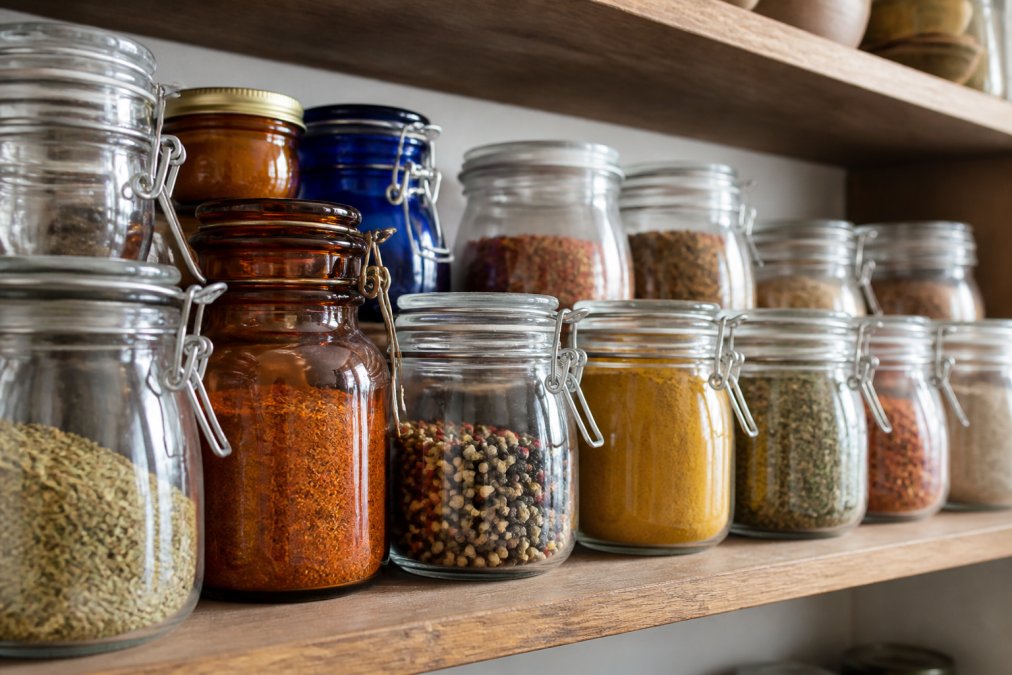
Glass is the superior choice for long-term artisanal spice storage. Dark glass jars, amber, cobalt blue, or opaque varieties, offer the best protection because they block light while keeping contents visible enough to monitor freshness. Glass doesn't react with spice oils or leach chemicals.
Plastic containers present real problems. Many plastics are permeable to oxygen over time, and plastic can absorb spice oils, degrading both the container and the blend. Clear plastic allows light exposure, which accelerates oxidation. A glass jar with an airtight seal will keep your spice blend viable for 6-12 months, while a plastic container typically provides only 3-4 months of protection (peer-reviewed research).
Airtight Seals and Vacuum Options
An airtight seal is non-negotiable. Look for containers with rubber gaskets, snap-lock lids, or screw-on caps that compress a seal against the rim. Test the seal by turning the jar upside down over a sink; if any liquid escapes, the seal isn't tight enough.
Vacuum-sealed containers take protection further by removing air when you pump the lid, creating a partial vacuum that dramatically slows oxidation. This is particularly effective for ground spices, which degrade faster than whole spices. The trade-off is convenience, you must re-pump the lid each time you open the jar. For serious spice enthusiasts, vacuum-seal bags work well for bulk storage, allowing you to portion smaller quantities into airtight glass jars for the kitchen while keeping the remainder sealed in the pantry.
Step 1: Choose Your Storage Location
The ideal location is cool, dark, and dry, far from sources of heat and light that accelerate degradation. A dark, enclosed pantry cabinet maintains stable temperature and humidity while blocking light completely.
Never store spice blends near the stove. Heat from cooking and steam from boiling water degrade essential oils rapidly and introduce moisture that promotes mold growth. Stove-adjacent storage can reduce shelf life by 50% or more (the FDA). Avoid windowsills, open shelves, and countertops near appliances. If you live in a humid climate, choose a kitchen pantry or interior cabinet away from moisture sources rather than a bathroom cabinet.
Step 2: Control Temperature and Humidity
Temperature stability is critical for preserving spice quality. Fluctuating temperatures cause the air inside sealed containers to expand and contract, creating micro-gaps that allow oxygen to enter. The ideal storage temperature is between 50-70°F, which slows oxidation without requiring refrigeration (usda.gov). Most home pantries naturally fall into this range.
Humidity control is equally important. Aim for humidity levels below 50%. If your pantry tends to be humid, add silica gel packets or small containers of uncooked rice inside your storage area to absorb excess moisture. Replace them monthly or when they feel damp. Ground spices are more sensitive to humidity than whole spices because they have greater surface area exposed to moisture. Clumping indicates humidity exposure and means the flavor profile has changed.
How Long Do Spice Blends Last
Ground vs. Whole Spices: Shelf Life Differences
Ground spices have a shorter shelf life than whole spices because grinding exposes more surface area to oxygen, light, and moisture. A properly stored ground spice blend typically maintains peak flavor for 6-8 months, then gradually loses potency for another 4-6 months. Whole spices are more stable, maintaining vibrant flavor for 12-18 months in cool, dark, airtight conditions.
Many artisanal blends combine both whole and ground spices. In these cases, the ground spices set the shelf-life timeline. Storage conditions dramatically affect these timelines, a blend stored in a warm kitchen cabinet might degrade within 3-4 months, while the same blend in a cool pantry could stay vibrant for a full year.
Signs of Expired Spices and When to Replace
Your senses are your best tools for assessing spice freshness. Faded color is the first sign of age, fresh blends are vibrant and striking, while older blends become pale or grayish. This color shift directly correlates with flavor loss.
Aroma is the second indicator. Fresh artisanal spice blends have bold, complex aromas that hit you immediately. An older blend smells muted or flat. If you can barely smell the spices when you open the jar, the essential oils have largely oxidized away. Clumping in ground spices indicates moisture exposure and means the blend won't distribute evenly in your cooking. Mold or off-odors mean discard immediately.
If your blend is over a year old, tastes noticeably flat, or shows significant color fading, replace it. Artisanal spice blends are an investment in flavor, and using degraded spices defeats the purpose.
Step 3: Label and Organize Your Collection
Label every container with the blend name and purchase date using waterproof labels or permanent marker. The purchase date tells you at a glance which blends are approaching the end of their optimal shelf life.
Organize by use case rather than alphabetically, group baking blends together, grilling blends together, and global cuisine blends together. This system makes it obvious which blends you reach for regularly. Keep a simple inventory list, either handwritten or digital, noting which blends you have, when you purchased them, and which dishes you've used them in.
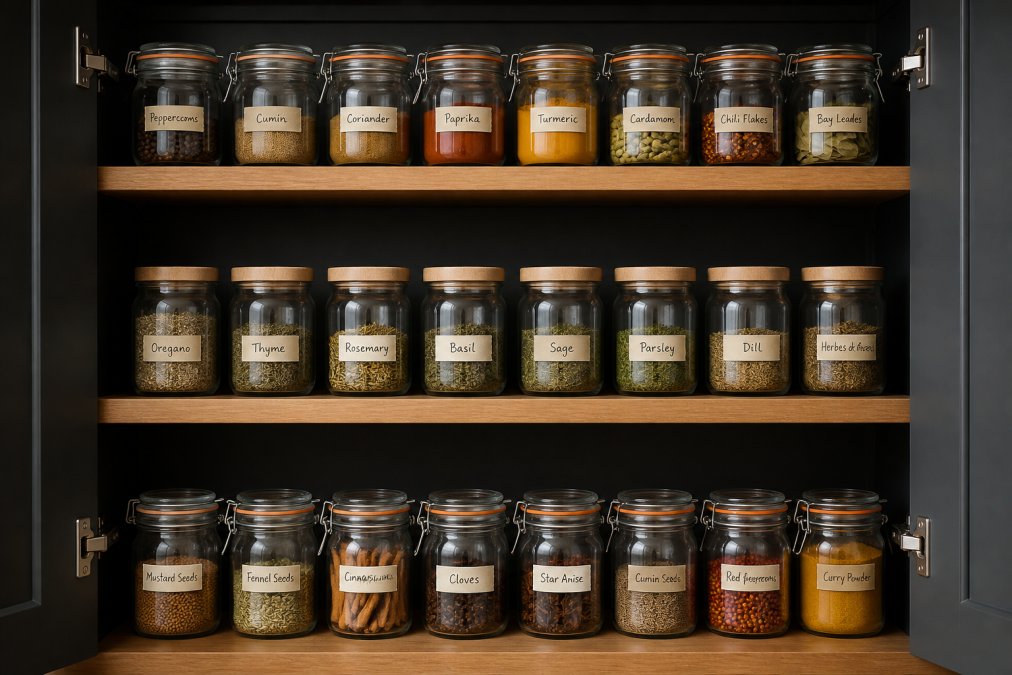
Store your collection at eye level or slightly below, you're more likely to use spices you can see easily. If you've received blends from Goodness Gracious Seasoning Blends, reference the included e-cookbook for pairing suggestions. Knowing exactly how to use each blend removes friction between purchase and actual cooking.
Common Storage Mistakes to Avoid
Storing spices in clear containers allows light to penetrate, accelerating oxidation. Switch to opaque or tinted glass containers, or store clear containers inside a dark cabinet.
Buying in bulk and storing everything in one large container is problematic because every opening exposes the entire batch to air and light. Portion your spices into smaller jars for daily use and keep the bulk supply sealed.
Storing spices in original packaging is tempting but problematic, commercial packaging isn't designed for long-term storage and doesn't maintain airtight seals after opening. Transfer blends to proper storage containers immediately.
Refrigerating spices is unnecessary and counterproductive. Refrigerators are humid environments with temperature fluctuations, and condensation introduces moisture. A cool, dry pantry is far superior.
Storing spices near the stove is the most damaging mistake. Heat and steam destroy flavor rapidly. If your kitchen layout forces this choice, choose inconvenience instead.
Finally, forget to check freshness before using. Spend 10 seconds checking color and aroma before you cook to prevent flat-tasting dishes.
Proper storage of artisanal spice blends is the difference between cooking that feels elevated and cooking that feels ordinary. When you invest in thoughtfully sourced, artfully blended spices from Goodness Gracious Seasoning Blends, protecting that investment through correct storage ensures every dish delivers the bold, striking flavors these blends were designed to provide. Start with cool, dark, airtight containers in your pantry, control temperature and humidity, label everything with purchase dates, and check freshness before using. These simple steps transform your spice collection into a reliable resource that unlocks culinary potential in every meal you create.
| Storage Factor | Best Practice | Impact on Shelf Life |
|---|---|---|
| Container Type | Dark glass with airtight seal | 6-12 months for ground; 12-18 months for whole |
| Location | Cool, dark pantry away from stove | Adds 3-6 months to blend viability |
| Temperature | 50-70°F, consistent | Prevents oxidation acceleration |
| Humidity | Below 50% | Prevents clumping and mold growth |
| Light Exposure | Complete darkness | Preserves essential oils and color |
| Organization | Labeled with purchase dates | Prevents using expired blends |
Frequently Asked Questions
Q: How should I store spice mixes to keep them fresh?
A: Store artisanal spice blends in airtight glass containers away from heat, light, and moisture. Keep them in a cool, dark pantry or cabinet, never near the stove or above the oven. Maintain consistent temperature below 70°F and use vacuum-sealed containers or mason jars with tight lids to preserve essential oils and flavor potency. Label containers with the blend name and purchase date for easy tracking.
Q: How long do spice blends last before losing flavor?
A: Ground spice blends typically retain peak flavor for 6 months to 1 year, while whole spices last 2-3 years. The shelf life depends on blend composition, storage conditions, and exposure to light and heat. Check your spices regularly for aroma loss and color fading.
Q: What are the signs that my spice blend has expired?
A: Expired spices show loss of aroma, faded color, clumping from moisture exposure, or visible discoloration. Smell the blend, if it lacks the vibrant fragrance you remember, potency has degraded. Ground spices lose flavor faster than whole ones due to increased surface area exposed to oxidation. When in doubt, taste a pinch; if flavor is muted or musty, it's time to replace the blend.
Q: Should I refrigerate or freeze my artisanal spice blends?
A: Refrigeration and freezing are not recommended for spice blends. Temperature fluctuations and condensation from opening cold containers introduce moisture that damages essential oils and accelerates degradation. A consistently cool, dry pantry (around 60-70°F) is ideal. Freezing can cause condensation when containers warm to room temperature, harming the blend's flavor profile and shelf stability.
This article was written using GrandRanker