

Table of Contents
- Why Use Premixed Seasoning Blends: The Real Advantages
- Time-Saving Benefits That Actually Matter
- Flavor Consistency and Balance in Every Dish
- Best Seasoning Blends for Home Cooks
- How to Use Seasoning Blends in Recipes
- How to Store Spice Blends for Freshness
- Cost-Effectiveness: Premixed vs. Building Your Own
- Controlling Sodium and Understanding Ingredient Labels
Last Updated: August 21, 2026
Why Use Premixed Seasoning Blends: The Real Advantages
Premixed seasoning blends have become a staple in home kitchens because they solve real problems that individual spices don't address as elegantly. A well-constructed blend delivers consistent, balanced flavor profiles without guesswork, layering aromatic compounds, balancing heat with sweetness, and creating depth through complementary flavors before the blend ever touches your food.
This guide explores why premixed seasoning blends matter, how to use them effectively, and how they compare to building your own spice collection from scratch. Whether you're a busy professional simplifying weeknight cooking or a flavor enthusiast expanding your culinary repertoire, understanding these blends transforms how you approach everyday meals.
Time-Saving Benefits That Actually Matter
The most obvious advantage of premixed seasoning blends is speed. Instead of measuring five or six individual spices, each with its own jar and potential for error, you grab one container. For a home cook juggling work, family, and the desire to eat well, this matters more than theory suggests.
Consider a practical example: a dry rub for grilled chicken. Building one from scratch requires gathering paprika, garlic powder, onion powder, cumin, black pepper, and salt, a process taking eight to ten minutes before you've even touched your protein. With a premixed blend like Goodness Gracious Seasoning Blends' FriedRoastedBaked, you open the jar and apply it directly. Total time: thirty seconds.

This efficiency compounds throughout a meal. Fewer decisions mean less friction between deciding what to cook and actually cooking it. Fewer spice jars opened also means less post-cooking cleanup, a genuine quality-of-life improvement for small kitchens or anyone who dislikes the mess.
Flavor Consistency and Balance in Every Dish
A well-formulated blend isn't just a collection of spices thrown together, it's a calibrated balance of flavor components designed to work together. When you mix your own spices, slight variations in measurement, spice age, or humidity can shift the final flavor profile. Premixed blends eliminate this variability, delivering the same result every time.
The flavor balance in a quality blend also reflects professional culinary knowledge. A well-designed seasoning blend layers flavors deliberately: some spices provide the primary flavor note, others add complexity, and still others balance heat or add subtle sweetness. This layering separates a flat, one-dimensional seasoning from something that tastes intentional and polished.
Best Seasoning Blends for Home Cooks
Not all premixed seasoning blends serve the same purpose. The best blends for home cooks work across multiple dishes and cooking methods rather than serving a single narrow use case.
All-purpose blends form the foundation of a functional spice rack. Goodness Gracious Seasoning Blends' FriedRoastedBaked exemplifies this approach, a savory blend of herbs and spices designed to transform fish, chicken, beef, pork, and vegetables. The versatility means you can reach for it multiple times a week.
Breakfast-focused blends address a gap many home cooks face. Goodness Gracious Seasoning Blends offers Everything Egg Blend, which elevates any egg dish, and Better Bacon Blend, which enhances bacon's natural savory character. These blends make breakfast feel like a deliberate culinary choice rather than routine.

Specialty blends serve specific cuisines or cooking techniques. While less universally useful than all-purpose options, they shine when exploring a particular culinary direction.
The key to building a functional blend collection is starting with versatile options that earn regular use, then adding specialty blends as your interests develop.
How to Use Seasoning Blends in Recipes
Understanding how to integrate seasoning blends into recipes is where their real power emerges. Many home cooks treat blends as direct replacements for salt and pepper, missing opportunities to layer them strategically throughout a dish.
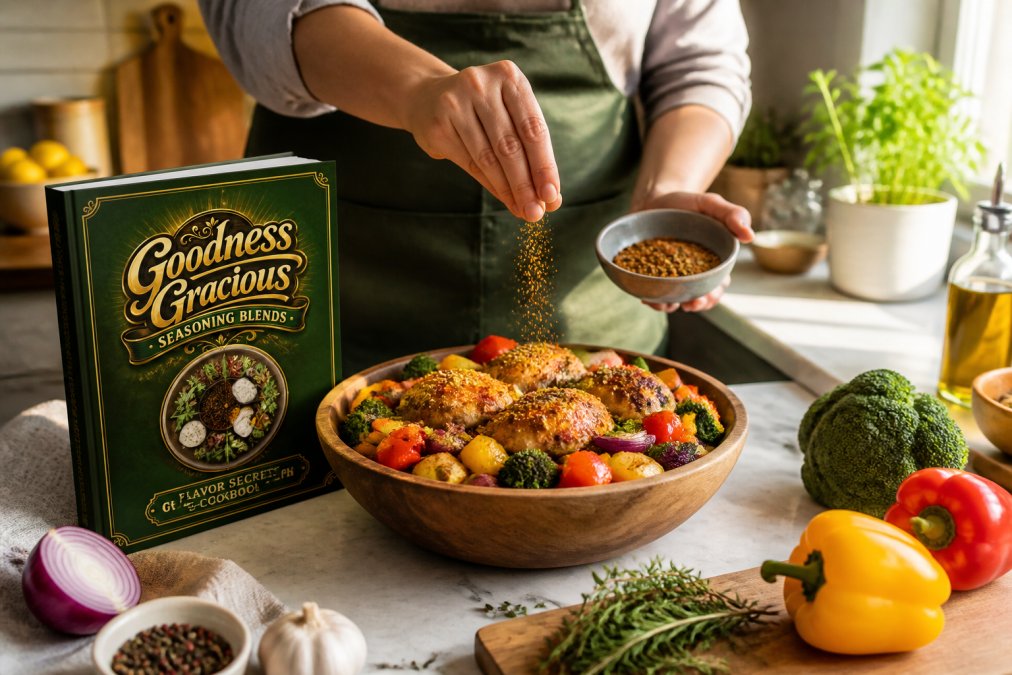
Direct application is the simplest method. Sprinkle the blend directly onto proteins before cooking, on chicken breasts before pan-searing, on fish before baking, on vegetables before roasting. Heat activates the aromatic compounds in the spices, deepening their flavor contribution.
Dry rubs represent a more intentional application. Mix the blend with a small amount of oil to create a paste, then massage it into the protein. This ensures the spices stay in contact with the food throughout cooking, creating a flavorful crust.
Blooming is a technique many home cooks overlook. When you heat a blend briefly in oil or butter before adding other ingredients, you release the essential oils from the spices, intensifying their flavor (peer-reviewed research). This works especially well in soups, stews, and sauces.
Marinades benefit from seasoning blends when combined with acid (vinegar or citrus) and fat (oil). The blend dissolves partially into the liquid, flavoring the protein from the inside while creating a flavorful surface.
Finishing adds brightness and complexity by sprinkling a small amount of blend onto a finished dish just before serving. It works on soups, roasted vegetables, grilled meats, and grain bowls.
Goodness Gracious Seasoning Blends provides a downloadable e-cookbook with over 40 recipes demonstrating how to use their blends across different dishes and techniques.

How to Store Spice Blends for Freshness
Proper storage directly impacts how long a seasoning blend maintains its potency and flavor profile.
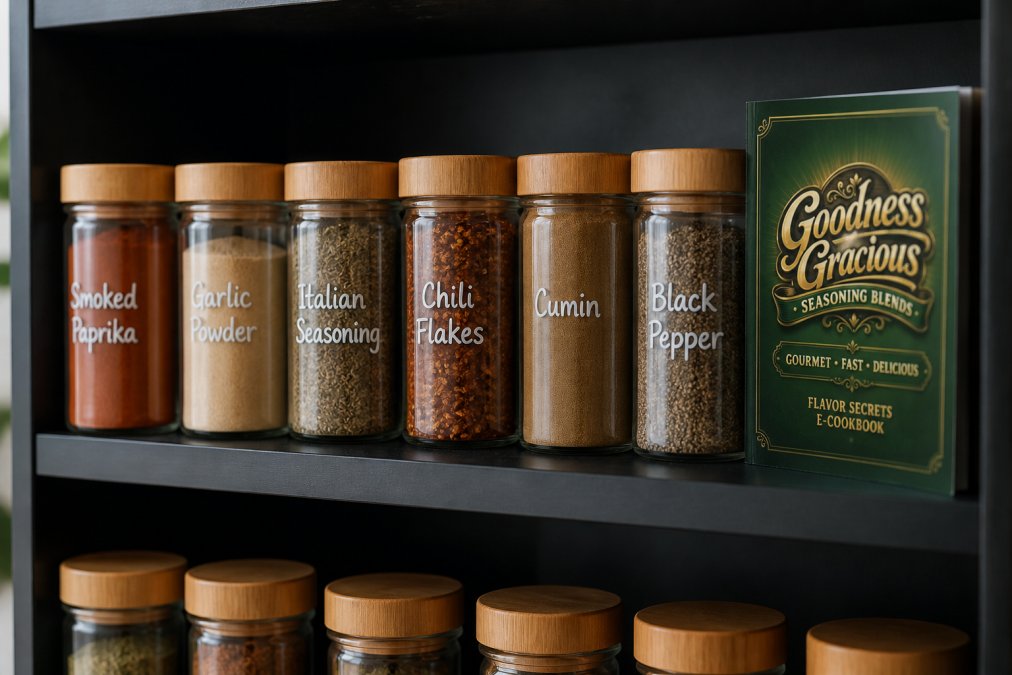
Temperature is the primary enemy of spice freshness. Heat breaks down volatile aromatic compounds. Store blends in a cool location, ideally between 50-70°F, a pantry shelf or cabinet away from heat sources, not above the stove or in direct sunlight (usda.gov).
Light exposure accelerates degradation. Spices stored in clear containers on open shelves lose potency faster than those in opaque containers in closed cabinets.
Moisture causes clumping and can introduce mold or bacterial growth. Store containers in dry conditions and never use a damp spoon to scoop from a jar.
Container choice matters significantly. Glass jars with tight-sealing lids work better than plastic containers. Airtight containers prevent moisture and oxygen from degrading the blend.
Shelf life for premixed seasoning blends typically ranges from one to three years when stored properly. Label containers with the purchase date to ensure you're using blends at their peak.
Cost-Effectiveness: Premixed vs. Building Your Own
The cost comparison between premixed blends and individual spices depends on how often you cook, which spices you use most, and whether you value your time.
Building your own spice collection requires upfront investment of $30-50 for a basic collection. Once purchased, these spices last months or years, so per-use cost becomes very low. However, this assumes you actually use all the spices you buy. A spice that costs $3 but never makes it into a dish has infinite cost-per-use.
Premixed blends like Goodness Gracious Seasoning Blends typically cost $16.99 for a 16-ounce container. This is more expensive per ounce than bulk individual spices, but you're paying for curation, testing, and convenience.
The real cost-effectiveness question is usage. If a premixed blend gets used three times a week while individual spices gather dust, the blend is more cost-effective. If you cook with individual spices five times a week, building your own collection makes financial sense.
For busy professionals and flavor enthusiasts who prioritize convenience and consistency, premixed blends represent better value despite their higher per-ounce cost.
Controlling Sodium and Understanding Ingredient Labels
Premixed seasoning blends reveal both their greatest advantage and a potential concern: sodium content and ingredient transparency.
Sodium in commercial blends varies widely. Some contain added salt as a primary ingredient, while others rely on natural sodium in spices and herbs. A typical commercial seasoning blend might contain 200-400 milligrams of sodium per teaspoon, while a homemade blend with no added salt contains zero (the FDA).
For people monitoring sodium intake, reading the ingredient label becomes essential. Look for blends that list salt separately from the spices. Some premium blends, including certain Goodness Gracious Seasoning Blends options, are formulated with lower or no added salt, giving you control over total sodium in your dish.
Ingredient transparency is where premixed blends shine. A quality blend lists every ingredient clearly: specific spices, herbs, salt if included, and any anti-caking agents or preservatives. This is vastly superior to vague descriptions like "spice blend" or "natural flavoring."
Anti-caking agents like silicon dioxide appear in many commercial spice blends to prevent clumping. These are food-safe additives approved by the FDA, but reading ingredient labels reveals whether a blend contains them.
The advantage of premixed blends is that ingredient information is standardized and accessible. A quality premixed blend provides transparency that individual spices rarely match.
The real value of premixed seasoning blends isn't just in the spices themselves, it's in the time saved, the consistency achieved, and the permission they give you to cook without overthinking. Whether you're a busy professional seeking simplicity or a flavor enthusiast exploring new combinations, the right blend transforms your kitchen into a place where good cooking happens naturally.
Goodness Gracious Seasoning Blends offers a curated collection designed exactly for this purpose. Their blends are thoughtfully sourced and artfully combined to bring bold, striking flavors directly into your cooking. For home cooks ready to elevate their meals without friction, starting with a versatile blend like FriedRoastedBaked or a breakfast specialty like Everything Egg Blend removes the barrier between deciding to cook and actually cooking something memorable. The downloadable Flavor Secrets E-Cookbook provides over 40 recipes showing exactly how to use these blends across different dishes and techniques, turning seasoning from an afterthought into an intentional part of your culinary ritual.
Frequently Asked Questions
Q: What are the main benefits of using premixed seasoning blends over individual spices?
A: Premixed seasoning blends save time by eliminating the need to measure and combine multiple spices. They ensure consistent flavor profile across your dishes, reduce waste from unused individual spices, and simplify cooking for busy home cooks. Most importantly, they deliver balanced flavor layering that takes culinary technique and experience to achieve on your own. Quality blends like Goodness Gracious Seasoning Blends are thoughtfully sourced to work together harmoniously, transforming simple ingredients into memorable meals.
Q: How do I know if a seasoning blend is high-quality?
A: Look for blends with a clear ingredient list free of excessive fillers, anti-caking agents, or preservatives. High-quality seasoning blends should have vibrant color and aroma, indicating fresh spices. Goodness Gracious Seasoning Blends are artfully crafted with thoughtfully sourced ingredients, and many brands offer detailed ingredient transparency so you can make informed choices about what goes into your food.
Q: Do premixed seasoning blends lose their flavor faster than individual spices?
A: Not necessarily. Shelf life depends on storage conditions and the blend's composition. Properly stored in cool, dry, airtight containers away from light and heat, most seasoning blends maintain potency for 6-12 months. Some spices in a blend may degrade slightly faster than whole spices, but the convenience and flavor consistency often outweigh this minor concern. Store your blends in a dark pantry or cabinet, not above the stove where heat accelerates potency degradation.
Q: Can I customize store-bought seasoning blends to suit my taste?
A: Absolutely. You can adjust premixed blends by adding extra salt, heat, or specific spices to match your preferences. Many home cooks start with quality blends like Goodness Gracious and enhance them with fresh herbs or additional aromatics. This approach gives you the time-saving foundation of a premixed blend while allowing culinary creativity. Experiment with small amounts first to understand how each addition affects the overall flavor balance before using the customized blend in full recipes.
This article was written using GrandRanker