

Table of Contents
- Why the Best Seasoning Blends for Home Cooks Beat a Spice Rack
- Quick Comparison: Top Seasoning Blends for Home Cooks
- 1. FriedRoastedBaked: The Best All-Purpose Seasoning for Everything
- 2. Better Bacon Blend: A Breakfast Game-Changer
- 3. Everything Egg Blend: Elevate Your Morning Routine
- How to Use Spice Blends Without Overthinking Dinner
- How to Store Spices for Freshness That Lasts
- Which Blend Fits Your Kitchen?
- Frequently Asked Questions
Last Updated: September 13, 2026
Why the Best Seasoning Blends for Home Cooks Beat a Spice Rack
A well-stocked spice rack looks impressive, but it rarely delivers dinner. The best seasoning blends for home cooks solve a problem individual jars cannot: they arrive balanced, so you are not guessing at ratios while the pan heats up. Goodness Gracious Seasoning Blends built its lineup around that idea, pairing thoughtfully sourced ingredients into blends that work the moment they hit the skillet.
The distinction matters more than most people expect. A jar of cumin is an ingredient. A blend is a finished decision.
According to USDA dietary guidance on sodium intake, most households take in far more salt than recommended, which is one reason cooking from scratch with a measured blend beats shaking salt at the table. When the salt-to-spice ratio is already settled, you season once and taste the result instead of correcting it three times.
What most guides miss is that a blend is a culinary technique, not a shortcut. Toasted spices, ground herbs, and aromatics are combined so their flavor profile peaks together. That is the whole point.
Quick Comparison: Top Seasoning Blends for Home Cooks
Here is how the three core blends compare before we get into each one.
| Blend | Best For | Flavor Direction | Size |
|---|---|---|---|
| FriedRoastedBaked | Chicken, fish, beef, pork, vegetables | Savory, all-purpose | 16 oz |
| Better Bacon Blend | Bacon and breakfast meats | Smoky, savory | 16 oz |
| Everything Egg Blend | Scrambles, omelettes, egg sandwiches | Zesty, savory | 16 oz |
Each sells for $16.99. If you want recipes before you commit, the Goodness Gracious Flavor Secrets E-Cookbook runs $9.99 and covers more than 40 dishes built around these blends.

1. FriedRoastedBaked: The Best All-Purpose Seasoning for Everything
If you buy one blend, buy this one. FriedRoastedBaked is a savory mix of herbs and spices designed to work across fish, chicken, beef, pork, and vegetables without adjustment. That versatility is what makes it the best all-purpose seasoning in the lineup.
The practical case is simple. A 16-ounce jar covers a lot of dinners, and one blend replaces the four or five jars you would otherwise buy to approximate the same flavor. For a dry rub, pat the meat dry, coat it evenly, and let it sit while the oven or grill comes up to temperature. For vegetables, toss with a little oil first so the blend adheres and the aromatics bloom rather than scorch.
2. Better Bacon Blend: A Breakfast Game-Changer
Bacon does not need help being bacon. It needs help being better, and Better Bacon Blend is built for exactly that narrow job. Dust it on before the strips hit the pan and the smoky, savory notes deepen as the fat renders.

The timing is where home cooks go wrong. Apply the blend to cold bacon, not hot. The seasoning needs a minute to adhere before the fat releases, otherwise most of it slides off into the pan. A light, even coating is enough; heavy application just burns.
This blend also earns its keep beyond breakfast. Try it on roasted Brussels sprouts, a breakfast sandwich, or a burger patty. The smoke-forward profile carries further than the name suggests.
3. Everything Egg Blend: Elevate Your Morning Routine
Eggs are the most forgiving thing you can cook and the easiest to make boring. Everything Egg Blend fixes that with a zesty, savory combination that works from scrambles to omelettes to egg sandwiches.

The texture rule matters here. Add the blend to beaten eggs before they hit the pan for scrambles, so the flavor distributes evenly through the curds. For fried eggs, season the yolk-side after flipping, when the surface is dry enough to hold the granules. Omelettes take it best folded in with the fillings, where the steam releases the aromatics.
It seasons rather than merely garnishes, which means you can cut back on salt without losing the savory finish.
How to Use Spice Blends Without Overthinking Dinner
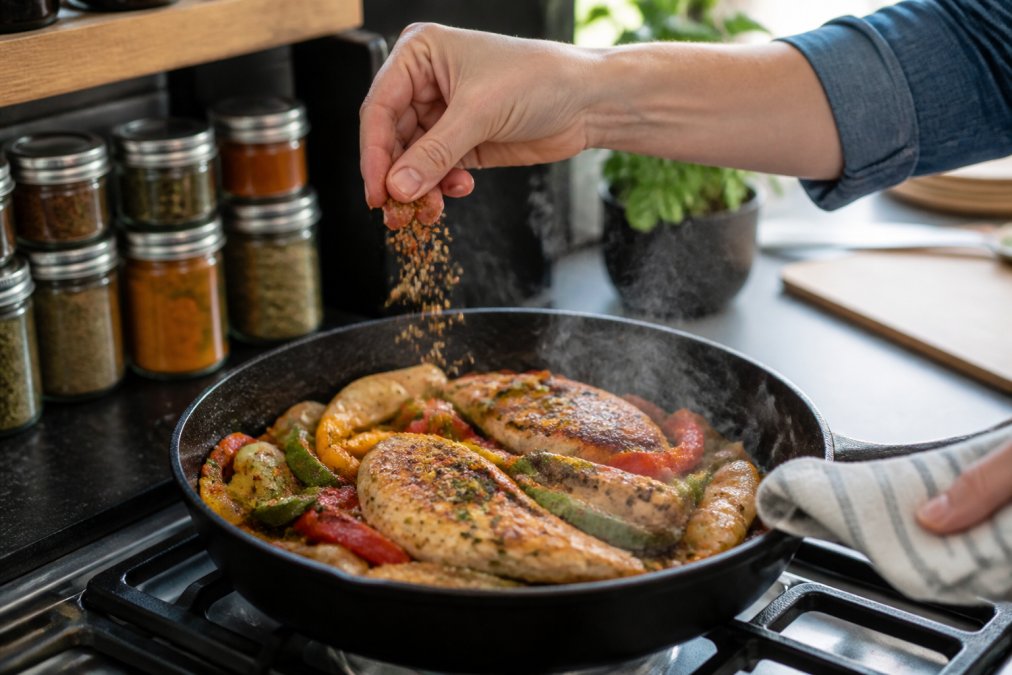
The fastest path to a good meal is a repeatable ratio. Use roughly one teaspoon of blend per half-pound of protein or two cups of vegetables, then adjust after the first bite rather than during cooking. That starting point is not a rule, it is a calibration you refine once you know how salty and how hot a given blend runs.
Three habits carry most of the work:
- Bloom before you build. Add the blend to warm oil for 20 to 30 seconds before the food goes in. The aromatics open up and the whole dish tastes finished.
- Match the blend to the method. Dry rubs for charring and grilling; looser applications for roasting and pan-searing.
- Taste at the end, not the middle. Blends concentrate as liquid cooks off, so a dish that tastes flat at minute five often lands right at minute twelve.
For marinades, combine the blend with oil and an acid, then give it at least 30 minutes. According to USDA food safety guidance on marinating, any marinade that touched raw meat should be discarded or boiled before reuse. That is a small detail that keeps a good dinner from becoming a bad week.
Why Certain Spices Belong Together
Most guides tell you what to combine. A few pairings show up across nearly every culinary tradition for the same underlying reasons:
- Cumin and coriander.
- Paprika and oregano.
- Black pepper and salt.
- Garlic and onion powders.
Dietary-Specific Seasoning: What Most Guides Skip
A blend that works for one cook can be off-limits for another. Three situations come up often:
- Low-sodium. If you are watching sodium, look for blends that list salt last or omit it. You can always add salt at the table; you cannot take it out of the jar.
- Nightshade-free. Paprika, cayenne, and chili powders are all nightshades.
- Allergen-aware. Some commercial blends include celery seed, mustard powder, or sesame. If those are concerns in your household, reading the full ingredient list, not just the front label, is the only reliable check.
None of this requires a separate product line. It requires knowing what is in the jar and adjusting the ratio to your table.
The E-Cookbook exists precisely for cooks who want the guesswork removed. It walks through each blend by protein and occasion, so you are choosing a dish rather than inventing one.
How to Store Spices for Freshness That Lasts
Ground spices lose their punch faster than most people realize, and a blend is only as good as its weakest component (PubMed). Knowing how to store spices for freshness is the difference between a blend that performs in month six and one that fades by month two.
The four rules cover most of it:
- Keep them dark. Light degrades color and aroma. A closed cabinet beats an open shelf every time.
- Keep them cool. Heat above the stove is the worst place in the kitchen for a spice jar. A pantry shelf away from the range holds flavor noticeably longer than the cabinet beside the burner.
- Keep them sealed. Air is the enemy. Screw lids down fully after each use, and press out excess air from any bag you decant into.
- Keep them dry. A measuring spoon that touched a wet pan should never go back into the jar. Moisture clumps ground spices and can seed mold in blends that contain dried garlic or onion.
What most storage advice skips is the why.
How to Tell If a Blend Has Gone Flat
You do not need a date stamp to judge freshness. Three quick checks work:
- Smell test. Rub a pinch between your fingers and smell. If you have to hunt for the aroma, the blend is fading.
- Color test. A blend that has dulled from its original hue, bright green herbs turning khaki, red paprika turning brown, has lost volatile oils along with pigment.
- Taste test. A small pinch on the tongue should taste layered. If it reads as flat salt or bitter dust, it is done.
Reading a Label for Quality
Storage only preserves what you started with, so the ingredient list matters as much as the jar. A few indicators separate a well-made blend from a filler-heavy one:
- Named spices, not "spices."
- Salt position.
- Anti-caking agents and silicon dioxide.
- Added sugar or maltodextrin.
Freshness is a flavor decision, not a housekeeping one. A blend that has gone flat will not rescue a dish no matter how much you add. Buy in a size you will actually finish, date the jar when you open it, and replace on smell rather than on the calendar.
Which Blend Fits Your Kitchen?
Start with how you actually cook, not how you would like to. If your weeknights are chicken, fish, and roasted vegetables, FriedRoastedBaked earns its place first. If breakfast is a ritual in your house, Better Bacon Blend and Everything Egg Blend cover the morning shift between them.
For cooks who want all three without the shipping wait, the downloadable E-Cookbook is the low-commitment entry point. It shows the blends in context, so you can see which one matches the food you already make.
The bigger point is that a blend is a small upgrade with an outsized effect. It removes a decision, shortens the learning curve, and makes an ordinary Tuesday dinner feel deliberate. That is the whole argument for keeping a few good blends within arm's reach of the stove.
Home cooks rarely lack ambition; they lack time and a reliable starting point. Goodness Gracious Seasoning Blends closes that gap with thoughtfully sourced ingredients, artfully blended combinations, and bold packaging that makes the lineup easy to keep on the counter. Pick up FriedRoastedBaked for the all-purpose workhorse, add Better Bacon Blend and Everything Egg Blend for mornings, and let the Flavor Secrets E-Cookbook show you how to put them to work. Get started with Goodness Gracious Seasoning Blends and turn tonight's dinner into a meal worth remembering.
Frequently Asked Questions
What are the most popular seasoning blends for beginners?
Beginners often gravitate toward all-purpose blends that work on multiple proteins and vegetables. A savory herb-and-spice mix like Fried*Roasted*Baked ($16.99 for 16oz) covers chicken, beef, pork, fish, and veggies, so you do not need five different jars. Breakfast-focused blends like Better Bacon Blend and Everything Egg Blend are also easy entry points because they target specific foods you already cook.
Should I buy pre-made spice blends or make my own?
Pre-made blends save time and deliver consistent results, especially when you want a specific flavor profile without buying six individual spices. Homemade mixes give you control over salt and heat levels. Many home cooks keep two or three quality blends on hand for weeknight cooking and make custom mixes for special occasions. The right choice depends on how often you cook and how much experimentation you enjoy.
How do you store seasoning blends to keep them fresh?
Keep blends in airtight containers away from heat, light, and moisture. A cool pantry shelf beats the space above your stove. Whole spices last longer than ground ones, but most blends stay potent for six to twelve months when stored properly. Label each jar with the date you opened it. If a blend smells flat or looks clumpy, it is past its prime.
How do I know which all-purpose seasoning is best for my cooking?
Start with the proteins and cuisines you cook most. A savory, herb-forward blend works across roasted chicken, grilled steak, and sautéed vegetables. Check the ingredient list for quality signals: recognizable spices, no excessive anti-caking agents, and a salt-to-spice ratio that lets you control seasoning yourself. Buying a 16oz bag at $16.99 gives you enough to test across multiple meals before committing to a larger collection.
Can I use the same spice blend on different types of meat?
Yes. An all-purpose blend like Fried*Roasted*Baked is designed for fish, chicken, beef, pork, and vegetables. The key is adjusting quantity and cooking method. Use a lighter hand on delicate fish, a heavier coating on steak before charring, and a moderate dusting on roasted vegetables. One blend can carry an entire week of meals if you vary the application technique.