

Table of Contents
- Essential Spices for Beginners: Building Your Flavor Foundation
- The Best Spice Blends for Beginners to Try Right Now
- Pre-Mixed vs. DIY Spice Blends: The Real Cost Comparison
- How to Use Spice Blends in Cooking: Practical Techniques
- How to Store Spice Blends for Maximum Freshness
- Dietary-Specific Spice Blends: Options for Every Table
- The Best Spice Blends for Beginners: How to Choose With Confidence
- Conclusion
Last Updated: August 17, 2026
Most home cooks own a dozen individual spices they rarely use. The real shift happens when you start cooking with spice blends for beginners built to work together. At Goodness Gracious Seasoning Blends, we've watched this transformation happen repeatedly: the right blend builds a complete flavor profile in seconds. Below, we'll walk you through essential spices to stock, the best blends to try first, how to use them, storage best practices, and the real cost of DIY versus pre-mixed.
Essential Spices for Beginners: Building Your Flavor Foundation
Essential spices for beginners form the culinary foundation every confident home cook builds from. A well-stocked spice cabinet doesn't require forty jars. For most beginners, a core group covers everyday cooking: garlic powder, onion powder, smoked paprika, cumin, black pepper, dried oregano, and kosher salt.
Sweet vs. Savory: Understanding Basic Flavor Profiles
Flavor profile is the combination of taste, aroma, and heat that defines how a dish lands on the palate. Savory profiles lean on earthy, pungent, or umami notes. Sweet profiles use warm spices like cinnamon, nutmeg, and allspice to create depth without heat.
The biggest mistake beginners make is treating sweet and savory as opposites. Many of the best seasoning blends bridge both: a dry rub for pork ribs often includes brown sugar alongside smoked paprika and cayenne because the sweetness balances the heat and creates a caramelized crust.
Whole Spices vs. Ground Spices: What to Stock First
Ground spices are the practical choice for beginners. They dissolve quickly, require no extra equipment, and work in marinades, dry rubs, and infusions without preparation. Stock ground spices first. Once comfortable with flavor balance, add whole spices like cumin seeds or coriander to expand your range. A mortar and pestle or dedicated spice grinder makes toasting and grinding straightforward.
The Best Spice Blends for Beginners to Try Right Now
The best spice blends for beginners are versatile enough to use across multiple proteins and vegetables, balanced so you can't easily over-season, and specific enough to actually taste like something.
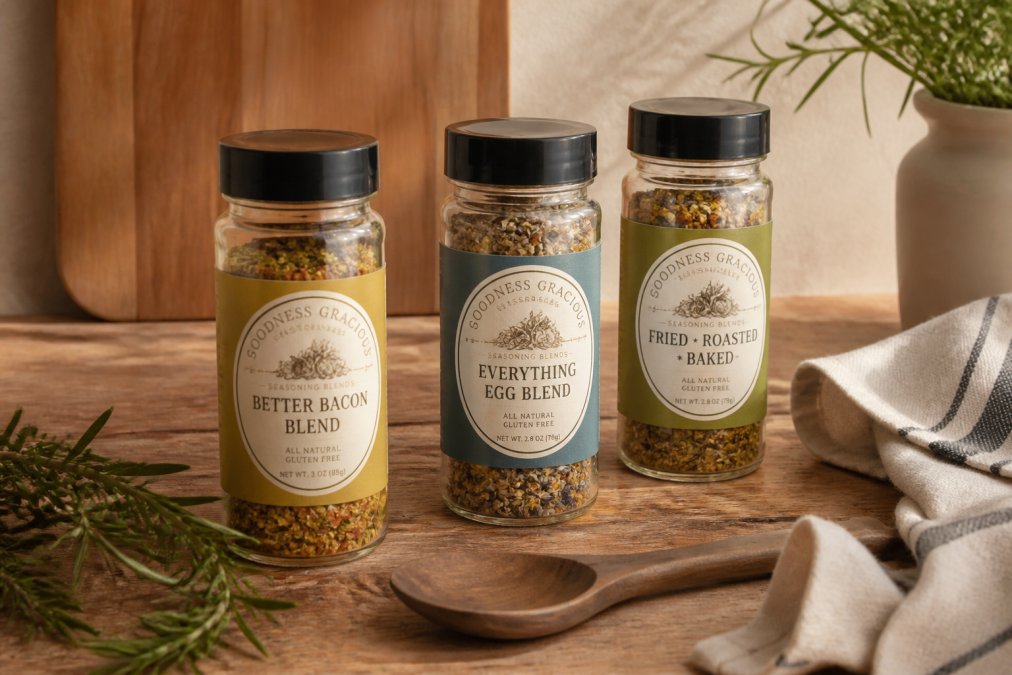
Here are three Goodness Gracious Seasoning Blends that belong in every beginner's spice cabinet.
1. FriedRoastedBaked: The All-Purpose Starter Blend
FriedRoastedBaked is a savory blend designed to transform fish, chicken, beef, pork, and vegetables across every cooking method its name promises. At $16.99 for a 16oz jar, it's the kind of pantry staple that earns its place because it genuinely works on nearly everything.

What makes it a strong first blend for beginners is the balance. The savory, aromatic profile doesn't skew too hot or too pungent, so it's forgiving when you're still developing a sense for how much to use. Rub it directly onto chicken thighs before roasting, toss it with vegetables before a sheet-pan dinner, or use it as a seasoning base for a marinade.
2. Better Bacon Blend: Breakfast Made Extraordinary
Better Bacon Blend is built specifically for bacon, but its application goes further. At $16.99 for a 16oz jar, this seasoning blend adds depth and complexity to a cut of meat that most cooks treat as self-sufficient. Sprinkle the blend lightly across strips before cooking, let it sit for a few minutes, then cook as normal. The seasoning amplifies the natural savory, slightly smoky character of the bacon rather than masking it.

3. Everything Egg Blend: Your Morning Game-Changer
Eggs are arguably the most forgiving protein for learning seasoning. They absorb flavor readily, cook quickly, and give you immediate feedback on whether your seasoning level is right.
Everything Egg Blend is designed to turn any egg preparation into something worth talking about. From scrambles to omelettes to egg sandwiches, the blend works because it's calibrated specifically to the mild, creamy flavor base of eggs. At $16.99 for a 16oz jar, it removes the guesswork from morning cooking entirely.
| Blend | Best For | Size | Price |
|---|---|---|---|
| FriedRoastedBaked | Fish, chicken, beef, pork, veggies | 16oz | $16.99 |
| Better Bacon Blend | Bacon and breakfast proteins | 16oz | $16.99 |
| Everything Egg Blend | All egg preparations | 16oz | $16.99 |
Pre-Mixed vs. DIY Spice Blends: The Real Cost Comparison
DIY spice blends sound economical, but the reality is more complicated. Building your own blend requires purchasing multiple individual spices in quantities far larger than any single recipe calls for. A DIY all-purpose savory blend might require garlic powder, onion powder, smoked paprika, dried thyme, black pepper, and additional aromatics. Buying each separately adds up quickly, and the resulting blend is only as good as your ability to balance ratios correctly.
Pre-mixed blends from a thoughtfully sourced producer solve both problems. The ratio work is done, the ingredients are selected for compatibility, and you get a consistent result every time. According to the American Spice Trade Association's guidance on spice quality, sourcing and blending consistency significantly affect the final flavor outcome.
For beginners, pre-mixed blends from a quality source are almost always the better investment per meal.
How to Use Spice Blends in Cooking: Practical Techniques
Learning how to use spice blends in cooking is less about memorizing recipes and more about understanding three core application methods: dry rubs, marinades, and infusions.
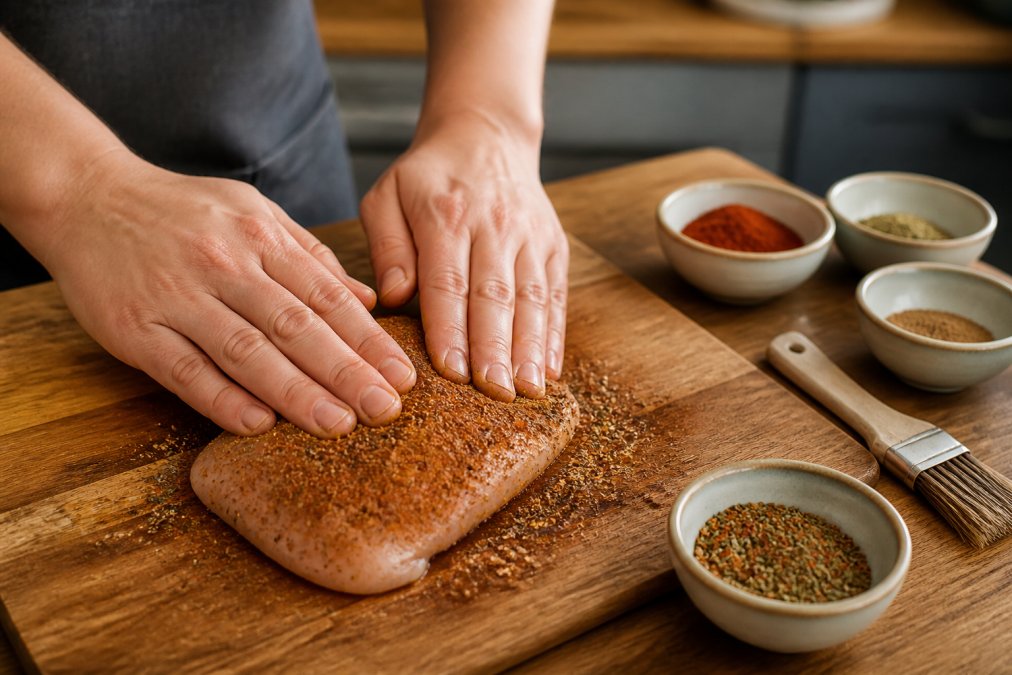
Dry Rubs, Marinades, and Infusions: Matching Method to Meal
Dry rubs involve pressing ground spices directly onto the surface of meat or vegetables before cooking. The heat activates the aromatics and creates a flavorful crust. This works particularly well with FriedRoastedBaked on chicken thighs or pork chops.
Marinades combine spice blends with a liquid carrier, typically oil, citrus juice, or vinegar, to penetrate the protein more deeply. A simple marinade ratio is two parts oil to one part acid, plus one to two teaspoons of your chosen blend per pound of protein.
Infusions apply spice blends to cooking fat before adding other ingredients. Heating a blend briefly in butter or oil releases the fat-soluble aromatic compounds and distributes flavor through the entire dish. This works especially well with egg dishes, where the Everything Egg Blend can be bloomed in butter before the eggs hit the pan.
Troubleshooting Flavor Balance: When a Dish Tastes Off
A dish that tastes flat usually needs acid, not more salt. A squeeze of lemon or a splash of vinegar can lift a dish that feels heavy or one-dimensional.
A dish that tastes harsh or overly pungent often has too much heat relative to the other elements. Adding a fat, such as butter, cream, or olive oil, softens the heat level and rounds out the flavor profile.
A dish that tastes muddy or confused has too many competing flavors. Choose one primary blend and build from there rather than layering multiple seasoning sources.
How to Store Spice Blends for Maximum Freshness
Spice blends lose potency through exposure to heat, light, moisture, and air. Proper storage directly determines how long your blends stay worth using.
According to the FDA's guidance on food storage and shelf life, store dried herbs and spices in airtight containers away from heat sources. A spice cabinet next to the stove is one of the worst places for long-term freshness because heat accelerates the breakdown of volatile aromatic compounds.
Practical storage rules:
- Use airtight containers with tight-fitting lids that limit air exchange
- Store away from direct sunlight and heat sources, including the stovetop and oven
- Keep away from the dishwasher, which generates steam that shortens shelf life
- Label containers with the purchase or blend date
Shelf-Life and Expiration Testing: How to Tell If a Blend Is Still Good
Ground spice blends are generally at their best within one to two years of production, though they remain safe to use beyond that point. The question isn't safety, it's potency.
The simplest test: rub a small amount of the blend between your fingers and smell it. A fresh blend releases a clear, distinct aroma immediately. A blend that's past its prime smells faint, dusty, or flat.
A secondary test for blends with visible whole or coarsely ground components: look for color fading. Vibrant reds from paprika and deep greens from dried herbs indicate freshness. Dull, grayish tones suggest the blend has lost significant potency.
Dietary-Specific Spice Blends: Options for Every Table
Dietary-specific spice blends are one of the most underserved categories in home cooking guides. Spice blends are naturally well-suited to a range of dietary needs because the core ingredients, dried herbs and ground spices, are inherently plant-based, gluten-free, and low in calories.
For low-sodium diets, look for blends that list salt toward the end of the ingredient list or offer a salt-free version. Many herb-forward blends work beautifully without added salt because the aromatic compounds carry enough flavor on their own.
For plant-based cooking, all-purpose savory blends like FriedRoastedBaked work as well on roasted chickpeas, tofu, or cauliflower as they do on animal proteins. For households cooking for both children and adults with different heat tolerances, keep a mild all-purpose blend as the base and add heat separately at the table.
According to USDA guidance on spice ingredients and labeling, ingredient transparency on spice labels helps consumers identify potential allergens and additives, making it easier to choose blends that fit specific dietary needs.
The Best Spice Blends for Beginners: How to Choose With Confidence
Choosing the right spice blends for beginners comes down to three practical questions: How often will you use it? Does it work across multiple dishes? Does the flavor profile match how you already cook?
Start with one all-purpose savory blend and one breakfast-specific blend. This covers the two meal occasions where most home cooks season most consistently. Repetition with a single, well-made blend teaches you how seasoning interacts with different proteins, cooking methods, and temperatures. That knowledge transfers to everything else you cook.
For cooks who want a structured starting point with recipes built around specific blends, the Goodness Gracious Flavor Secrets E-Cookbook is a $9.99 downloadable resource with over 40 recipes designed around the full Goodness Gracious lineup.

| Starting Point | Best Blend | Why It Works |
|---|---|---|
| General cooking | FriedRoastedBaked | Covers fish, meat, and vegetables |
| Breakfast focus | Everything Egg Blend | Builds confidence through daily use |
| Breakfast proteins | Better Bacon Blend | Elevates a familiar ingredient |
| Structured learning | Flavor Secrets E-Cookbook | 40+ recipes with blend-specific guidance |
Last Updated: August 17, 2026
Choosing where to start with spice blends is genuinely the hardest part. Once you have the right blend in hand, the cooking gets easier and the results improve immediately. Goodness Gracious Seasoning Blends offers thoughtfully sourced, artfully crafted blends designed to take that first step from uncertain to confident. Start with FriedRoastedBaked as your all-purpose foundation, add Everything Egg Blend for mornings, and download the Flavor Secrets E-Cookbook to see exactly how both fit into dozens of real recipes.
Frequently Asked Questions
What are the most versatile spice blends for everyday cooking?
All-purpose savory blends are the most versatile starting point because they work across proteins and vegetables alike. A blend designed for fried, roasted, and baked dishes covers the widest range of cooking methods, making it ideal for beginners. Look for blends with a balanced flavor profile, aromatic but not overpowering, so they complement rather than compete with the natural taste of your ingredients. Goodness Gracious Seasoning Blends' Fried*Roasted*Baked ($16.99) is built exactly for this everyday flexibility.
How do you store spice blends to keep them fresh?
Store spice blends in airtight containers away from heat, light, and moisture. A kitchen cabinet away from the stove is better than a rack above it, since steam and heat accelerate flavor loss. Ground spices and pre-mixed blends generally hold peak freshness for 1 to 3 years when stored correctly. To test whether a blend is still good, crush a small amount between your fingers, if the aroma is faint or flat, the seasoning has lost most of its potency and should be replaced.
Are store-bought spice blends better than homemade?
Neither is universally better, it depends on your time, budget, and skill level. DIY blends let you control every ingredient and adjust heat level or salt content, but require buying multiple individual spices, which adds up quickly. Pre-mixed blends from quality producers save time, reduce waste, and deliver a consistent flavor profile every time. For beginners especially, a well-crafted pre-mixed blend removes the guesswork and helps you build confidence before experimenting with custom ratios.
How do I start building a spice collection as a beginner?
Start with three to five blends that cover your most common meals rather than buying dozens of individual spices. Prioritize one all-purpose savory blend, one breakfast seasoning, and one blend that matches your favorite cuisine style. This keeps your spice cabinet manageable and ensures you actually use what you buy. Once you're comfortable with those flavors, you can expand into whole spices like cumin seeds or coriander and practice toasting and grinding them with a mortar and pestle for deeper, fresher flavor.
What makes a spice blend good for dietary restrictions like low-sodium or gluten-free diets?
A good dietary-friendly spice blend skips fillers, anti-caking agents, and hidden sodium sources like MSG or salt as a primary ingredient. For low-sodium cooking, choose blends where salt appears late in the ingredient list or is absent entirely, then season to taste at the table. For gluten-free needs, verify the blend is processed in a dedicated facility to avoid cross-contact. Reading the ingredient label carefully is the fastest way to confirm a blend fits your specific dietary requirements.
This article was written using GrandRanker