

Table of Contents
- Why Gourmet Spice Blends Beat a Cabinet Full of Single Spices
- Quick Gourmet Dinner Ideas for Busy Professionals
- How to Season Food Like a Professional Chef
- Gourmet Meal Prep Strategies That Save Your Weeknights
- Dietary Modifications for Gourmet Spice Blends
- Pairing Spice Blends with the Right Cooking Method
- Common Mistakes When Cooking with Spice Blends
- Frequently Asked Questions
Last Updated: September 16, 2026
Why Gourmet Spice Blends Beat a Cabinet Full of Single Spices
A well-built spice blend is a finished flavor system, not a shortcut. Keeping two or three blends on hand instead of a dozen single jars is the difference between easy gourmet recipes using spice blends and a pantry that quietly goes stale.
Most guides treat blends as a beginner's crutch. In practice, they solve the hardest part of weeknight cooking: balance. A good blend already has the salt, heat, aromatic base, and finishing note worked out, so you season once instead of tasting six times.
The practical wins stack up fast:
- Consistency. The same scoop tastes the same in March and in November.
- Speed. One jar replaces four or five reaches into the cabinet.
- Rotation. Blends you actually use get used up, so nothing turns to dust in the back row.
Quick Gourmet Dinner Ideas for Busy Professionals
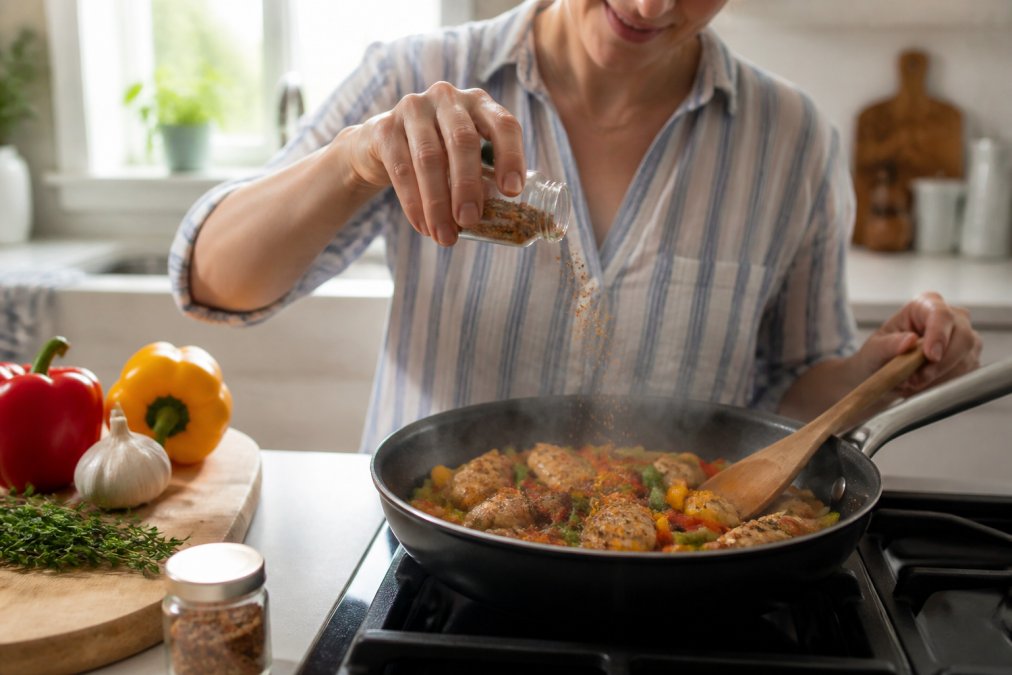
Weeknight cooking fails on timing, not skill. The fix: one protein, one vegetable, one blend, one hot pan, a 15-minute window from fridge to plate on a good night.
Build-Your-Own Blend Framework (The Part Most Guides Skip)
This framework makes any recipe work with whatever is already in your cabinet. A balanced savory blend is a ratio, not a recipe:
- 3 parts base aromatic, cumin, coriander, paprika, or garlic powder. This is the spine of the blend.
- 2 parts supporting note, onion powder, dried oregano, thyme, or black pepper. This rounds the edges.
- 1 part heat, cayenne, chipotle, chili powder, or crushed red pepper. Adjust to taste.
- 1/2 part finishing accent, citrus zest, ground ginger, cinnamon, or dried mint. This is what makes it taste 'gourmet' rather than generic.
- Salt to taste, roughly 1 part kosher salt per 6 parts total spice if you want a seasoning mix, or zero if you want to salt separately.
15-Minute Pan-Seared Protein with FriedRoastedBaked
FriedRoastedBaked is an all-purpose savory blend built for exactly this: fish, chicken, beef, pork, and vegetables. It comes in a 16-ounce jar that survives a real cooking schedule.
- Pat your protein dry and season it generously on both sides.
- Heat a heavy skillet over medium-high until a drop of water skitters.
- Add a thin film of oil, then the protein. Leave it alone for 4-5 minutes.
- Flip once, add a knob of butter, and spoon the foaming butter over the top.
- Rest for 3 minutes before slicing.
Sheet-Pan Vegetables with Bold Spice Blends
Vegetables need three things to taste gourmet: high heat, enough oil, and seasoning applied before they hit the pan. Toss chopped vegetables with oil and a heavy pinch of blend, spread them in a single layer, and roast at 425°F until the edges char.
Same Blend, Three Cooking Methods
A blend is not one-trick. The same jar behaves differently depending on how you apply heat:
- Air fryer (375°F, 12-15 minutes): blends with paprika and garlic powder bloom fast in the circulating heat. Use a light coating, the concentrated airflow can scorch sugar-forward blends.
- Slow cooker (low, 6-8 hours): warm blends with cumin, coriander, and dried chile meld into the liquid and deepen over time. Add half the blend at the start and half in the last 30 minutes so the top notes survive.
- Sous vide (140-160°F, 1-4 hours): whole spices and coarse blends infuse gently without scorching. Ground blends can taste flat after long baths, so finish with a fresh pinch in a hot pan after the bath.
How to Season Food Like a Professional Chef
Chefs season in layers, not in one dump at the end, the most transferable technique in a professional kitchen. Layering means adding seasoning at multiple points so each addition builds on the last: season the protein before it hits the heat, season the vegetables separately, then taste and adjust the finished dish.
Layering Spice Blends for Depth and Balance
Here is the sequence that works for almost any savory dish:
- Before cooking: season the protein and let it sit 10 minutes.
- During cooking: add a second pinch when you add aromatics like onion or garlic.
- At the end: taste, then add a final small pinch to brighten.
Gourmet Meal Prep Strategies That Save Your Weeknights
Meal prep works when you prep components, not finished plates. Cooked-and-reheated meals lose texture fast, but seasoned components recombine into something new every night. The Sunday ritual:
- Roast a sheet pan of vegetables with a bold blend.
- Sear two proteins with a second blend.
- Cook a pot of grains plain, so they can go sweet or savory later.
Batch Cooking with Spice Blends: A Sunday Ritual
Keep the seasoning on the components, not the finished dish, so Monday's bowl and Thursday's skillet taste different despite coming from the same afternoon of cooking.
Goodness Gracious Flavor Secrets →
| Prep Task | Time | Keeps For | Reheat Method |
|---|---|---|---|
| Roasted vegetables | 30 min | 4 days | Skillet or cold |
| Seared protein | 20 min | 3 days | Low skillet, covered |
| Cooked grains | 25 min | 5 days | Microwave with splash of water |
| Blend portioning | 5 min | 3 months | Airtight container |
Dietary-Specific Blend Modifications for Meal Prep
Small swaps can help meet a dietary need:
- Low-sodium: start with a salt-free blend and salt each portion at the table. When you batch-cook, unsalted components give you room to adjust per person instead of salting the whole pot for the highest-salt eater.
- Keto or sugar-free: check barbecue and jerk-style blends first, brown sugar, honey powder, and molasses powder are common. Swap in smoked paprika plus a pinch of ground allspice to keep the sweetness illusion without the carbs.
- Gluten-free: anti-caking agents and thickeners are the usual culprits. A blend that is just ground spices and dried herbs is almost always safe; a 'seasoning mix' with a flow agent needs a label check.
- Low-FODMAP: garlic and onion powder are the frequent offenders. Build the blend on dried oregano, thyme, basil, citrus zest, black pepper, and paprika instead, you lose the allium punch but keep the aromatic base.
- AIP (autoimmune protocol): nightshades (paprika, cayenne, chili) and seed-based spices (cumin, coriander, mustard) are typically out. Lean on ginger, turmeric, cinnamon, dried thyme, and dried rosemary for warmth and depth.
The FDA guidance on food allergen labeling is the place to check what a label must disclose, and it is worth a look if you cook for anyone with a serious allergy.
Balancing Salt and Acidity in Batch Cooking
When you cook the same base for four days, salt and acid keep it from tasting like leftovers. Salt suppresses bitterness and amplifies aroma; acid cuts richness and resets your palate. Professional kitchens under-salt the batch slightly and finish each portion with lemon, vinegar, or flaky salt.
Dietary Modifications for Gourmet Spice Blends
Most blends adapt to dietary needs with small swaps rather than full replacements.
- Lower sodium: use a salt-free blend and add salt yourself at the end, where you can taste it.
- Gluten-free: check the label for anti-caking agents and thickeners, which are the usual culprits.
- Sugar-free or keto: avoid blends built around brown sugar or honey powder, common in barbecue rubs.
- Low-FODMAP: garlic and onion powder are frequent offenders; look for blends built on herbs, citrus zest, and pepper instead.
Pairing Spice Blends with the Right Cooking Method
The cooking method decides which blend works.
- Sear and roast: savory, herbaceous blends with pepper and garlic.
- Grill: blends with paprika and a little sugar, which char nicely.
- Braise and stew: warm blends with cumin, coriander, and dried chile.
- Marinade: thin the blend with oil and acid so it can emulsify and cling.
- Finish raw: citrusy, herbaceous blends over salads, eggs, and grains.
A dry rub and a seasoning mix are not the same thing.
Common Mistakes When Cooking with Spice Blends
For anyone who wants the guesswork removed entirely, the USDA's food storage and safety guidance covers how long ground spices and prepared foods hold up, and Goodness Gracious Seasoning Blends publishes a downloadable Flavor Secrets E-Cookbook with over 40 recipes built around its blends, so you can see the layering method applied dish by dish.

Frequently Asked Questions
How do you use spice blends to make a meal taste gourmet?
Start with a quality gourmet spice blend and treat it like a finishing ingredient, not an afterthought. A blend like Fried*Roasted*Baked works on fish, chicken, beef, pork, and vegetables.
What are some quick gourmet dinner ideas for busy professionals?
Pan-sear a protein with Fried*Roasted*Baked in a hot skillet for 15 minutes, then toss sheet-pan vegetables with the same blend and roast at 425°F. For breakfast-for-dinner nights, Everything Egg Blend turns scrambles and omelettes into something worth sitting down for. Better Bacon Blend upgrades a simple bacon-and-egg sandwich into a weekend-worthy plate. Each of these uses one jar and under 30 minutes, which is why they work for weeknight cooking after a long day.
How much spice blend should I use per pound of meat?
You can always add more after tasting, but you cannot take it out, so start conservative and adjust.
What are the best ways to store spice blends for maximum flavor?
Keep gourmet spice blends in an airtight container away from heat, light, and moisture. Label each jar with the date you opened it, and smell it before using.