

Table of Contents
- Why Seasoning Blends Transform Your Meal Prep Routine
- Essential Pantry Spices for Busy Professionals
- How to Season Meal Prep Chicken for Maximum Flavor
- Low Sodium Seasoning Blends for Meal Prep Without Compromise
- DIY vs. Store-Bought Blends: Which Saves Time and Money
- Flavor Profiles for Different Cuisines in Batch Cooking
- Shelf Life and Storage Tips for Your Seasoning Collection
- Conclusion
Last Updated: August 23, 2026
Why Seasoning Blends Transform Your Meal Prep Routine
The difference between a forgettable meal and one you actually look forward to eating often comes down to seasoning. Batch-cooked plain chicken, unseasoned rice, and neutral vegetables taste flat and uninspired, making you more likely to abandon your meal prep routine halfway through the week.
Best seasoning blends for meal prep solve this problem by delivering bold, consistent flavor without requiring you to think about ingredient ratios or spend extra time in the kitchen. Instead of juggling individual spices, you reach for a single balanced blend. At Goodness Gracious Seasoning Blends, we've built our entire collection around this principle: thoughtfully sourced spice combinations that transform your batch-cooking sessions into something genuinely memorable.
The real advantage is consistency. When you use the same blend across multiple batches, your palate knows what to expect, and your cooking becomes more intuitive. That confidence is what separates people who stick with meal prep from those who give up after two weeks.
Essential Pantry Spices for Busy Professionals
Building a functional spice cabinet doesn't require owning 50 different jars. Most busy professionals can get by with: garlic powder, onion powder, paprika, cumin, oregano, black pepper, dried thyme, cayenne, and coriander. These cover everything from Mediterranean to Mexican to Asian-inspired dishes.
The mistake most people make is buying individual spices without a plan for how they'll use them. You end up with a drawer full of half-empty jars that taste stale by the time you reach for them again. Pre-blended options are practical because they're already measured and combined in proportions that work.
When selecting pantry staples, prioritize versatility over exotic variety. A high-quality paprika appears in Spanish, Hungarian, and American cooking. Cumin works equally well in Mexican, Indian, and Middle Eastern preparations. This overlap means fewer bottles while still giving you access to diverse flavor profiles.
How to Season Meal Prep Chicken for Maximum Flavor
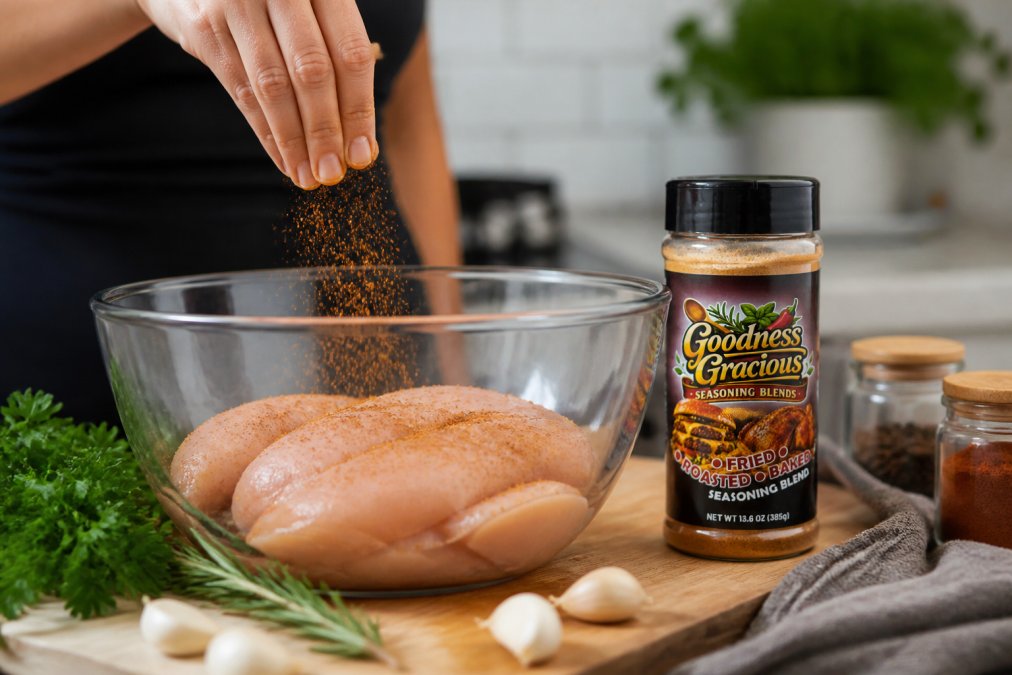
For chicken breasts, apply your seasoning blend at least 4-6 hours before cooking, ideally overnight (fsis.usda.gov). This gives the spices time to penetrate the meat. Use a dry rub approach: mix your chosen blend with a small amount of oil to create a paste, then massage it thoroughly into the chicken.
When preparing multiple proteins at once, consider using different blends for different portions. Cook half your chicken with an all-purpose savory blend like FriedRoastedBaked, and the other half with something more specialized. This gives you flexibility in how you use your prepped proteins, the same cooked chicken can become a Mediterranean bowl one day and a taco filling the next.
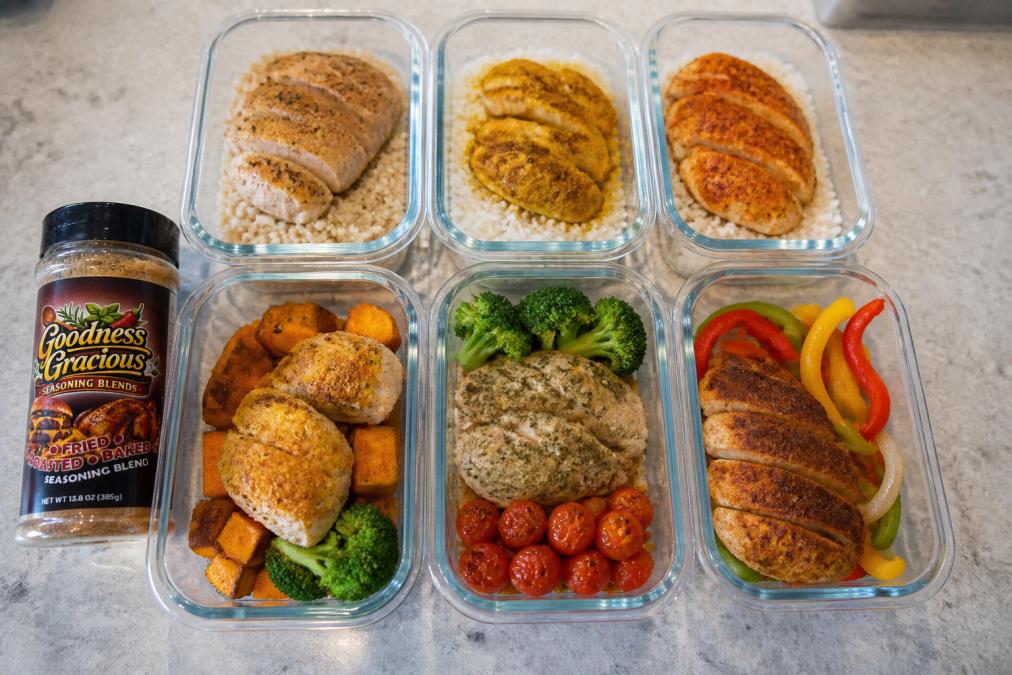
Oven-roasting at 400°F for 20-25 minutes allows the seasoning to caramelize slightly on the surface, creating deeper flavor (usda.gov). Pan-searing before finishing in the oven adds another layer through the Maillard reaction, where amino acids and sugars interact under high heat to create new flavor compounds.
Low Sodium Seasoning Blends for Meal Prep Without Compromise
If you're watching your sodium intake, the biggest challenge with pre-made seasonings is that salt is often the primary ingredient. You don't have to choose between flavorful and low-sodium, you just need to know what to look for.
Build your own low-sodium blends by combining individual spices in ratios that work. A simple Mediterranean blend might combine oregano, thyme, garlic powder, lemon zest powder, and black pepper in equal parts. A warming spice blend for roasted vegetables could mix cumin, coriander, paprika, and a tiny amount of cayenne.
When using low-sodium blends, compensate for the missing salt by incorporating acidic components. Lime juice, vinegar, or fresh lemon zest activate your taste buds similarly to salt, creating the perception of a more flavorful dish. Use umami-rich ingredients like dried mushrooms, tomato powder, or nutritional yeast to add depth without relying on sodium.
| Flavor Component | Low-Sodium Alternative | How It Works |
|---|---|---|
| Salt | Acidic components (lemon, vinegar) | Activates taste receptors similarly |
| Salt | Umami ingredients (mushrooms, tomato) | Adds savory depth and complexity |
| Salt | Aromatic spices (garlic, onion powder) | Increases perceived flavor intensity |
| Salt | Fresh herbs (cilantro, parsley) | Brightens flavors and adds freshness |
DIY vs. Store-Bought Blends: Which Saves Time and Money
Making your own blends gives you complete control over ingredient quality, sodium content, and flavor ratios. You can source whole spices, toast them yourself, and grind them fresh. The resulting blend tastes noticeably more vibrant than pre-ground alternatives.
The time cost is real. Creating a single custom blend takes 15-20 minutes if you're toasting and grinding. For five different blends, you're looking at an hour of prep work before you even start cooking your actual meals.
Store-bought blends eliminate this friction entirely. The quality of pre-made blends has improved significantly in recent years. Goodness Gracious Seasoning Blends combines thoughtfully sourced ingredients in proportions designed specifically for meal prep applications.
A quality store-bought blend at $16.99 for a 16oz container. Making your own requires buying individual spices, which have higher per-unit costs in small quantities. The practical sweet spot for most people is a hybrid approach: keep 2-3 store-bought blends on hand for your most-used flavor profiles, and make custom blends occasionally when experimenting with new cuisines.
Flavor Profiles for Different Cuisines in Batch Cooking
When batch cooking for the week, divide your proteins across 2-3 different cuisines to build diverse meals from the same base ingredients.
Mediterranean flavors rely on oregano, thyme, rosemary, garlic, and lemon or olive undertones. These work beautifully with chicken, fish, and vegetables. Season one portion Mediterranean-style and use it in grain bowls with cucumber, feta, and olives.
Mexican and Tex-Mex flavors center on cumin, chili powder, garlic, and warming spices like cinnamon in small amounts. The same chicken becomes taco filling, burrito bowls, or enchilada components.
Asian-inspired flavors vary by region. Thai emphasizes heat and brightness through chili, garlic, and lime. Chinese includes warming spices like star anise. Japanese tends toward umami through soy and mirin. Each has its own internal logic.
When batch cooking for multiple cuisines, garlic and onion powder work across all of them as safe foundations. From there, build cuisine-specific blends by adding 3-4 spices that define that flavor profile. A single batch of chicken seasoned with Mediterranean herbs can become Greek salads, Italian pasta dishes, or Middle Eastern wraps depending on what vegetables and sauces you pair with it.
Shelf Life and Storage Tips for Your Seasoning Collection
The biggest mistake people make is keeping jars on open shelves above the stove. Heat, light, and humidity cause dried spices to lose their volatile oils, the compounds responsible for flavor and aroma. A blend stored above your stove might taste noticeably duller after just 2-3 months.
The ideal storage location is a cool, dark cabinet away from direct sunlight and heat sources. Glass jars with tight-sealing lids are better than plastic. Label with the purchase date to rotate through your collection.
Ground spices and blends typically maintain good flavor for 6-12 months, depending on storage conditions. After a year, they don't become unsafe, they simply lose potency. Using your blends regularly ensures you're always cooking with fresh, flavorful seasonings.
If you buy in bulk, transfer your seasonings into smaller containers and keep the bulk supply in a cool place. This reduces how often you open the main container, slowing oxidation.
Conclusion
The best seasoning blends for meal prep are ones you'll actually use consistently. Whether you go the DIY route or reach for store-bought options, the goal is the same: transform batch-cooked proteins and vegetables into meals you genuinely want to eat.
Goodness Gracious Seasoning Blends offers thoughtfully sourced spice combinations specifically designed for this purpose. Their blends like FriedRoastedBaked ($16.99) work across multiple proteins and cuisines, while their Everything Egg Blend ($16.99) and Better Bacon Blend ($16.99) handle breakfast meal prep with bold flavor. If you're unsure how to use their blends effectively, their downloadable Flavor Secrets E-Cookbook ($9.99) includes over 40 recipes showing exactly how to apply each blend to different proteins and preparations.

Start with one or two blends that match your most-cooked proteins, then expand your collection as you discover what actually gets used. The ritual of seasoning your meal prep well is what turns the routine into something you look forward to, and that consistency is what makes meal prep sustainable long-term.
Frequently Asked Questions
Q: What are the most versatile seasoning blends for meal prep?
A: All-purpose blends like Fried*Roasted*Baked work across proteins and vegetables, making them ideal for batch cooking. Look for blends with balanced heat levels and aromatic components that complement multiple cuisines. The key is choosing blends with flavor profiles that don't overpower lean proteins or acidic components in your meals. Versatile blends typically include savory herbs, warming spices, and herbaceous notes that enhance rather than dominate.
Q: How do you keep meal prep food from tasting bland throughout the week?
A: Apply seasoning strategically during cooking rather than at the end, allowing flavors to develop and penetrate proteins during batch cooking. Store cooked portions in airtight containers to preserve aromatics and prevent flavor loss. Consider using fresh herbs as a finishing touch when serving, which adds brightness to meals stored for several days. Seasoning blends with higher pungent spice content maintain their impact better across the week than single-note seasonings.
Q: Should I use pre-mixed seasoning blends or individual spices for meal prep?
A: Pre-mixed blends save time during bulk preparation and ensure consistent seasoning ratios across large batches. They're especially valuable for busy professionals who prioritize meal prep efficiency over customization. Individual spices offer flexibility but require more planning and measuring. Most home cooks find that quality pre-mixed blends strike the best balance between flavor enhancement and convenience for weekly meal prep routines.
Q: How long do seasoning blends stay fresh in the pantry?
A: Most dried spice blends maintain optimal shelf life for 6-12 months when stored in cool, dry conditions away from direct sunlight. Airtight containers preserve flavor profiles and prevent moisture absorption. Blends with higher dried spice content generally have longer shelf life than those with fresh herbs. Store your seasoning collection in a dedicated spice cabinet rather than above the stove, where heat accelerates flavor degradation.
Q: What are the best low sodium seasoning options for healthy meal prep?
A: Low sodium seasoning blends for meal prep rely on culinary herbs, warming spices, and umami-rich components instead of salt. Look for blends labeled as reduced-sodium or salt-free that use garlic, onion powder, and aromatic herbs to build palatability. Acidic components like citrus or vinegar powder enhance flavor without adding sodium. These blends work particularly well with lean proteins where sodium content matters for wellness-conscious meal planning.
Ready to elevate your meal prep routine? Explore Goodness Gracious Seasoning Blends and discover how thoughtfully crafted spice combinations can unlock a world of flavor in every batch you cook. [EXTERNAL_LINK: Download their free Flavor Secrets E-Cookbook | goodnessgraciousblends.com] to see recipes and applications for each blend.
This article was written using GrandRanker