

Table of Contents
- Why Meals Become Bland and How to Recognize It
- How to Season Food Like a Chef
- Using Acid to Improve Flavor
- Essential Spice Blends for Beginners
- Quick Fixes for Bland Dishes Already on Your Plate
- Moist Cooking Methods That Lock in Flavor
- Batch Cooking for Consistent, Flavorful Meals
- Conclusion
Last Updated: August 22, 2026
Why Meals Become Bland and How to Recognize It
A bland meal isn't a failure of ingredients, it's a failure of balance. Most home cooks understand this intuitively but struggle to articulate why a dish tastes flat. The truth is, bland food usually lacks one or more of three elements: seasoning depth, acidic brightness, or textural contrast. When you learn to recognize these gaps, fixing bland meals becomes straightforward.
Bland food typically signals an imbalance in your flavor profile. You might have salt but no acid. You might have fat but no brightness. You might have heat but no complexity. The good news: once you understand what's missing, adding it back takes minutes, not hours.
At Goodness Gracious Seasoning Blends, we've observed that home cooks sometimes think they have a seasoning problem when they actually have a technique problem. They owned good spices but didn't know how to layer them, when to add acid, or how to build flavor through cooking method. This guide covers exactly how to recognize these gaps and fix them fast.

The first step is learning to taste intentionally. When you take a bite of something bland, pause and ask: Is this missing salt? Missing brightness? Missing depth? Missing texture? The answer tells you exactly what to reach for next.
How to Season Food Like a Chef
The difference between home cooking and restaurant cooking often comes down to seasoning strategy, not ingredients. Chefs season in layers, tasting between additions, adjusting for balance rather than following a recipe's exact measurements. This approach to seasoning transforms ordinary dishes into memorable ones.
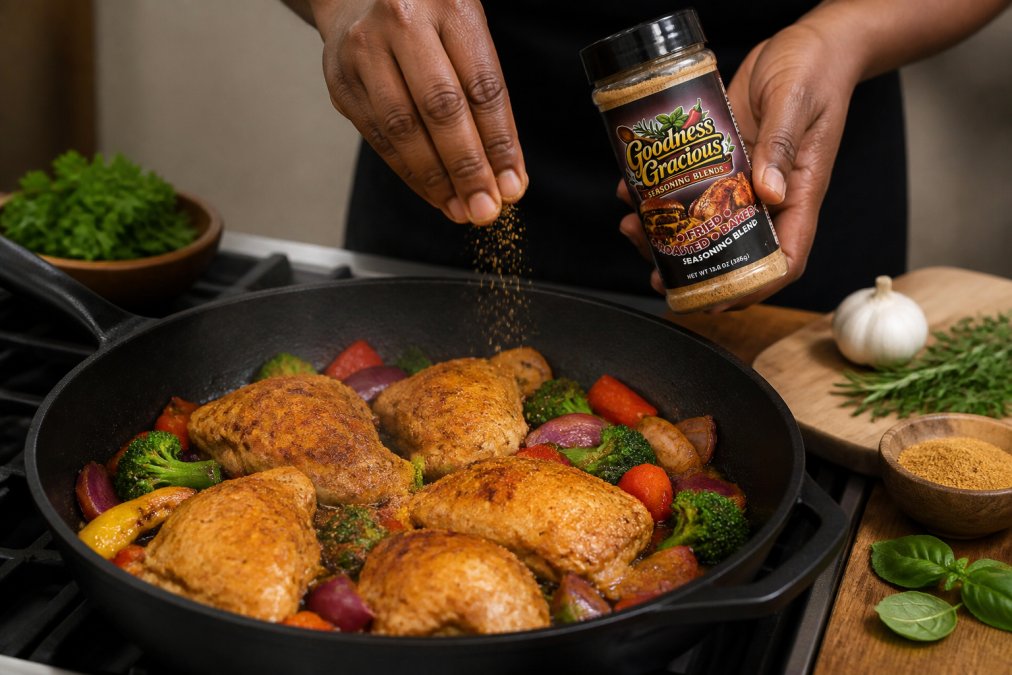
Professional cooks season at multiple stages: when proteins hit the pan, when aromatics soften, when liquids reduce, and right before serving. Each addition builds complexity. Home cooks often dump all their seasoning at once, then wonder why the result tastes one-dimensional.
Start with salt early. Salt doesn't just add saltiness, it amplifies other flavors and helps proteins retain moisture (peer-reviewed research). Season your protein before cooking. Season your vegetables as they hit the pan. Season your sauce as it reduces. This layering approach creates depth that a single final seasoning cannot match.
The second principle is tasting constantly. Professional kitchens have a culture of tasting. You taste after seasoning, taste after adding acid, taste after a reduction. Each taste informs the next adjustment. Most home cooks season once and hope for the best. Instead, taste after each meaningful change.
Consider using a seasoning blend like Goodness Gracious FriedRoastedBaked as your base layer. A thoughtfully crafted blend handles the foundational seasoning work, letting you focus on balancing acid and building texture. This saves time while ensuring consistent flavor depth across your cooking.
The third principle is understanding when to season. Early seasoning (salt on proteins, seasoning in aromatics) builds foundation. Mid-cooking seasoning (adjusting as liquids reduce) maintains balance. Final seasoning (fresh herbs, finishing salt, acid) adds brightness and prevents the dish from tasting flat or one-note.
Using Acid to Improve Flavor
Acid is the secret weapon that transforms bland meals into vibrant ones. It's not about adding a sour taste, it's about adding brightness, complexity, and what food scientists call "acidic balance." When a dish tastes flat despite proper seasoning, acid is usually the missing piece.
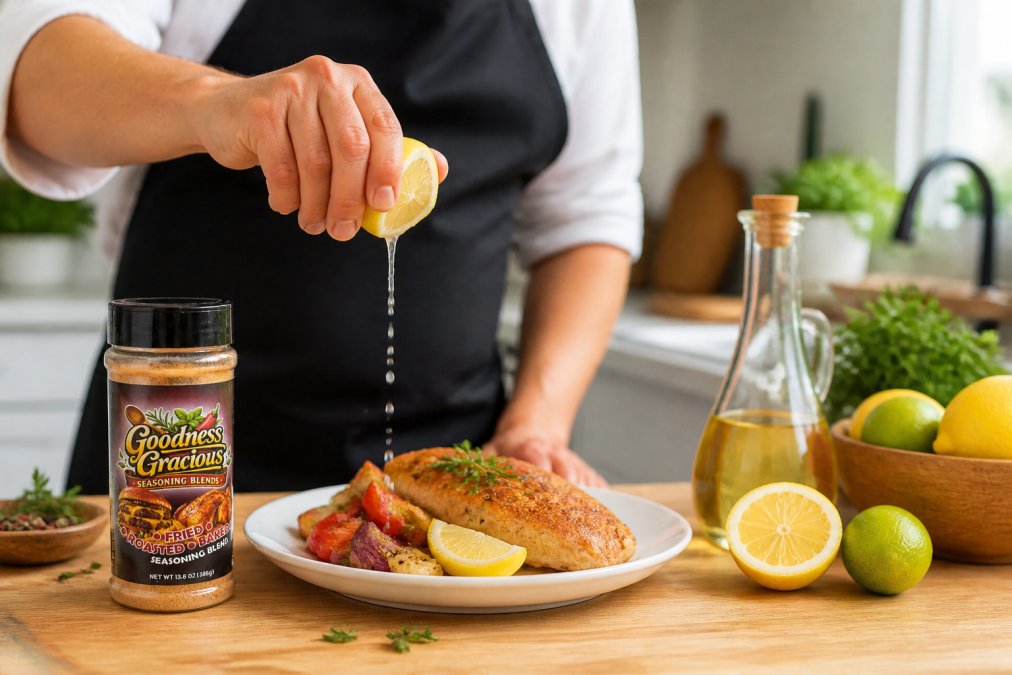
Acidic balance refers to the interplay between salt, fat, seasoning, and acid in creating a complete flavor profile (ift.org). Without acid, even well-seasoned food tastes muted. A squeeze of lemon juice, a splash of vinegar, or a dash of citrus zest wakes up the palate and lets other flavors shine.
Common acids for cooking include:
- Lemon and lime juice: Bright, clean, versatile. Works with nearly every protein and vegetable.
- Vinegar: Wine vinegar, apple cider vinegar, rice vinegar each bring different character. Vinegar adds depth beyond simple brightness.
- Tomato products: Acidic and savory. Tomato paste, canned tomatoes, or fresh tomatoes add body along with brightness.
- Wine: Red or white wine reduces and concentrates, adding acidity and complexity to sauces and braises.
- Buttermilk or yogurt: Tangy, creamy acid that works in dressings, marinades, and sauces.
The timing of acid matters. Add acid too early and it can cook off or lose its brightness. Add it at the end and it sits on top of the dish rather than integrating. For most dishes, add acid in two stages: a small amount mid-cooking to build complexity, then a final squeeze or splash right before serving to brighten the finished dish.
Many cooks fear adding acid because they worry about making food taste sour. Start with small amounts, a teaspoon of vinegar, a squeeze of half a lemon, then taste and adjust. Acid should enhance other flavors, not announce itself.
Essential Spice Blends for Beginners
Building a spice cabinet can feel overwhelming. Specialty spice shops stock hundreds of options. The smarter approach: start with a few versatile blends that work across multiple cooking styles, then expand from there.
A foundational blend should be savory, balanced, and work with proteins and vegetables alike. Goodness Gracious FriedRoastedBaked is designed exactly for this purpose, it's an all-purpose blend that handles the seasoning work for fish, chicken, beef, pork, and roasted vegetables without requiring additional spices.
Beyond an all-purpose blend, consider adding:
- A breakfast blend: Something with savory depth that transforms eggs, bacon, and breakfast vegetables. Goodness Gracious Everything Egg Blend handles this role, turning standard eggs into something memorable.
- A bacon-forward blend: If you cook bacon regularly, a dedicated blend amplifies its natural richness. Goodness Gracious Better Bacon Blend is designed to enhance bacon's best qualities while adding complexity.
- A heat-forward blend: Something with gentle spice for when you want warmth without overwhelming heat.
The key to using blends effectively is understanding their base flavor profile. An all-purpose savory blend works differently than a breakfast blend. A bacon-forward blend shouldn't go on fish. Start with blends designed for specific purposes, use them consistently, and learn their character before experimenting with substitutions.
Many home cooks ask whether pre-made blends are different from buying individual spices and mixing them at home. The answer: quality matters more than the source. A thoughtfully sourced, carefully balanced blend from a specialty producer often outperforms randomly assembled individual spices. Goodness Gracious blends are crafted with specific flavor goals, not generic proportions.
Quick Fixes for Bland Dishes Already on Your Plate
Sometimes you taste a finished dish and realize it's bland. You don't have time to start over. Here's how to fix bland meals that are already cooked.
For proteins (chicken, fish, beef, pork): Finish with acid and a spice blend. A squeeze of lemon juice plus a pinch of finishing salt transforms a bland chicken breast. If you have a quality blend on hand, a light dusting adds depth without overpowering.
For vegetables: Acid works best here. A splash of vinegar over roasted vegetables brightens them instantly. If vegetables are steamed and bland, drizzle with oil, add acid, and season aggressively with a savory blend.
For sauces and gravies: Taste first. If it's underseasoned, add salt gradually. If it tastes flat, add acid, a splash of vinegar, a squeeze of lemon, or a splash of wine. If it tastes one-dimensional, add a complementary spice blend that echoes the dish's main flavor.
For soups and stews: These are forgiving. Taste and adjust salt first. Then add acid. If the broth still tastes thin, add a spice blend that complements the main ingredients. A moist cooking method like braising or stewing concentrates flavors, so seasoning adjustments have room to work.
For rice and grains: Plain rice tastes bland by design. Finish with butter or oil, salt, acid, and fresh herbs or a spice blend. Even a simple grain becomes memorable with proper finishing.
The principle here: acid and seasoning work together. Add acid first to brighten, then taste and adjust seasoning. This two-step approach prevents over-salting while ensuring the dish tastes complete.
Moist Cooking Methods That Lock in Flavor
The cooking method you choose determines how flavor develops. Dry cooking methods like roasting or pan-searing create crust and concentration. Moist cooking methods like braising, steaming, and poaching preserve moisture and allow flavors to infuse gently.
Moist cooking methods work best when you understand how they build flavor. Braising, cooking slowly in liquid, allows flavors to meld and intensify (nal.usda.gov). The cooking liquid absorbs flavor from the protein and vegetables, then reduces and concentrates. This is why braised dishes taste richer than simply boiled ones.
Steaming preserves delicate flavors but requires careful seasoning. Steamed vegetables taste bland unless you season the cooking liquid itself. Add salt, aromatics, and spices to the water before steaming. This infuses the food during cooking rather than requiring heavy seasoning afterward.
Poaching is similar. Poach chicken in broth seasoned with aromatics, not plain water. Poach fish in court-bouillon (seasoned broth) not plain liquid. The cooking liquid becomes part of the flavor development.
Braising is perhaps the most forgiving moist method for beginners. Brown your protein and aromatics first to build flavor foundation. Add seasoning and acid to the braising liquid. Cook low and slow. The extended time allows flavors to integrate and the liquid to reduce and concentrate. Braised dishes taste deeper and more complex than quick-cooked ones.
The key to moist cooking: season your liquid, not just your protein. The food cooks in the seasoning, absorbing flavor throughout. This approach prevents the dry, underseasoned results that plague many home cooks.
Batch Cooking for Consistent, Flavorful Meals
Batch cooking, preparing multiple servings at once, offers a practical advantage: consistency. When you cook once and portion multiple times, you can focus on getting the seasoning and flavor exactly right, then replicate it.
Start with a simple base. Cook a large batch of white rice or mashed potatoes seasoned with salt, butter, and a quality spice blend. This foundation takes 30 minutes and provides the base for multiple meals throughout the week.
Next, prepare proteins and vegetables. Roast a sheet pan of chicken thighs with vegetables, seasoning them with a versatile blend like Goodness Gracious FriedRoastedBaked. Braise a pot of beef or pork in seasoned liquid. Prepare steamed vegetables seasoned at cooking time, not after.

The advantage: you've done the seasoning work once. Each meal tastes intentional rather than hastily assembled. You can portion components differently throughout the week, the same braised meat might become tacos one night, rice bowls another night, and soup another night.
For batch cooking to work, season properly at each stage. Don't underseason thinking you'll adjust later. Season your cooking liquid. Season your aromatics. Season your proteins. This approach ensures every component tastes complete on its own, making assembly throughout the week seamless.
Many busy professionals worry that batch cooking means eating the same meal repeatedly. The reality: with properly seasoned components, you can create variety by combining them differently. The same braised chicken, rice, and vegetables become completely different meals depending on what acid and fresh herbs you add at serving time.
Bland meals frustrate home cooks because the solution feels mysterious. It's not. Most bland food lacks proper seasoning technique, acidic balance, or moist cooking methods that allow flavors to develop. Once you understand these principles, layering seasoning, adding acid strategically, choosing cooking methods that build flavor, you control the outcome.
Start with Goodness Gracious Seasoning Blends to handle foundational seasoning work. Our FriedRoastedBaked blend works across proteins and vegetables, removing guesswork from base seasoning. Our Goodness Gracious Flavor Secrets E-Cookbook provides over 40 recipes showing exactly how to use our blends in real dishes. Download it today and transform your everyday cooking into something memorable.

Frequently Asked Questions
What's the fastest way to fix bland meals that are already cooked?
Add acid first: a squeeze of fresh lemon juice, splash of vinegar, or dash of hot sauce brightens flavors instantly. Layer seasoning next, start with salt to enhance natural tastes, then add a quality spice blend like Fried*Roasted*Baked to build depth. Finish with fresh aromatics like chopped herbs or a sprinkle of garlic. This three-step approach works on almost any bland dish in under two minutes.
How do I season food like a chef without overdoing it?
Chefs build flavor in layers throughout cooking, not all at once. Start with a light pinch of salt early to draw out natural flavors. Add spices halfway through cooking so they infuse rather than sit on top. Taste frequently and adjust. Using a curated spice blend can help achieve balanced flavor combinations, preventing the guesswork of mixing individual spices and risking imbalance.
Which spice blends should every home cook have on hand?
Start with three essentials: a savory all-purpose blend for proteins and vegetables (like Fried*Roasted*Baked), a breakfast-focused blend for eggs and morning dishes (like Everything Egg Blend), and a specialty blend for specific proteins. These cover a wide range of home cooking. Curated blends save time and can provide balanced flavor profiles.
Can I fix a bland meal if I'm sensitive to spicy food?
Yes. Skip hot peppers and focus on umami and acid instead. Use lemon juice, vinegar, or a touch of soy sauce to brighten the dish. Layer in savory spice blends without heat, look for blends heavy on herbs, garlic, and aromatic spices. Fresh herbs like basil or parsley add mouthfeel and complexity without any heat. Umami-rich ingredients like parmesan or mushrooms also deepen flavor safely for sensitive palates.
This article was written using GrandRanker