

Table of Contents
- Spice Blends vs Individual Spices: The Real Difference
- Cost-Per-Use Analysis: Are Blends Worth the Price?
- Flavor Profile Control vs. Curated Convenience
- Sodium and Additives: What's Hiding in Store-Bought Blends?
- How to Layer Flavors in Cooking Like a Pro
- The Benefits of Homemade Spice Blends
- Best Seasoning Blends for Home Cooks Who Want Both
- Conclusion: Build Your Spice Cabinet Strategy
- Frequently Asked Questions
Last Updated: September 9, 2026
Spice Blends vs Individual Spices: The Real Difference
The debate between spice blends vs individual spices often comes down to a single question: do you want control or convenience? A spice blend is a pre-portioned combination of ground spices, herbs, and seasonings designed to deliver a complete flavor profile in one shake, while individual spices are single-origin ingredients like cumin, paprika, or oregano that you combine yourself. Most kitchens benefit from both.
The real distinction isn't quality, it's strategy. Individual spices give you total command over every element of a dish, from heat to aromatics. A thoughtfully crafted blend collapses the gap between inspiration and a finished meal, which matters on a weeknight. Below, we break down the cost realities, flavor science, and hidden additives so you can decide which approach deserves space in your spice cabinet.
Cost-Per-Use Analysis: Are Blends Worth the Price?
The common wisdom is that individual spices are cheaper, but that logic collapses under a true cost-per-use analysis. The issue isn't the price on the jar; it's the price per teaspoon you actually cook with before the flavor degrades.
The Ground Spice Clock Starts Ticking at the Mill.
A jar of pre-ground cumin loses its volatile oils, the source of its aroma and taste, rapidly after being milled. While it won't spoil, its flavor potency can diminish noticeably within six to twelve months (the FDA). A $6 jar of ground coriander used once and left for a year is $6 on a flavor ghost; a $16.99 all-purpose blend used twice a week for six months costs pennies per meal.
A Concrete Cost Breakdown:
Let's compare a hypothetical scenario for a home cook who makes chili and roasted chicken weekly.
- The Individual Route: You buy jars of chili powder ($4.50), cumin ($5.00), oregano ($4.00), garlic powder ($4.50), and onion powder ($4.50) to make your own mix. Your initial outlay is $22.50. If you use 1 teaspoon of each per week, you'll use them up in about 6-8 months, but you'll likely lose some to staleness. The cost per use is roughly $0.45 per meal.
- The Blend Route: You buy one versatile, high-quality savory blend for $16.99. You use 2 teaspoons per meal for the same two weekly recipes. The jar lasts roughly 4-5 months. The cost per use is approximately $0.21 per meal.
The 'Single-Recipe' Trap:
The real budget killer isn't the price per jar; it's the jar that only serves one purpose. A specialized pumpkin pie spice used once a year is a poor investment. The most economical choice is a blend with a broad application profile, one that works across proteins, vegetables, and starches.
The Whole-Spice Exception:
There is one area where individual spices win on cost: whole spices. Whole cumin, coriander, and mustard seeds retain their essential oils for years, not months. If you have a spice grinder, buying whole spices for your rarely used flavors is the most economical strategy. You grind only what you need, preserving the rest for future use.
Flavor Profile Control vs. Curated Convenience
Cooking with individual spices hands you the steering wheel. You control the ingredient ratio, the heat, and the layering of flavors from the ground up, essential when developing signature dishes or working around a dietary restriction. If you enjoy the ritual of building a dry rub from scratch, individual spices offer an unmatched creative outlet.
Blends, by contrast, deliver curated convenience. A well-made blend is built by someone who has balanced the umami, aromatics, and seasoning. Professional blenders understand how spices interact chemically and adjust ratios so no single note dominates.
The honest trade-off is time and predictability. Individual spices require you to know your ratios and trust your palate. A quality blend removes the guesswork, giving consistent results even when you're too tired to think.
Sodium and Additives: What's Hiding in Store-Bought Blends?
To keep costs down and extend shelf life, commercial producers often add salt as a cheap filler, along with anti-caking agents and preservatives (the FDA). If you're watching sodium, a "seasoning" that is half salt is a poor substitute for real spices.
Reading the label changes everything. Many pre-mixed products list salt, sugar, or silicon dioxide before the actual spices, which tells you exactly where the manufacturer's priorities lie. A high-quality spice blend should list spices and herbs as the primary ingredients, with minimal additives if any.
This doesn't mean every commercial blend is suspect. Smaller producers who source thoughtfully and blend in small batches use salt as a flavor enhancer rather than a filler.
How to Layer Flavors in Cooking Like a Pro
Layering flavors is the difference between a good meal and a memorable one, but the technique isn't just about timing, it's about chemistry. Understanding how the form of your spice interacts with your cooking method is important.
The Chemistry of Flavor: Oil-Soluble vs. Water-Soluble
Many of the most potent flavor compounds in spices are not water-soluble; they are fat-soluble (peer-reviewed research). Adding a dry spice directly to a watery liquid (like broth or tomato sauce) will not fully release its flavor potential, the compounds need a fat carrier to dissolve into and distribute throughout the dish.
- Fat-Soluble Compounds: These are the heavy hitters, the warmth of cinnamon, the earthiness of cumin, the heat of chili peppers. They require heat and fat to unlock their full aromatic potential.
- Water-Soluble Compounds: These are the brighter, more volatile notes that hit your nose immediately. Think of the sharpness of fresh ginger or the citrusy top notes of coriander.
The 'Bloom' vs. 'Add' Mechanism:
This chemistry dictates your technique. When you 'bloom' spices in hot oil, you use the fat to extract the fat-soluble compounds, creating a flavor-infused oil that coats every other ingredient. This 30-60 second process is non-negotiable for building deep, foundational flavor in curries, chili, or dry rubs.
- Blooming a Blend: A pre-mixed blend is a complete flavor system. Blooming it in oil activates all its components simultaneously, creating a complex, cohesive flavor base. The risk is that you can't control the intensity of a single component (e.g., you want more heat but not more garlic).
- Blooming Individuals: This is where you have ultimate control. You can bloom the slow-to-release spices (like cumin and coriander) first, then add the more delicate ones (like chili flakes) later to preserve their brightness. This staggered blooming creates a layered flavor profile.
The 'Add Late' Strategy for Blends:
A blend's greatest strength, its balance, can also be a limitation. Add a complex blend at the end of cooking and you only get the water-soluble, volatile top notes; the deeper, fat-soluble flavors never develop. For this reason, a quality blend is best used in two stages:
- Bloom half the blend in oil at the start to build the flavor foundation.
- Finish with the other half just before serving to add a fresh, aromatic top note.
This 'split addition' technique gives you the convenience of a blend.
A Practical Guide to Timing:
- Start (Bloom): Heat oil, add your blend or hardier individual spices (cumin, mustard seeds, peppercorns). Cook for 30-60 seconds until fragrant.
- Middle (Build): Add aromatics (onion, garlic) and let them soften in the spiced oil.
- End (Finish): Add delicate herbs (cilantro, parsley) or a final pinch of a bright, acidic spice (like sumac) to lift the dish.
The Benefits of Homemade Spice Blends
Making your own spice blends at home is one of the most satisfying upgrades you can make to your cooking routine. The benefits of homemade spice blends extend beyond cost savings into flavor control, dietary customization, and creative pleasure. When you blend your own, you choose the quality of every component and adjust ratios to your exact palate.
Dietary restrictions become simple. Need a salt-free dry rub for a low-sodium diet? You control every granule. Avoiding garlic or onion for a FODMAP-sensitive household? You simply leave them out. This level of customization is nearly impossible with commercial pre-mixed products, which is why so many wellness-conscious cooks make their own.
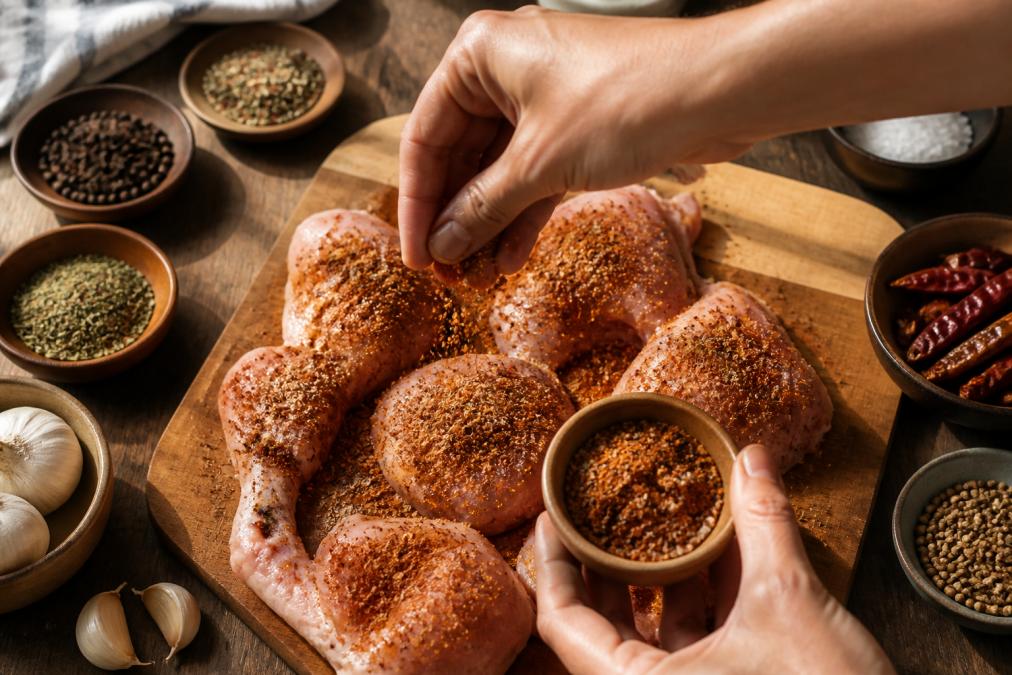
Homemade blends also stay fresher because you grind them in small quantities. Ground spices lose their essential oils quickly, so a blend made today and used within a month delivers far more flavor than a jar that sat on a store shelf for a year. Start with a base formula and adjust:
- Savory base: 2 parts paprika, 1 part garlic powder, 1 part onion powder, 1/2 part black pepper
- Warm base: 2 parts cumin, 1 part coriander, 1/2 part cinnamon, 1/4 part cayenne
- Store properly: Keep blends in airtight containers away from light and heat
Best Seasoning Blends for Home Cooks Who Want Both
You don't have to choose sides. The best seasoning blends for home cooks who want both convenience and control are versatile, all-purpose mixes that serve as a foundation rather than a one-note flavor. A thoughtfully crafted blend acts like a trusted sous-chef, delivering consistent seasoning so you can focus on technique and fresh ingredients.
Goodness Gracious Seasoning Blends builds its collection around this philosophy. The FriedRoastedBaked seasoning ($16.99) is a savory all-purpose blend of herbs and spices that transforms fish, chicken, beef, pork, and vegetables, making it the kind of pantry staple you'll reach for nightly. For breakfast lovers, the Everything Egg Blend ($16.99) turns scrambles, omelettes, and egg sandwiches into a signature dish, while the Better Bacon Blend ($16.99) takes a breakfast classic to new heights.


What sets these apart is the sourcing and the art of the blend itself. Each combination is thoughtfully crafted so the spices work in harmony, and the bold packaging reflects the vibrant flavors inside. If you're unsure how to use them, the Goodness Gracious Flavor Secrets E-Cookbook ($9.99) includes over 40 recipes showing exactly how each blend performs, and it's downloadable so you skip shipping costs.
| Approach | Best For | Key Trade-Off |
|---|---|---|
| Individual spices | Recipe development, dietary control | Requires time and palate experience |
| Homemade blends | Customization, freshness | Short shelf life, batch effort |
| Quality commercial blends | Weeknight convenience, consistency | Less control over exact ratios |
Conclusion: Build Your Spice Cabinet Strategy
Treat spice blends vs individual spices as complementary tools. Keep whole and single ground spices on hand for dishes where you want precise control, and stock a few versatile, high-quality blends for nights when you need reliable flavor without the thinking. Stocking both makes every cooking occasion feel like a creative opportunity rather than a chore.
At Goodness Gracious Seasoning Blends, we craft our spice blends to earn a permanent spot in that cabinet, delivering bold, artfully balanced flavor that turns everyday meals into memorable occasions. Explore our collection of thoughtfully sourced seasoning blends and discover how easy gourmet cooking can be.
Frequently Asked Questions
Is it cheaper to make your own spice blends?
Not always. Buying every individual spice for one recipe costs more upfront, especially for blends with 10 or more ingredients. A 16oz jar of a quality blend like Goodness Gracious Fried*Roasted*Baked costs $16.99. The savings from homemade blends only appear if you cook with those individual spices regularly and buy them in bulk.
What is the difference between a spice blend and a seasoning mix?
A spice blend combines ground or whole spices, like cumin, coriander, and paprika. A seasoning mix typically adds salt, sugar, dried herbs, and sometimes anti-caking agents. This matters for sodium content and flavor intensity. Many store-bought seasoning mixes use salt as the first ingredient to cut costs. Quality blends like Better Bacon Blend or Everything Egg Blend focus on the spice ratio first, so you control the salt you add at the table or in the pan.
Can you substitute individual spices for a pre-made blend?
Yes, but you need the exact ingredient ratio to match the flavor profile. A blend like Fried*Roasted*Baked balances savory herbs and spices in proportions developed through testing. Recreating that at home means buying each spice, measuring precisely, and storing the extras. For a single recipe, substitution works. For regular cooking, a pre-made blend can save time. The best seasoning blends for home cooks solve the ratio problem so you get the same taste every time.
How do you properly store individual spices to maintain freshness?
Store all spices, whole or ground, in airtight glass jars away from heat, light, and moisture. Keep them in a cool, dark cabinet rather than above the stove. Ground spices stay fresh for about 6 months to 1 year, while whole spices last up to 3 years. Oxidation and exposure to humidity dull flavor intensity quickly. Buying blends in larger 16oz containers reduces the number of jars to manage and means you replace them less often.