

Table of Contents
- Artisanal Spice Blends vs. Store-Bought: The Real Cost Difference
- Why Flavor Potency and Aroma Are Better in Small Batches
- How to Use Artisanal Spice Blends Without Overcomplicating Dinner
- Shelf Life and Storage: Are You Throwing Money Away?
- What Makes the Best Seasoning Blends for Home Cooks
- Our Take: The Verdict on Artisanal Blends
- Conclusion
- Frequently Asked Questions
Last Updated: September 6, 2026
Artisanal Spice Blends vs. Store-Bought: The Real Cost Difference
The question of whether artisanal spice blends are worth it usually comes down to price per jar. A standard grocery store blend costs a few dollars, while a small-batch tin can run $10 to $18 (usda.gov). That comparison misses the actual unit of value: cost per serving, not cost per container.
Most commercial spice blends rely on fillers like salt, sugar, and silicon dioxide to stretch volume (the FDA). Artisanal blends use whole spices and herbs as the base, so a teaspoon delivers concentrated flavor. Since you use roughly half the amount of a premium blend for the same taste, the per-meal cost narrows considerably.
Here is a practical cost-per-serving framework for comparing any two blends:
| Comparison Factor | Store-Bought Blend | Artisanal Blend |
|---|---|---|
| Typical jar size | 2-3 oz | 4-16 oz |
| Filler content | High (salt, sugar, anti-caking agents) | Low to none |
| Teaspoons per serving | 1-2 tsp | 0.5-1 tsp |
| Flavor compounds | Reduced by age and processing | Preserved by small-batch grinding |
| Cost per finished meal | Higher than expected | Competitive when portioned correctly |
At Goodness Gracious Seasoning Blends, our 16 oz jars are priced at $16.99. The real cost difference is what each teaspoon actually does in your pan.
Why Flavor Potency and Aroma Are Better in Small Batches
Spice flavor lives in volatile oils, the aromatic compounds that give cumin, coriander, and peppercorns their signature character. These oils begin evaporating the moment a seed is cracked or ground (peer-reviewed research). A large commercial operation may grind, package, and warehouse spices for months before the jar reaches a shelf, meaning much of the aroma has already escaped by the time you open the lid.
Small-batch production shortens that timeline dramatically. When spices are ground in limited quantities and packaged quickly, the volatile oils stay locked in the jar. The difference is obvious on the nose: a freshly ground blend smells vivid and sharp, while an older one smells flat and dusty. That aroma is the flavor you will taste in your food.
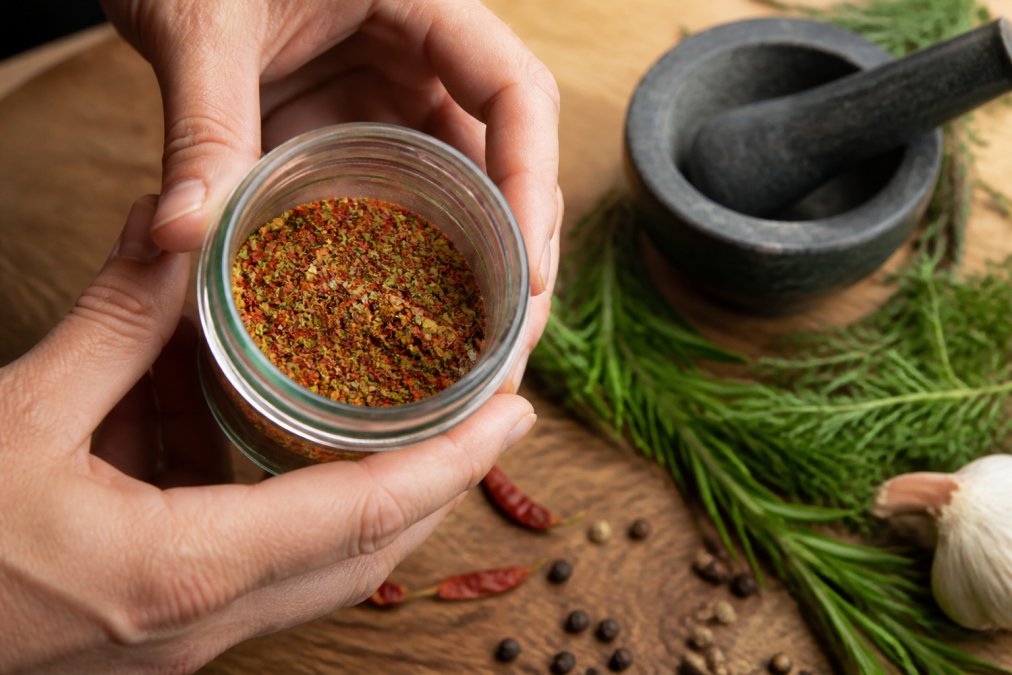
Fresher oils also mean the blend performs better in cooking, releasing flavor steadily rather than fading halfway through a dish. Home cooks notice this most in dry rubs and marinades, where a potent blend penetrates meat rather than just coating the surface.
How to Use Artisanal Spice Blends Without Overcomplicating Dinner
The biggest fear with premium seasoning is that it will sit unused in the pantry, too precious to waste on a Tuesday meal. The solution is to treat artisanal spice blends as a substitution, not a new cooking project. If you already season chicken with paprika and garlic powder, swap in an all-purpose savory blend and change nothing else.
A versatile blend should handle at least three cooking methods without a recipe rewrite. Our FriedRoastedBaked blend works as a dry rub for grilled fish, a coating for roasted vegetables, and a finishing salt for pan-seared steak. One jar replaces several single-purpose seasonings, simplifying your spice cabinet.

For cooks who want guidance, a downloadable cookbook with 40 recipes removes the guesswork. The key is to start with one blend and one familiar dish, then expand as you learn how the flavor profile behaves under heat.
Shelf Life and Storage: Are You Throwing Money Away?
The worth of an artisanal blend is not just in the ingredients, it's in the engineering that keeps them alive. Ground spices degrade through oxidation, light exposure, and moisture, but the rate of degradation is directly controlled by packaging technology.
The Chemistry of Fading
The volatile oils that carry flavor are unsaturated hydrocarbons. When exposed to oxygen, they oxidize into compounds that taste flat or rancid. Light, particularly UV, accelerates this process, and moisture triggers enzymatic reactions that further degrade potency. A blend in a clear plastic jar on a countertop can lose significant aroma within weeks, while the same blend in a sealed, opaque container can retain its character for months.
The Packaging Technology Gap
Mass-market spice jars are often designed for shelf appeal, not preservation. Clear glass or plastic allows light to penetrate, and lids may not create a true airtight seal. Artisanal producers who invest in packaging technology are protecting your purchase. Look for these features when evaluating a premium blend:
- Vacuum-sealed lids: These remove oxygen from the headspace, dramatically slowing oxidation. A jar that 'pops' when opened is a sign of a good seal.
- UV-protective glass: Amber or cobalt blue glass blocks the specific light wavelengths that degrade volatile oils. Clear glass, while attractive, offers no such protection.
- Desiccant packets: Some high-end producers include a food-grade desiccant to absorb moisture, preventing clumping and enzymatic breakdown.
- Whole-spice packaging: Blends sold as whole spices that you grind yourself have a vastly longer shelf life because the volatile oils are protected inside the seed until the moment of grinding.
The Practical Math
Consider a $16.99 artisanal blend in a UV-protective, vacuum-sealed container. If it maintains peak potency for 12 months, the cost of lost flavor is negligible. A $5 grocery store blend in a clear plastic jar might lose half its aroma within 3 months, meaning you are paying for flavor that has already escaped. The 'worth' of the premium product is in the technology that ensures you actually consume that quality.
Storage Best Practices That Extend Value
Even the best packaging cannot overcome poor storage habits. The enemy is a warm, bright kitchen counter. The ideal environment is a cool, dark cabinet, ideally below 70°F. Do not store spices above the stove or near the dishwasher. Keep the lid tightly sealed after each use, and use a dry spoon to avoid introducing moisture. If you buy in bulk, transfer a small portion to a daily-use jar and keep the main supply in a sealed bag in the freezer, cold storage dramatically slows oxidation.
The Unique Angle: Packaging as a Value Metric
When comparing a $10 artisanal tin to a $3 grocery jar, do not just compare the spices, compare the containers. A producer who invests in vacuum sealing and UV-protective glass understands the science of flavor preservation. That investment is part of what you are paying for, and it is a concrete factor in whether the blend delivers value by the time it reaches your pan. A cheap jar that loses half its potency before you finish it is not a bargain; it is a waste of money.
What Makes the Best Seasoning Blends for Home Cooks
The best seasoning blends for home cooks share non-negotiable traits: versatility across proteins and vegetables, whole ingredients rather than fillers, and a formula designed by someone who understands flavor layering. But beyond taste, a deeper question is increasingly relevant: where did those spices come from, and how were they handled before they reached the jar?
The Sourcing Blind Spot
Most commercial spice blends are made from commodity spices that travel through a multi-tier supply chain. A peppercorn might be harvested in Vietnam, shipped to a consolidator, sold to a global trader, imported to a US facility, and then distributed to a spice company. Each step adds months and opportunities for mishandling. By the time it is ground into a blend, it may be 18 months old, and the volatile oils that define its character have largely evaporated.
Artisanal producers who prioritize sourcing often shorten this chain, buying directly from farming cooperatives or through importers who specialize in high-grade, single-origin lots. This improves flavor and creates accountability. A producer who knows their turmeric comes from a specific region in India can tell you about growing conditions, harvest timing, and processing methods, a signal of quality that requires knowing their supply chain.
The Sustainability and Ethics Layer
For many home cooks, the 'worth' of a premium blend extends beyond taste to ethics. Fair trade certifications, direct trade relationships, and sustainable farming commitments represent real choices about how the spice industry operates. Many spice-growing regions face volatile commodity prices, limited market access, and pressure to maximize yield at the expense of quality or environmental stewardship.
A producer who pays above-market rates to secure high-grade spices is investing in the long-term viability of their supply chain, often meaning better farming practices and higher-quality raw materials. For the home cook, this translates to a fresher product that aligns with ethical consumption, a legitimate part of the value calculation, even if harder to quantify than cost per serving.
What to Look For in a Transparent Blend
When evaluating a blend, look for specific signals of supply chain quality:
- Origin information: Does the label or website specify where the spices are grown? 'Single-origin' or 'region-specific' claims are more meaningful than generic 'imported' labels.
- Harvest or processing dates: Some producers print a 'packaged on' date, but the most transparent ones share harvest information, which gives you a true sense of freshness.
- Direct trade or cooperative sourcing: This indicates a shorter supply chain and a direct relationship with growers.
- Sustainability commitments: Look for specific practices, such as shade-grown cultivation, water conservation, or support for farmer cooperatives, rather than vague 'eco-friendly' language.
The Practical Test
A blend that is versatile, uses whole ingredients, and comes from a transparent supply chain is a kitchen staple. A blend that only works on one cut of meat is a novelty. A blend that cannot tell you where its ingredients come from is a commodity. The best artisanal blends act as a foundation, not a ceiling, they give you a reliable baseline flavor while inviting your own technique to finish the dish, and confidence that the product was made with intention, from seed to jar.
The Unique Angle: Transparency as a Quality Signal
In a market where most articles focus solely on taste and price, supply chain transparency is a differentiator. For the home cook who cares about both flavor and ethics, a blend from a producer who can articulate their sourcing is worth more. This is not just about feeling good, a shorter, more careful supply chain produces fresher, more potent spices. That is a measurable benefit in the 'worth it' calculation.
Our Take: The Verdict on Artisanal Blends
Artisanal spice blends are worth it for anyone who cooks regularly and cares about flavor intensity, provided you choose the right product and use it consistently. For a home cook who seasons several times a week, the fresher oils, higher concentration, and lower filler content justify the price. For someone who cooks sporadically and keeps spices for years, a cheaper jar may be the more rational purchase.
Where artisanal blends win decisively is in the experience of cooking itself. A blend that smells vivid when you open the jar changes how a meal feels to prepare, turning a routine weeknight dinner into something closer to a ritual, a value proposition mass-market seasoning cannot replicate.
Goodness Gracious Seasoning Blends offers 16 oz jars, with blends like FriedRoastedBaked covering proteins and vegetables, and Better Bacon Blend and Everything Egg Blend handling breakfast duty. Each is priced at $16.99, and a downloadable cookbook with over 40 recipes removes the learning curve.

Conclusion
Choosing between artisanal and store-bought seasoning is a question of how much you value flavor intensity at the moment you cook. Most home cooks find that a high-quality blend pays for itself in the meals it elevates, especially when the per-ounce price is competitive and the jar is sized to match real usage. The challenge is finding a product that balances freshness, versatility, and cost without overhauling your cooking routine.
Goodness Gracious Seasoning Blends meets that challenge with thoughtfully sourced ingredients, artfully blended combinations, and bold packaging that protects the spices inside. The all-purpose options handle weeknight dinners, the breakfast blends make morning eggs memorable, and the downloadable cookbook shows you exactly how to use each jar. Get started with Goodness Gracious Seasoning Blends and turn your next meal into a culinary occasion.
Frequently Asked Questions
Do artisanal spice blends actually taste better than homemade versions?
Yes, when freshness is the priority. Artisanal blends use freshly ground spices with volatile oils intact, which deliver a more robust aroma and flavor than jars that have sat on shelves for months. Homemade blends only taste better if you buy whole spices, toast them, and grind them yourself right before cooking. For most home cooks, a small-batch artisanal blend provides that same fresh flavor without the extra prep time or the cost of buying eight separate jars.
What is the shelf life of artisanal spice blends compared to grocery store brands?
Both last about two to three years past their best-by date, but potency fades much faster in mass-produced blends. Ground spices lose volatile oils through oxidation, and grocery store supply chains can mean the product is already months old when you buy it. Artisanal blends are typically packaged within days of grinding, so you get the full flavor window at home. Store them in airtight containers away from heat and light to maximize their life.
How do you tell if a spice blend is high quality?
Open the jar and smell it. A high-quality blend hits you with a concentrated, bright aroma immediately. Rub a pinch between your fingers: it should feel oily and release even more fragrance. Check the ingredient list for spices you recognize rather than fillers like salt and sugar listed first. The color should look vibrant, not dull or dusty. Small-batch producers also typically share sourcing details, which signals attention to ingredient quality.
Are there specific dishes where artisanal spices make a noticeable difference?
Any dish with few ingredients lets the seasoning shine. Scrambled eggs, roasted vegetables, grilled chicken, or a simple piece of fish all improve dramatically with a fresh, complex blend. A single teaspoon of a well-made all-purpose blend like Fried*Roasted*Baked adds depth that would normally require layering five or six individual spices. In heavily sauced dishes like chili or curry, the difference is less noticeable, so save your artisanal blends for simpler preparations.