

Table of Contents
- Why Home Cooks Look Beyond Spiceology
- Best Seasoning Brands for Home Chefs: What Actually Matters
- How to Choose High-Quality Spice Blends
- Spiceology Alternatives for Home Cooks: Three Blends Worth Trying
- Budget-Conscious Scaling: Getting Gourmet Flavor Without Overspending
- Dietary-Specific Alternatives and Storage That Preserves Potency
- Frequently Asked Questions
Last Updated: September 15, 2026
Why Home Cooks Look Beyond Spiceology
Home cooks searching for a spiceology alternative for home cooks aren't chasing novelty, they're chasing consistency. A pre-mixed seasoning is only worth rebuying if the flavor lands the same way every time, and many blends go flat within months.
The reason is simple chemistry. Ground spices lose their volatile oils to air, light, and heat, and a blend that sat in a warehouse before it reached your shelf starts its life already partway through that decline. According to USDA food storage guidance, ground spices hold their best quality for a far shorter window than most home cooks assume, which is why freshness, not brand loyalty, should drive the decision.
Below: what separates a good blend from a forgettable one, how to match flavor to dish, and three blends that solve specific problems.
Best Seasoning Brands for Home Chefs: What Actually Matters
The best seasoning brands for home chefs tell you where ingredients came from, when they were packed, and what's in the jar. Label design and celebrity endorsements are secondary.
Three criteria do most of the work:
- Sourcing transparency. Can you find the origin of the cumin, the paprika, the chile?
- Harvest and pack dates. A "best by" date tells you when flavor dies. A harvest or pack date tells you when it was born. The second is more useful.
- Batch testing. Smaller producers often taste every batch before it ships.
Sourcing, Harvest Dates, and Batch Testing
Sourcing is where most blends cut corners. A paprika from a high-volume supplier and one from a named region look identical but taste nothing alike, same for cumin, which loses its punch fast once ground.
Harvest dates matter because spices are agricultural, not manufactured: a chile harvested last season and ground this month beats one harvested two years ago.
Additives, Anti-Caking Agents, and Clean Labels
Many commercial blends use anti-caking agents like silicon dioxide or calcium silicate to keep powder flowing in humid kitchens (the FDA). They're generally safe, but they dilute flavor and signal a producer expects a long shelf life.
Preservatives and added starches do the same. A clean-label blend, just spices, salt, maybe a little sugar, tastes brighter.
How to Choose High-Quality Spice Blends
Choosing a high-quality spice blend means matching three things: flavor profile, the dish you're cooking, and how quickly you'll use it. Align those and you'll stop buying blends that sit untouched.
Read the ingredient list in order, ingredients are listed by weight, so if salt is first, you're mostly buying salt (Federal Register). Fine for a fry seasoning, less fine for a rub you want to taste through.
Next, check the format. Whole spices keep far longer than ground, but a pre-mixed blend is ground by definition, so buy smaller quantities and replace them more often.
Flavor Profile Mapping: Match the Blend to the Dish
This step decides whether a blend earns a permanent spot. Instead of buying a blend and hunting for uses, start with the dishes you actually cook and work backward.
| If you cook mostly... | Look for a blend that's... | Because... |
|---|---|---|
| Weeknight proteins (chicken, fish, pork) | Savory, herb-forward, low salt | It won't fight whatever sauce you add |
| Breakfast (eggs, bacon, potatoes) | Smoky, peppery, slightly sweet | It stands up to fat and heat |
| Vegetables and grains | Bright, acidic, chile-forward | It lifts bland bases without overpowering |
| Grilled and roasted meats | Coarse, bold, smoke-leaning | It forms a crust instead of dissolving |
Map your three most-cooked meals to a column, and you'll know exactly which blends to buy. Everything else is noise.
Spiceology Alternatives for Home Cooks: Three Blends Worth Trying
The three blends below cover the most common home-kitchen cooking patterns: an all-purpose workhorse, a breakfast specialist, and a second breakfast option for eggs. Each is a 16-ounce jar at $16.99.
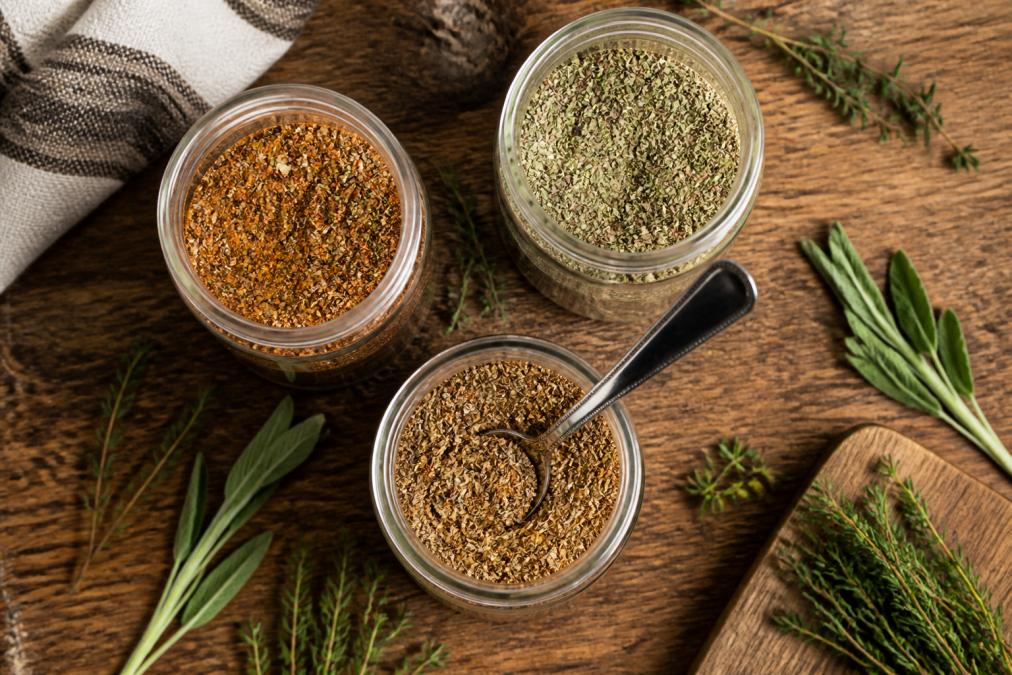
Flavor-Profile Mapping: If You Like X, Try Y
Most shoppers pick a blend by brand name and hope for the best. Better: start with the flavor notes you already reach for and match them to a jar. The table below maps common cravings to the blend that delivers them, so you buy by taste rather than label.
| If you tend to reach for... | Flavor notes you're chasing | Try this blend | Why it fits |
|---|---|---|---|
| Smoky, peppery rubs on bacon, sausage, or grilled meat | Smoke, black pepper, a touch of sweetness | Better Bacon Blend | Built around the fat-and-smoke profile of bacon, so it carries onto potatoes, sausage, and roasted vegetables |
| Bright, herby seasoning on chicken, fish, or roasted vegetables | Savory herbs, balanced salt, no single dominant note | FriedRoastedBaked | Herb-forward and low enough in salt that it won't fight a pan sauce or a squeeze of lemon |
| Rich, egg-forward breakfasts, scrambles, omelets, breakfast sandwiches | Savory, slightly sharp, cuts through yolk richness | Everything Egg Blend | Formulated to lift eggs without burying them under salt or heat |
| A single jar that has to cover weeknight proteins and sides | All-purpose savory with herb and spice balance | FriedRoastedBaked | The reliable middle, not the best match for any one dish, but the one you'll actually use four nights a week |
FriedRoastedBaked: The All-Purpose Workhorse
Better Bacon Blend and Everything Egg Blend: Breakfast, Upgraded
A Quick Note on What These Blends Are Not
Budget-Conscious Scaling: Getting Gourmet Flavor Without Overspending
Gourmet flavor comes from freshness and matching, not price.

Three ways to scale flavor without scaling spend:
Dietary-Specific Alternatives and Storage That Preserves Potency
Dietary-Specific Alternatives: Match the Blend to the Restriction
| Dietary need | What to look for | What to avoid | How the blends here fit |
|---|---|---|---|
| Low-sodium / salt-conscious | Salt listed late in the ingredient order, or a salt-free version | Salt as the first ingredient; added MSG or salt-heavy flavor boosters | FriedRoastedBaked is herb-forward with moderate salt. |
| Gluten-free | Single-ingredient spices with no added starches, fillers, or "natural flavor" catch-alls | Wheat-derived anti-caking agents, maltodextrin, hydrolyzed proteins | Blends built from whole spices and herbs, with no anti-caking agents. |
| Keto / low-carb | Spices, salt, and dried herbs only | Added sugar, cornstarch, dextrose, rice flour used as flow agents | Better Bacon Blend and Everything Egg Blend lean savory rather than sweet. |
| Additive-free / clean-label | An ingredient list you can read in one breath | Silicon dioxide, calcium silicate, preservatives, added starches | A clean-label blend tastes brighter. |
| Allergen-conscious | A short, named ingredient list you can audit | "Spices" or "natural flavors" as a catch-all with no breakdown | Named ingredients make it possible to check against your specific allergen list before you buy |
Storage That Actually Preserves Potency
Four storage rules do most of the work:

Frequently Asked Questions
Is Spiceology worth the money for home cooks?
It depends on how often you cook and what you value. Spiceology blends tend to cost more per ounce than grocery-store jars, and the price reflects small-batch sourcing and bold flavor profiles. If you cook most nights and want blends that hold their potency, the cost per meal can be reasonable. If you only season occasionally, a smaller, budget-friendly blend may serve you better. Compare price per ounce, not per jar, before deciding.
What should I look for in a Spiceology alternative?
Focus on four things: a clear harvest or batch date, a short ingredient list without anti-caking agents or preservatives, a flavor profile that matches the dishes you actually cook, and a price per ounce that fits your monthly budget. Small-batch blenders often list sourcing details and offer 16-ounce options. Ask whether the blend is meant for dry rubs, marinades, or finishing.
How do boutique spice brands compare to mass-market seasonings?
Mass-market blends usually prioritize shelf stability, so they often include anti-caking agents and sit in warehouses longer. Boutique and artisanal blenders tend to grind in smaller batches. The trade-off is cost and availability.
How should I store spice blends to keep them fresh?
Keep blends in airtight containers away from heat, light, and moisture. Do not store them above the stove or in a sunny windowsill. Whole spices last longer than ground, but most blends are ground, so plan to use them within six to twelve months for full potency. Label each jar with the purchase date. If a blend smells flat or dusty rather than aromatic, it is past its best.
Are there more affordable alternatives to professional-grade spice brands?
Yes. Buying larger sizes, such as a 16-ounce blend, usually drops the cost per ounce well below small jars. A downloadable recipe collection can also stretch a single blend across many meals, so you waste less. Look for blends that work across proteins and vegetables rather than single-use mixes. Comparing price per ounce and planning meals around one versatile blend is the simplest way to cut seasoning costs without losing flavor.