

Table of Contents
- Why Flavor Enhancing Spices Transform Your Dinner
- Essential Pantry Spices Every Home Cook Needs
- How to Season Food Like a Chef
- Best Spice Blends for Dinner Success
- How to Balance Flavors in Cooking
- Spices for Specific Proteins and Vegetables
- Storing and Using Spices for Maximum Freshness
- Frequently Asked Questions
Last Updated: August 30, 2026
Why Flavor Enhancing Spices Transform Your Dinner
The difference between a forgettable meal and one you remember comes down to intentional seasoning. Most home cooks treat spices as an afterthought, reaching for salt and pepper at the end of cooking. When you understand how to layer flavors, build depth, and balance competing tastes, you move from following recipes to creating meals that feel like they came from a restaurant kitchen.
A well-stocked spice cabinet with 10 thoughtfully chosen ingredients beats a cluttered one with 50 random jars. This guide walks you through the flavor enhancing spices that deliver real results, how to use them like a professional, and why the ritual of seasoning transforms cooking into something genuinely creative.
Essential Pantry Spices Every Home Cook Needs
Every serious home cook needs a foundation of spices that work across cuisines and protein types. These workhorses appear in nearly every professional kitchen because they deliver consistent, reliable flavor.
Cumin brings warmth and earthiness to virtually anything savory. Toasted whole seeds have a more complex, roasted character than pre-ground cumin.
Paprika comes in three types: sweet (everyday use), smoked (transforms dishes with instant depth), and hot (adds heat without overwhelming). Smoked paprika is particularly valuable in rubs for beef, roasted vegetables, and soups.
Black pepper deserves respect beyond being a table condiment. Fresh-cracked pepper tastes nothing like pre-ground, as essential oils dissipate quickly once ground (peer-reviewed research). A pepper mill is worth the investment.
Garlic powder and onion powder are flavor concentrators that add savory depth. A pinch in dry rubs, roasted vegetables, or marinades provides what fresh garlic alone cannot.
Oregano and thyme are foundational dried herbs. Oregano works with tomato-based dishes and grilled meats; thyme works across nearly every cuisine. Both are stronger when dried, so use about one-third the amount if substituting fresh.
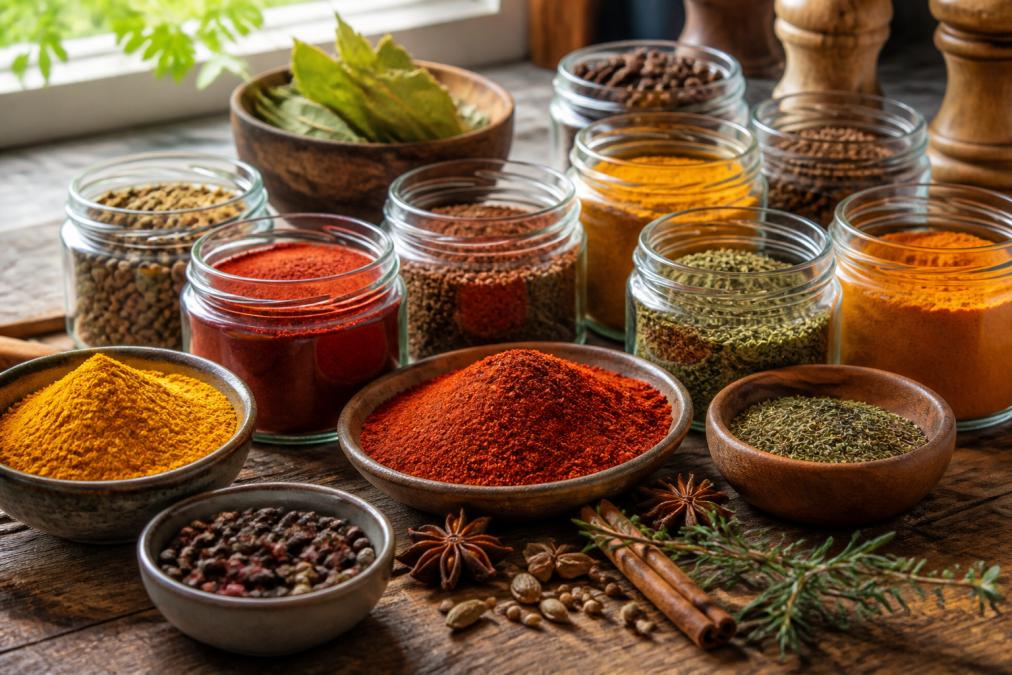
Chili powder and cayenne handle heat differently. Chili powder is a blend with depth and mild heat; cayenne is pure heat with minimal flavor, so use it sparingly.
Cinnamon and nutmeg belong in your savory collection. A small pinch in chili, beef stew, or Moroccan-inspired dishes adds warmth and complexity without overwhelming.
A functional spice cabinet needs about 12-15 core spices. Quality matters, replace anything that's been sitting for more than a year.
How to Season Food Like a Chef
Professional cooks build flavor in layers, tasting constantly and adjusting throughout cooking, not at the end.
Start with aromatics. Sauté onions, garlic, and celery in fat before adding protein or vegetables. The Maillard reaction creates hundreds of complex flavor compounds that cannot be replicated by adding spices at the end (peer-reviewed research).
Season at multiple stages: add a pinch of salt and spice to aromatics as they cook, season your protein or vegetables as they go into the pan, and taste halfway through to adjust. This integrates flavors throughout the dish rather than layering them on top.
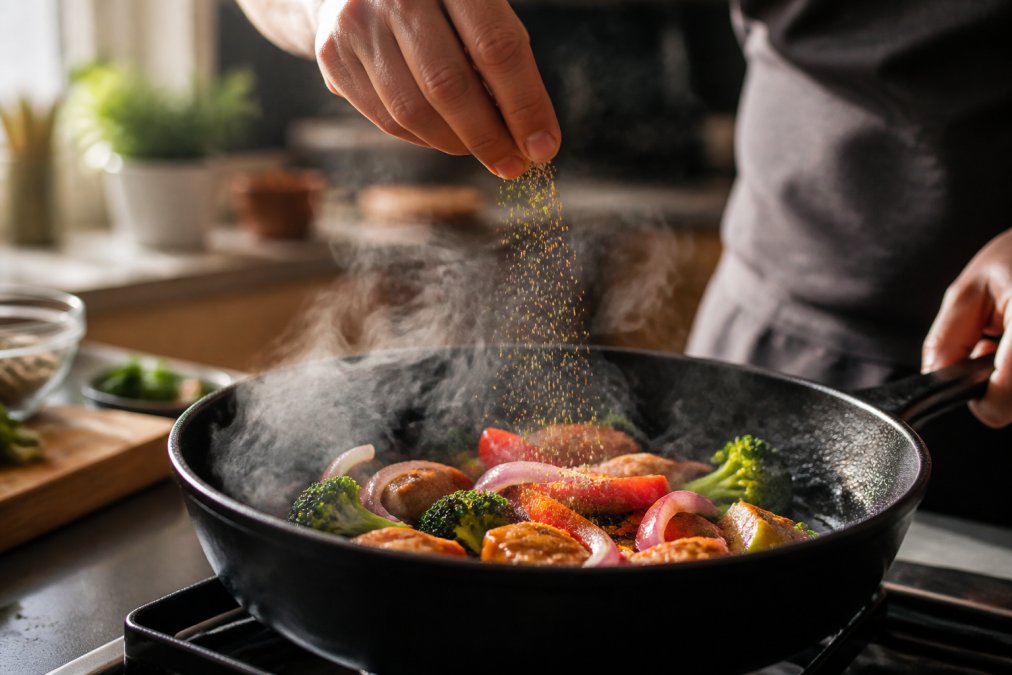
Toast your spices before using them. Two minutes in a dry pan over medium heat releases essential oils and deepens flavor dramatically. Grind immediately after while still warm for maximum impact.
Understand the difference between heat level and flavor. Cayenne adds pure spice without character; chili powder brings heat plus depth. This distinction changes how you build a dish.
Balance is everything. Every dish needs contrast. If something is rich, add acid (lemon juice, vinegar) or brightness (fresh herbs). If something is acidic, add richness (fat, cream) or sweetness. If something is one-note, add a complementary spice.
Use salt strategically. Small amounts amplify other flavors; too much overwhelms. The goal is vibrant seasoning without tasting salty.
Fresh herbs added in the last minute provide brightness that dried herbs cannot. Cilantro, parsley, basil, and chives lose their character when cooked.
Best Spice Blends for Dinner Success
Thoughtfully composed seasoning blends handle the flavor balancing work for you, creating a profile greater than the sum of its parts.
All-purpose savory blends work on nearly any protein or vegetable. Goodness Gracious Seasoning Blends' FriedRoastedBaked is a savory blend of herbs and spices designed for fish, chicken, beef, pork, and vegetables. The blend handles flavor balancing, so you don't have to think about whether you need more heat, earthiness, or brightness.

Smoky blends lean into depth and complexity, typically containing smoked paprika and cumin. Use them on grilled meats, roasted vegetables, or in soups and stews.
Warm spice blends combine cinnamon, nutmeg, clove, and allspice. A pinch in chili, beef stew, or Moroccan-inspired dishes adds complexity without sweetness.
Citrus-forward blends include dried lemon peel, lime, or orange zest. These brighten dishes and work particularly well with fish, chicken, and vegetables.
The advantage of a blend is consistency and convenience. Goodness Gracious Seasoning Blends offers curated combinations designed for how home cooks actually cook. The brand's downloadable Flavor Secrets E-Cookbook includes over 40 recipes showing exactly how to use each blend, removing guesswork about whether a blend will work with your cooking style.
How to Balance Flavors in Cooking
Flavor balance separates adequate cooking from excellent cooking. Every dish needs multiple flavor dimensions working together.
The five flavor dimensions are salt, sweet, sour, bitter, and umami. Most home cooks focus on salt and maybe sweet. Professional cooks think about all five.
Salt amplifies other flavors without making food taste salty. Sweetness rounds out harsh edges and adds depth, a pinch of sugar in tomato sauce or a touch of honey in a vinaigrette balances acidity and heat. Sourness (acidity) adds brightness and prevents heaviness. Bitterness adds complexity when used subtly. Umami is the savory depth from soy sauce, tomato paste, aged cheese, mushrooms, or meat broths.
Building a balanced dish means addressing each dimension. Start with your protein or vegetable, add salt and heat through spices, add acid through lemon or vinegar, add sweetness if needed, and add umami through stock or paste. Taste and adjust. This approach works across cuisines.
Spices for Specific Proteins and Vegetables
Chicken is mild and benefits from bright, warm spices like cumin, paprika, thyme, and garlic. Citrus zest adds brightness; ginger and turmeric work for Asian-inspired dishes.
Beef handles bolder, earthier spices. Cumin, coriander, smoked paprika, and chili powder work beautifully. For stews, warm spices like cinnamon add complexity.
Fish and seafood need restraint. Delicate white fish works with subtle spices like dill and tarragon; oily fish like salmon can handle smoked paprika and cumin.
Pork works with warm spices like sage, thyme, and cumin, and pairs beautifully with apple-based flavors and citrus.
Root vegetables benefit from warm, earthy spices like cumin, coriander, cinnamon, and nutmeg. Green vegetables need brighter spices like garlic and lemon. Leafy greens work with garlic, cumin, and a touch of chili. Tomato-based dishes are the canvas for Mediterranean spices like oregano, basil, and garlic.
Match the intensity and character of the spice to the ingredient. Delicate ingredients need subtle spices; bold ingredients can handle stronger flavors.
Storing and Using Spices for Maximum Freshness
Spice quality degrades over time. Heat, light, and air are the enemies. Proper storage extends the life of your spices significantly.
Store in airtight containers away from heat and direct light. Glass jars with tight lids are ideal. Label everything with the purchase date, spices lose potency after about a year.
Whole spices last longer than ground. Whole seeds stay fresh for two to three years; ground spices typically stay fresh for one year (the FDA).
Toast whole spices before grinding for maximum flavor. A two-minute toast releases essential oils and deepens flavor.
Buy from sources that turn inventory quickly. Specialty spice shops and online retailers typically have fresher stock than grocery stores. The quality difference is significant.
Goodness Gracious Seasoning Blends uses thoughtfully sourced ingredients selected for flavor and freshness. Keep frequently used spices in smaller containers at your cooking station, and store backup supplies in a cool, dark cabinet.
The transformation from adequate cooking to memorable cooking happens when you stop treating spices as an afterthought and start treating them as your primary tool for flavor. Start with the essentials, learn to balance flavors, and taste constantly as you cook. That discipline, combined with quality ingredients and thoughtful blends, creates meals that feel intentional. Goodness Gracious Seasoning Blends' curated collections handle the blending work for you, and their Flavor Secrets E-Cookbook provides over 40 recipes showing exactly how to use each blend. Get started with a blend that matches your cooking style, and watch how a single jar transforms your regular dinners into occasions worth remembering.

Frequently Asked Questions
Q: What are the most flavorful seasonings for home cooking?
A: The most flavorful seasonings include cumin, smoked paprika, garlic powder, black pepper, and oregano. These pantry staples work across proteins and vegetables. Spice blends that combine multiple aromatics, like a savory blend with herbs and complementary spices, deliver complex flavor profiles that elevate dishes faster than single spices alone. Toasting whole spices before grinding releases essential oils and deepens their flavor intensity.
Q: How do you use spice blends to improve dinner flavor?
A: Apply spice blends as dry rubs on proteins 15-30 minutes before cooking to let flavors infuse. Bloom blends in hot oil or butter at the start of cooking to activate their aromatics. For simmered dishes, add blends early so flavors meld with the cooking liquid. A curated blend like Fried*Roasted*Baked works across fish, chicken, beef, and vegetables, eliminating guesswork and ensuring balanced flavor every time.
Q: What's the difference between using individual spices and seasoning blends?
A: Individual spices offer precision and flexibility for specific recipes, but require knowledge of ratios and flavor pairing. Seasoning blends combine complementary spices in balanced proportions, saving time and reducing the risk of overpowering one flavor. Blends are ideal for busy cooks who want gourmet results without experimentation. They also introduce you to new flavor combinations you might not create on your own.
Q: How do you know if spices are fresh and high-quality?
A: Fresh spices have vibrant color, strong aroma, and potent flavor. Check the purchase date if available; spices lose potency after 6-12 months. Quality matters because stale spices require more volume to achieve the same impact, affecting your dish's balance. Thoughtfully sourced blends from specialty providers are formulated with freshness in mind, ensuring each blend delivers the bold flavor profile intended.
This article was written using GrandRanker