

Table of Contents
- Why Your Home Cooking Tastes Bland (and Restaurant Food Doesn't)
- How to Season Food Like a Chef
- How to Balance Salt, Acid, and Fat in Any Dish
- Best Flavor Enhancers for Home Cooking
- Common Mistakes That Make Food Taste Bland
- The Role of Texture and Aroma in Flavor Perception
- How to Fix Bland Home Cooking with Better Tools and Blends
- Frequently Asked Questions
Last Updated: September 14, 2026
Why Your Home Cooking Tastes Bland (and Restaurant Food Doesn't)
The gap between home cooking and restaurant cooking usually comes down to one thing: restaurants season in layers, and home cooks season once. According to Harvard T.H. Chan School of Public Health's guidance on salt and health, salt does more than make food salty. It suppresses bitterness and amplifies aroma, which is why properly seasoned food tastes sweeter and more complex even when nothing sweet was added.
At Goodness Gracious Seasoning Blends, we hear the same question from home cooks: "I followed the recipe exactly, so why is it flat?" The answer is rarely the recipe. It's timing, balance, and a few small habits that restaurants build into every dish. Below, we'll show you exactly how to fix bland home cooking with five repeatable techniques, starting with how seasoning actually works.
Layering flavors is the practice of adding salt, acid, fat, and aromatics at multiple points during cooking rather than all at once at the end. Each addition builds on the last, creating depth that a single dump of seasoning can't match.
That's the theory. Here's what it looks like in practice.
How to Season Food Like a Chef
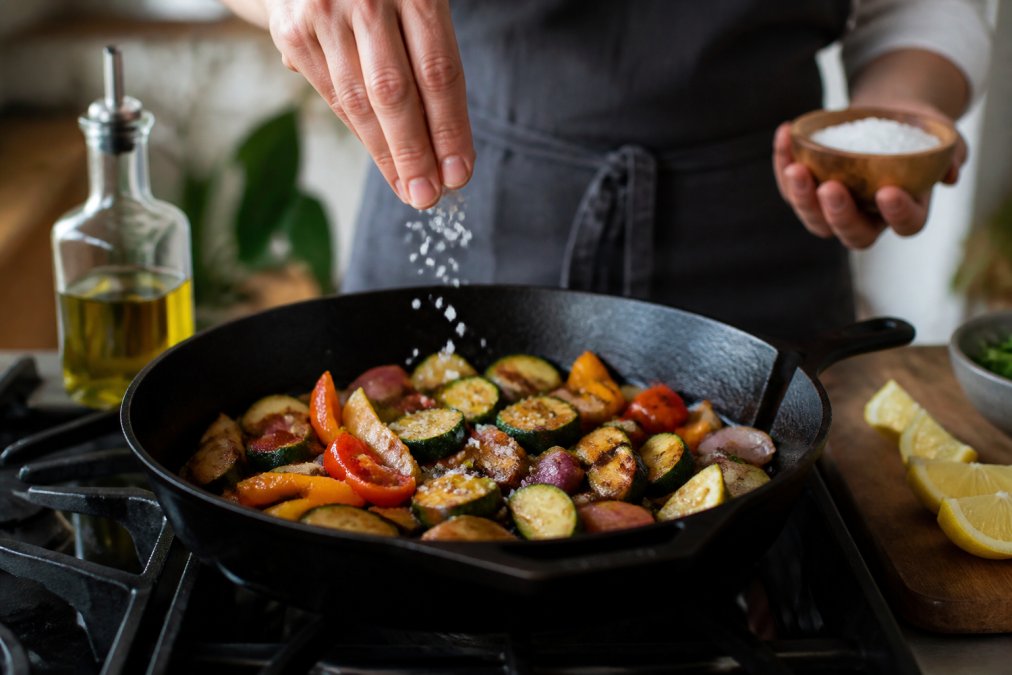
Chefs season in stages, not in one move. A restaurant line cook might salt a protein before it hits the pan, season the vegetables mid-sauté, deglaze with wine or stock, and finish with flaky salt and a squeeze of lemon. Four touches, one dish.
Home cooks who adopt the same habit notice the difference immediately.
Season Early, Taste Often
Salt added at the start has time to penetrate and dissolve into the food (pubmed.ncbi.nlm.nih.gov). Salt added at the end sits on the surface, which is why late-only seasoning tastes sharp rather than integrated. A common mistake is waiting until the dish is plated to check the seasoning. Taste at three points instead: after the aromatics go in, after the main liquid or sauce comes together, and right before serving.
The Finishing Touch: Salt and Acid at the End
Finishing salt and a hit of acid are the two moves that separate "good" from "restaurant good." A pinch of flaky salt adds texture and a bright pop of salinity. A squeeze of lemon juice or a splash of vinegar cuts through fat and wakes up the whole plate. Try both before you decide a dish is done.
How to Balance Salt, Acid, and Fat in Any Dish
Balance is the relationship between salt, acid, fat, and heat, and adjusting any one of them changes how the others read. Too much fat makes a dish taste heavy and dull; too little acid makes it taste muddy. The fix is rarely "add more of everything." It's identifying which element is missing.
The If-This-Then-That Flavor Fix
Use this troubleshooting table when a dish tastes off but you can't name why.
| What You Taste | What's Missing | The Fix |
|---|---|---|
| Flat, dull, "something's missing" | Salt or acid | Pinch of salt, then a squeeze of lemon |
| Heavy, greasy, coating your mouth | Acid | Vinegar, citrus, or a spoonful of yogurt |
| Sharp, harsh, aggressive | Fat or sweetness | Butter, olive oil, or a touch of honey |
| Thin, watery, no depth | Reduction or umami | Simmer to concentrate, add soy or parmesan |
| Bitter or metallic edge | Salt | Salt suppresses bitterness more than sugar does |
Keep this table on your phone the next time you cook. Most "failed" dishes are one adjustment away from working.
Best Flavor Enhancers for Home Cooking
The best flavor enhancers are ingredients that add savory depth, brightness, or both without requiring a trip to a specialty store. Anchovies, soy sauce, parmesan, citrus zest, vinegar, and fresh herbs cover nearly every gap a home cook runs into.
These aren't replacements for salt. They're multipliers.
Umami Powerhouses: Anchovies, Soy Sauce, and Parmesan
Umami is the savory taste associated with glutamates, and it's the reason a dish can taste "full" without tasting salty. A single anchovy fillet melted into olive oil disappears completely but leaves behind a deep, meaty backbone. Soy sauce does the same job in stir-fries and marinades. Parmesan rinds simmered in soup add body that no amount of salt can replicate.
What most guides miss is that these ingredients are salt, so pull back on your added salt when you use them.
Brightness and Depth: Citrus, Vinegar, and Fresh Herbs
Acidity provides brightness, the quality that makes a rich dish taste alive instead of heavy. Lemon juice, lime zest, red wine vinegar, and rice vinegar each bring a different character. Fresh herbs added at the end deliver aroma, while dried spices bloomed in hot fat deliver depth. Use both, and use them at different stages.
Common Mistakes That Make Food Taste Bland
Underseasoning is the most common cause of bland food, but it's rarely the only one. Cold food tastes less seasoned than warm food because aroma volatiles fade as temperature drops (Volatile flavor release from foods during eating). Overcrowding a pan steams instead of sears, which kills caramelization and the flavor it creates. Skipping the taste test means you're cooking blind.
Three fixes cover most of it: season in layers, give food room in the pan, and taste before you plate. If you're working from a blend, start with less than you think you need and build up. A savory all-purpose blend like FriedRoastedBaked is built for exactly this kind of incremental seasoning across fish, chicken, beef, pork, and vegetables.

The Role of Texture and Aroma in Flavor Perception
Most guides treat "bland" as a taste problem. It's often a texture and aroma problem. Flavor is largely retronasal, meaning you perceive it when aroma volatiles travel from your mouth up the back of your throat to your olfactory receptors. Texture controls how quickly that happens: a crisp, porous surface releases volatiles faster than a smooth, dense one, which is why the same sauce tastes more vivid on a crusty piece of bread than on a soft one.
This is the angle most home-cooking guides skip. You can nail salt, acid, and fat and still plate something forgettable if every bite has the same mouthfeel.
Why Texture Reads as Flavor
Three mechanisms do most of the work:
- Surface area and volatile release. Toasting, searing, and frying create porous, browned surfaces. Those surfaces hold and release aroma compounds more readily than a boiled or steamed exterior.
- Contrast. A creamy base with a crunchy topping forces your palate to reset between bites. Without contrast, your taste buds adapt within a few seconds and the dish flattens, a phenomenon sometimes called sensory-specific satiety.
- Mechanical stimulation. Crunch, chew, and snap engage the jaw and trigeminal nerve, which registers temperature, fizz, and heat (like chili) and adds a layer of sensation that pure taste can't.
A Texture Toolkit You Already Own
You don't need new ingredients, you need a finishing move. Keep one or two of these on hand and add them at the moment of plating:
| Texture Goal | Tool or Ingredient | How to Use It |
|---|---|---|
| Crunch | Toasted panko, fried shallots, crushed nuts | Scatter over soups, grain bowls, roasted vegetables |
| Creaminess | Greek yogurt, tahini, a soft-poached egg | Swirl into a finished sauce or dollop on top |
| Chew | Farro, barley, al dente pasta | Swap in for a softer starch in the same dish |
| Snap | Quick-pickled red onion, raw fennel, celery | Add raw at the end so it stays crisp |
| Zest | Microplane-grated citrus peel | Grate over the plate right before serving |
A microplane is the single most underrated tool for this. It turns a lemon's peel into a fine, aromatic snow that distributes evenly instead of leaving bitter pith behind. The same tool grates garlic, ginger, hard cheese, and nutmeg into a paste that dissolves into sauces rather than sitting in chunks.
Aroma: The Other Half of the Equation
Aroma is the reason a dish smells done before it tastes done. Two habits matter:
- Bloom, don't dump. Ground spices and dried herbs release fat-soluble aroma compounds. Stir them into hot oil or butter for 30 to 60 seconds before adding liquid. The difference between bloomed and unbloomed cumin is the difference between a warm, round flavor and a dusty, flat one.
- Finish with fresh aromatics. Cilantro, parsley, basil, mint, scallions, and citrus zest carry volatile oils that break down under heat. Add them off the heat, right before serving, so their aroma reaches the plate intact.
The 30-Second Texture Test
Take a finished bowl of soup, pasta, or a grain dish and add exactly one textural element: toasted breadcrumbs, fried shallots, chopped parsley, or a spoonful of yogurt. Taste again. The underlying seasoning didn't change, but your perception of it did. That's the point, blandness is a perception problem, and texture is one of the fastest levers you can pull.
How to Fix Bland Home Cooking with Better Tools and Blends
Technique gets the credit, but equipment quietly sets the ceiling on how much flavor you can extract from the same ingredients. A dull knife bruises herbs instead of slicing them, releasing bitter compounds. A crowded nonstick pan steams meat instead of browning it. A cheap pepper grinder leaves uneven chunks that taste sharp in one bite and absent in the next. Upgrading a few tools changes the outcome more than any single recipe.
The Tools That Actually Move Flavor
| Tool | What It Changes | Why It Matters |
|---|---|---|
| Cast-iron or carbon-steel skillet | Heat retention and searing | Holds high heat through a cold protein, producing the Maillard browning that creates roasted, nutty flavor compounds |
| Microplane | Particle size of aromatics | Turns garlic, ginger, citrus zest, and hard cheese into a paste or fine snow that distributes evenly instead of clumping |
| Kitchen scale | Consistency | Volume measuring varies by up to 20% for flour and spices; weight keeps seasoning repeatable night to night |
| Instant-read thermometer | Doneness control | Prevents overcooking, which drives off moisture and concentrates the wrong flavors |
| Mortar and pestle | Aroma release | Crushes cell walls to release volatile oils that a blade leaves trapped |
| Pepper mill | Freshness | Pre-ground pepper loses volatile oils quickly; grinding to order keeps the bite bright |
None of these are expensive. A microplane and a scale together cost less than a single dinner out, and they change how every subsequent meal tastes.
Why Cast Iron and Carbon Steel Beat Nonstick for Flavor
Nonstick pans are convenient, but their coatings can't sustain the high, dry heat that produces a proper sear. When you add a cold piece of chicken or a wet vegetable to a nonstick pan, the surface temperature drops and the food releases water, which steams it. Cast iron and carbon steel, by contrast, store enough thermal energy to recover quickly, so the surface stays hot enough to brown rather than boil. That browning is where roasted, toasted, and savory notes come from.
A simple rule: use nonstick for eggs and delicate fish, and reach for cast iron or stainless steel when you want color.
Blends as a Consistency Shortcut
Even with good tools, most home cooks under-season because they're guessing at ratios. A pre-built blend removes that guesswork, you taste, adjust, and move on instead of measuring six spices from six jars.
This is where Goodness Gracious Seasoning Blends fits. Our blends are thoughtfully sourced and artfully combined so you're not rebuilding the same ratio every night. The Flavor Secrets E-Cookbook walks through more than 40 recipes built around the blends, and it's downloadable, which saves you on shipping. A savory all-purpose blend like FriedRoastedBaked is built for incremental seasoning across fish, chicken, beef, pork, and vegetables, start with less than you think you need and build up.

If you want to go deeper on what's actually in the ingredients you cook with, the USDA's FoodData Central is a useful reference.
Frequently Asked Questions
What is the secret to making food taste like a restaurant?
Restaurants season in layers, not all at once. They salt early during cooking, add acid at the end, and finish with fresh herbs or a flavored oil. The biggest difference is tasting as you go and adjusting. A squeeze of lemon juice or a splash of vinegar brightens a dish the same way a finishing salt adds crunch and pop. Use a quality all-purpose blend like Fried*Roasted*Baked ($16.99) to build a savory base, then taste and adjust.
How do you fix a dish that lacks depth of flavor?
Depth comes from umami-rich ingredients and caramelization. Add a teaspoon of soy sauce, a chopped anchovy, or a piece of Parmesan rind to simmering sauces. Deglaze your pan with wine or broth to lift the fond (the browned bits) into the sauce. For a quick fix, stir in a small amount of miso or tomato paste. These ingredients add savory complexity without making the dish taste like any single one of them.
Is salt the only way to fix bland food?
No. Salt is the most common fix, but acid, fat, and umami matter just as much. If a dish tastes flat but salty enough, add a squeeze of lemon juice or a dash of vinegar. If it tastes thin, finish with butter or olive oil. If it lacks savoriness, add soy sauce, anchovies, or Parmesan. Balancing all four elements is how you fix bland home cooking without over-salting.
How can I add umami to my cooking?
Umami-rich ingredients include soy sauce, fish sauce, anchovies, Parmesan, mushrooms, tomato paste, and miso. Add them early in cooking to build a savory base. For example, sauté mushrooms with your aromatics before adding liquid, or stir a spoonful of miso into a soup just before serving. A good seasoning blend that includes savory herbs and spices can also add umami-like depth. Start with small amounts and taste as you go.