

Table of Contents
- Why Storing Spice Blends Properly Matters
- What You'll Need Before You Start
- Step 1: Choose the Best Spice Storage Containers
- Step 2: Find the Right Spot for Moisture Control and Temperature
- Step 3: How Long Do Spice Blends Last?
- Step 4: Signs That Spices Have Gone Bad
- Step 5: Label, Organize, and Prevent Cross-Contamination
- Common Mistakes to Avoid When You Store Spice Blends
- A Note on Buying Blends Worth Storing
- Frequently Asked Questions
Last Updated: September 12, 2026
Why Storing Spice Blends Properly Matters
Learning how to store spice blends properly is the difference between a jar that perfumes a dish for years and one that fades into colored dust within months. Spice blends are built on volatile oils, and those oils begin degrading the moment a blend is exposed to air, heat, and light. This guide from Goodness Gracious Seasoning Blends walks through the exact steps for protecting that investment, from container selection to labeling systems.
A blend is more fragile than any single spice in it. Once you combine ground cumin, smoked paprika, and dried herbs, you have multiplied the surface area exposed to oxygen, and the most delicate ingredient sets the clock for the whole jar. The USDA food storage and freshness guidance treats spice quality as a function of oxygen, heat, and moisture exposure, which is exactly why storage habits matter more than the printed date on the label.
What You'll Need Before You Start
Gather your tools before you touch a single jar. The right supplies prevent the half-measures that shorten shelf life.
- Small airtight containers, ideally glass with a gasket seal
- Chalkboard labels or a label maker
- A permanent marker for dates
- A cool, dark cabinet with room to spare
- A small funnel for refilling
- A tray or riser to keep jars off the cabinet floor
Step 1: Choose the Best Spice Storage Containers
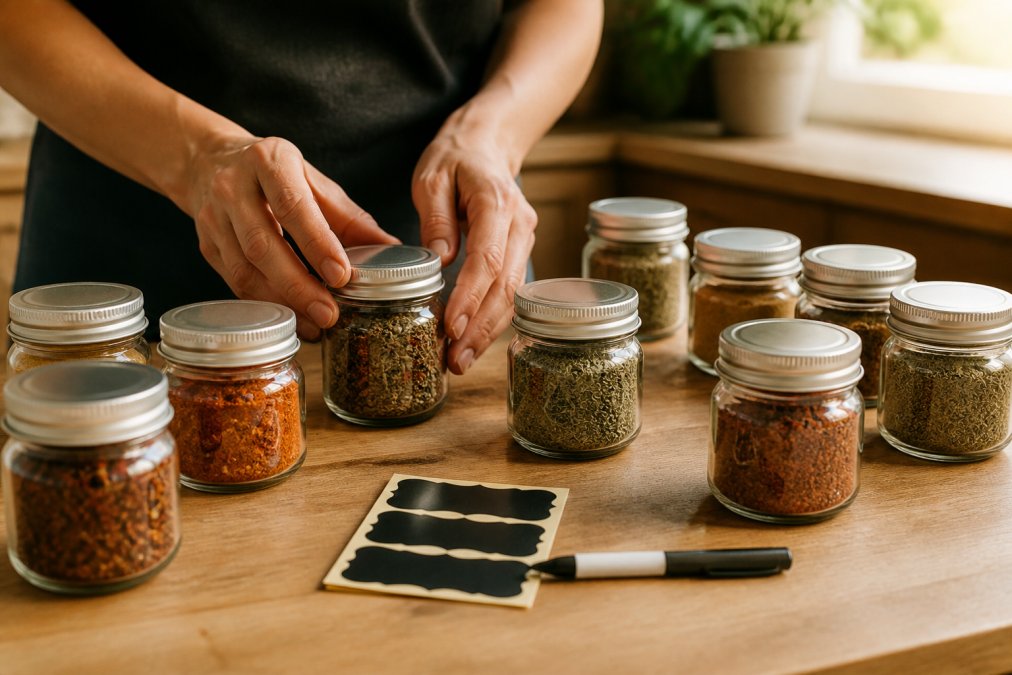
The best spice storage containers are small, airtight, and opaque or stored out of light. Glass with a rubber gasket and a clamp lid outperforms most decorative options because it blocks both air and moisture. Buy containers that hold roughly what you use in a few months, so you are not opening a large jar repeatedly and cycling fresh air through the whole supply.
Glass vs. Plastic: Which Keeps Blends Fresher?
Glass wins for anything you plan to keep longer than a few weeks. It does not absorb or transfer odors, stain, or react with the oils in a blend. Plastic is lighter and cheaper, but it is slightly permeable to air and can hold onto the scent of whatever it stored last. Reserve plastic for blends you will finish quickly, and never reuse a container that held something strongly scented.
Eco-Friendly and Refillable Options
Refillable glass jars cut waste and keep your cabinet consistent. Many cooks buy blends in bulk bags and decant them into matching jars they reuse indefinitely. This reduces packaging and makes it obvious when a blend is running low, since mismatched containers hide how much you actually have left.
Step 2: Find the Right Spot for Moisture Control and Temperature
The right spot is a cool, dark cabinet away from the stove, with a steady temperature and low humidity. Moisture control is the single biggest factor in whether a blend stays free-flowing or turns into a solid brick. Heat speeds up the breakdown of volatile oils, and temperature swings cause condensation inside the jar.
Why Some Blends Clump and Others Do Not
Not every blend reacts to humidity the same way. Ingredients have different relationships with water, and that difference determines whether a jar stays scoopable or turns into a solid block.
Hygroscopic ingredients pull moisture from the air. Salt, sugar, and starches like onion and garlic powder absorb water vapor from their surroundings (the FDA). A salt-heavy seasoning blend will start to cake in a humid kitchen long before a pure ground-chili blend does, because the salt pulls moisture out of the air every time the jar is opened. This is why a barbecue rub left in a steamy kitchen can turn rock-hard in weeks while a jar of dried oregano beside it stays loose.
Fat and oil content changes the equation. Blends with ground seeds, nuts, or high-oil spices like sesame or poppy are more vulnerable to rancidity than to moisture. Rancidity is an oxidation problem, so these blends benefit most from oxygen exclusion and cool temperatures rather than desiccant-style moisture control.
Dried herbs are the most fragile passenger. Herbs like oregano, thyme, and basil have thin leaves that lose their volatile oils quickly once crushed. In a blend, they are usually the first ingredient to go flat, even when the salt and chili around them still taste fine.
Practical Takeaways for a Mixed Cabinet
- If your cabinet holds both salt-based rubs and herb-forward blends, give the salt-based jars the tightest seal and the coolest, driest spot.
- A small food-grade desiccant packet inside a salt-heavy jar can slow caking in a humid climate, but replace it before it becomes saturated.
- Never store blends in the refrigerator door. The repeated temperature swings create condensation inside the jar, which is worse for hygroscopic ingredients than a steady room-temperature cabinet.
- In a humid region, store your most moisture-sensitive blends in a sealed container within the cabinet for a second layer of protection.
Why the Stove, Direct Sunlight, and Humidity Are the Enemy
Storing spices near the stove feels convenient and ruins them faster than almost anything else. Heat rising off a cooktop warms the jars every time you cook, driving off aroma and encouraging clumping. Direct sunlight breaks down the pigments that give blends their color, so a windowsill display fades a blend even while it sits sealed (PubMed). Kitchen humidity does the rest, seeping in each time you open a lid and settling as condensation.
Step 3: How Long Do Spice Blends Last?
Most ground blends hold good flavor for about one to two years when stored properly, while whole spices can stay potent for three to four years. A blend heavy in ground cumin and chili powder fades faster than one built on whole seeds and coarse herbs, because finely ground spices release their oils and lose them sooner. Salt-based seasoning blends hold up longer since salt does not degrade, though the herbs and spices around it still will.
Ground vs. Whole Spices and Blend Ingredients
Ground spices expose far more surface area to air, so their volatile oils escape quickly. Whole spices keep their oils locked inside until you grind them, which is why a peppercorn stays sharp for years while ground pepper fades in months. In a blend, the most fragile ground ingredient sets the pace for the whole jar. For maximum shelf life, buy blends built on whole or coarsely cracked spices and grind them closer to use.
| Blend Type | Typical Shelf Life | Main Reason |
|---|---|---|
| Ground-heavy blends | 1-2 years | High surface area, fast oil loss |
| Whole-spice blends | 3-4 years | Oils protected inside seeds |
| Salt-based seasonings | 2-3 years | Salt stable, herbs fade |
Step 4: Signs That Spices Have Gone Bad
Signs that spices have gone bad show up in color, smell, and texture long before anything looks unsafe. The clearest signal is a blend that smells flat or dusty when you open the jar. Faded color is another clue: a paprika blend that has shifted from deep red to dull brown has lost much of its pigment and aroma. Clumping points to moisture, and if you see actual mold, discard the jar entirely.
- No aroma when you open the lid
- Noticeably dull or brown color
- Hard clumps that will not break apart
- A musty or stale smell
- Visible mold or damp powder
Step 5: Label, Organize, and Prevent Cross-Contamination
Labeling and inventory management turn a crowded cabinet into a system you can cook from. Write the blend name and the date you opened or filled the jar on every label, then arrange jars so the oldest sit at the front. A lazy susan or tiered riser keeps everything visible, which stops duplicate purchases and lets you rotate stock before it fades.
A Simple Inventory System That Actually Works
Most cooks lose track of when a blend was made or opened, which is why 'spice fatigue' sets in: the cabinet fills with jars nobody trusts. A lightweight system solves this without a spreadsheet.
Use a first-in, first-out rotation. When you refill a jar, move it to the back of the shelf and pull the older jar forward. This habit means you always cook from the oldest stock first, the same principle commercial kitchens use.
Track two dates, not one. Write the blend date (when it was mixed or purchased) and the open date (when the seal was first broken) on the label. The open date matters for shelf-life estimates, because a sealed jar ages far more slowly than an opened one.
Keep a running list on the cabinet door. A notecard or dry-erase sticker listing each blend and its open date lets you scan the inventory at a glance. When a blend hits the one-year mark, use it up or replace it.
Color-code by category. A dot of colored tape on the lid, one color for salt-based rubs, another for herb blends, another for chili-forward mixes, lets you find what you need without opening five jars and shows when a category is overstocked.
Cross-Contamination: The Mechanisms That Matter
Cross-contamination in a spice cabinet is not about germs the way raw meat is. It is about flavor and moisture transfer, both of which happen through specific, avoidable pathways.
The wet spoon problem. A damp measuring spoon introduces water into a dry blend, feeding clumping and starting the caking process immediately in a salt-based blend. Always use a bone-dry spoon, and never dip a spoon that has touched a simmering pot back into the jar, steam condenses on it in seconds.
The shared-spoon problem. Using one spoon across multiple jars transfers oils from a strong blend (like smoked paprika or curry mix) into a delicate one (like lemon-herb). Over time, the delicate blend picks up a ghost of the stronger flavor. Keep one dedicated spoon per jar, or scoop into a small bowl first.
The smell-transfer problem in plastic. Plastic containers absorb and release odors. A plastic jar that held a garlic-heavy blend will perfume the next blend stored in it, no matter how well you wash it, one more reason glass is the better long-term choice.
The proximity problem. Strongly scented blends stored shoulder-to-shoulder with delicate ones can transfer aroma through the air inside a closed cabinet over months. If you have the space, group strong blends together and give delicate herb blends their own zone.
Common Mistakes to Avoid When You Store Spice Blends
The most common mistakes share one root cause: convenience winning over conditions. Storing jars above the stove, leaving them in direct sunlight, and scooping with a damp spoon each shorten shelf life in ways that are easy to fix. Buying oversized containers is another culprit, since every opening cycles fresh air through the whole supply. Finally, never top off an old jar with a fresh blend, the stale powder drags down the new, and you lose track of how old the contents really are.
A Note on Buying Blends Worth Storing
Storage protects quality, but it cannot create it. Starting with thoughtfully sourced, artfully blended combinations means the flavor is worth preserving. Goodness Gracious Seasoning Blends builds its collection around bold combinations designed to turn everyday cooking into a memorable occasion, and each jar rewards the small effort of proper storage. The downloadable cookbook on the website walks through more than 40 recipes that show how to use each one.
Frequently Asked Questions
Do spice blends go bad?
Yes, spice blends lose potency over time even though they rarely spoil in a food-safety sense. Ground blends typically stay fresh for 6 months to 2 years depending on ingredients. Volatile oils that carry aroma and flavor evaporate, and exposure to heat, light, moisture, and air speeds that up. If a blend smells flat or dusty, it is past its prime. Storing blends in airtight glass jars in a cool, dark cabinet keeps them usable longer.
Should spice blends be stored in glass or plastic?
Glass is the better choice for most blends. It does not absorb or transfer odors, does not react with volatile oils, and seals tightly against moisture. Plastic containers can hold onto the scent of previous contents and some plastics are slightly porous, letting air in over time. If you use plastic, choose food-grade, airtight containers labeled BPA-free. Glass jars with a rubber gasket or screw-top lid offer the best barrier against humidity and condensation.
Is it better to keep spice blends in the fridge?
For most blends, no. Refrigerators cycle through humid air every time the door opens, and condensation inside a jar can clump powders and dull flavor. A cool, dark pantry cabinet away from the stove is ideal. The exception is blends high in paprika, chili powder, or other ground peppers, which can go rancid faster in warm kitchens. If you refrigerate those, use a tightly sealed glass jar and let it come to room temperature before opening.
What is the best way to organize spice blends in a small kitchen?
Use a tiered spice rack or a lazy susan inside a cabinet so every jar is visible without digging. Group blends by cuisine or use, such as taco, Italian, or grilling blends, and label each lid with the blend name and date opened. Refillable containers in matching sizes save shelf space and make inventory easy to scan. Keep the blends you use daily at eye level and store bulk backstock in a separate cool, dark spot.
The challenge with any blend is that flavor fades quietly, and by the time you notice, the jar is already past its best. Goodness Gracious Seasoning Blends makes the front end easier with thoughtfully sourced ingredients, artfully blended combinations, and bold packaging that keeps your cabinet looking as good as it tastes. Get started with Goodness Gracious Seasoning Blends and give every jar a shelf life worth protecting.