

Table of Contents
- Spiceology vs The Spice Lab: Quick Comparison Table
- Ingredient Quality and Sourcing Transparency
- Flavor Profiles and Culinary Innovation
- Clean Label and Additive-Free Standards
- Dietary Restriction Compatibility and Salt-Free Options
- Pricing, Value, and Bulk Purchasing Logistics
- Goodness Gracious Seasoning Blends: A Third Option for Home Chefs
- Which Brand Wins for the Best Seasoning Brands for Home Chefs?
- Frequently Asked Questions
Last Updated: September 11, 2026
Spiceology vs The Spice Lab: Quick Comparison Table
The Spiceology vs The Spice Lab comparison comes down to a simple split: Spiceology leans into bold, chef-driven blends, while The Spice Lab leans into a wide catalog of single-origin spices and salt-free options. This guide from Goodness Gracious Seasoning Blends breaks down sourcing, flavor, clean label standards, dietary compatibility, and bulk purchasing.
Here is the side-by-side breakdown:
| Factor | Spiceology | The Spice Lab |
|---|---|---|
| Core strength | Chef-driven blends and rubs | Broad single-spice catalog |
| Flavor focus | Bold, high-impact profiles | Versatile, build-your-own |
| Clean label | Additive-free blends | Additive-free, many salt-free |
| Best for | Rubs, marinades, grilling | Pantry staples, dietary needs |
| Buying format | Retail and bulk | Retail and bulk |
Both brands have earned a following among home chefs, but they solve different problems. Spiceology is the pick for cooks who want a finished flavor profile in one scoop; The Spice Lab is the pick for cooks who want control over every element.
Ingredient Quality and Sourcing Transparency
Sourcing transparency means telling customers where a spice was grown, how it was handled, and how it was tested. Both Spiceology and The Spice Lab publish sourcing information, though neither discloses full farm-level traceability for every product. Don't judge spice quality by color alone, bright color can signal freshness or added dyes. The more reliable signals are aroma, particle size, and published quality control information.
Mesh Size, Potency, and Batch Consistency
Mesh size refers to how finely a spice is ground and directly affects how much you need. A coarser grind releases flavor slowly in long-cooked dishes; a fine grind disperses quickly in rubs and marinades. Spiceology tends toward coarser, rub-friendly grinds, while The Spice Lab varies more across its catalog. Batch consistency matters too: when a blend tastes different jar to jar, recipes stop being repeatable. Both brands run quality control checks, but The Spice Lab's single-spice focus makes consistency easier to maintain.
Flavor Profiles and Culinary Innovation
Flavor profiles are the combined aroma, heat, and taste a blend delivers in a finished dish. Spiceology built its reputation on culinary innovation, releasing limited-run blends that follow food trends. The Spice Lab stocks individual spices and classic blends rather than chasing seasonal novelty.
Rubs and Marinades: Heat Level and Umami
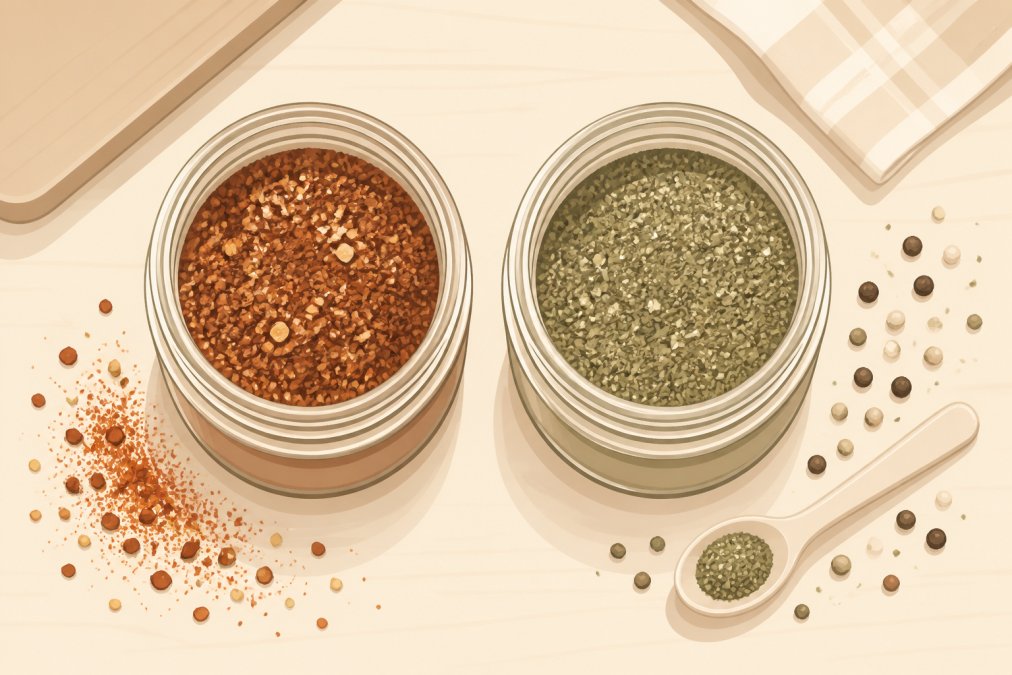
Heat level and umami separate a forgettable rub from one you reach for weekly. Spiceology's rubs run hotter and more layered, with chili-forward blends that hold up on grilled meat. The Spice Lab's rubs skew milder, which suits family cooking but leaves heat-seekers wanting more. Umami is the savory depth that makes a rub taste finished rather than flat; blends built on smoked paprika, mushroom powder, or fermented ingredients deliver more than simple salt-and-pepper mixes. If marinades taste thin, add umami, not salt.
Clean Label and Additive-Free Standards
Clean label seasoning brands commit to skipping anti-caking agents, artificial colors, and preservatives. Both Spiceology and The Spice Lab market additive-free products and avoid the silicon dioxide and dye packets common in grocery-store spice aisles. The catch: "clean label" has no single legal definition in the United States. Read the ingredient list, not the badge, a blend with three recognizable ingredients is cleaner than one with twelve.
Dietary Restriction Compatibility and Salt-Free Options
Dietary restriction compatibility is the biggest practical difference between these two brands. Salt is the cheapest ingredient in the spice industry, which is why so many commercial blends lead with it. If you manage sodium intake or follow a structured eating pattern, the salt question decides which catalog you can shop.
Here is how the two brands stack up across the restrictions that come up most often in home kitchens:
| Dietary need | Spiceology | The Spice Lab |
|---|---|---|
| Salt-free | Limited; most blends include salt | Extensive salt-free and no-salt-added line |
| Low-sodium | Salt present; you adjust the rest of the recipe | Salt-free base lets you control sodium at the pan |
| Gluten-free | Select products labeled gluten-free; verify each jar | Select products labeled gluten-free; verify each jar |
| Keto / low-carb | Most blends qualify (spices carry negligible carbs) | Most single spices qualify; watch blend fillers |
| Kosher certification | Available on select products | Available on select products |
| Additive-free | Most blends qualify | Most products qualify |
Why Salt-Free Changes the Math
A salted rub forces a cascade of adjustments: you cannot season the protein independently, layer a finishing salt, or dial the dish up or down for a guest watching sodium. A salt-free blend or single spice lets you add salt last, at the pan, tasting as you go. That is why The Spice Lab holds an edge for restricted diets, its catalog is built around individual spices and salt-free blends, so the salt decision stays in your hands. Spiceology's blends are formulated to taste finished out of the jar, which usually means salt is already in the mix.
Reading the Label for Hidden Triggers
"Salt-free" on the front of a jar does not guarantee the product is free of everything you are avoiding. Three label details matter more than the badge:
- Anti-caking agents. Silicon dioxide and calcium silicate are common in grocery-aisle spices (the FDA). Both brands avoid them on most products, but verify per jar.
- Natural flavors. This catch-all term can hide gluten-derived or dairy-derived carriers. If a blend lists it without detail, treat it as unverified for a strict elimination diet.
- Shared facility risk. Neither brand publishes a full allergen cross-contact statement for every SKU. If you have a severe allergy, contact the brand directly before buying a blend.
The Single-Spice Advantage for Restricted Diets
When you buy individual spices, you control every gram that goes in the pot, that is why a single-spice catalog beats a blend catalog for anyone cooking under a restriction. You build the flavor yourself, know exactly what is in it, and can swap one component without abandoning the whole jar. The trade-off is time: building a rub from six jars takes longer than scooping one blend. If your restriction is mild, say, cutting sodium, a salt-free blend from The Spice Lab gets you most of the benefit. If it is strict, the single-spice route is safer.
Pricing, Value, and Bulk Purchasing Logistics
Bulk purchasing is where the math gets interesting. Spice prices move with harvests, packaging changes, and shipping costs, so any dollar figure quoted in an article is stale within a season. The useful comparison is structural, not numerical.
The Cost-per-Ounce Mechanism
Every spice purchase reduces to one number: cost per ounce. Format determines that number more than brand does.
- Retail jars (typically 1.5-4 oz). Highest cost per ounce, but the lowest commitment and the easiest way to test a blend before scaling up.
- Mid-size pouches and refill bags (typically 8-16 oz). The sweet spot for most home cooks. Cost per ounce drops sharply versus retail jars, and the volume is finishable within the flavor window.
- Bulk bags and food-service formats (1 lb and up). Lowest cost per ounce by a wide margin, but only worth it if you cook enough volume to finish the bag before potency fades.
Rule of thumb: if you will not finish a container within its peak-flavor window, the cheaper cost per ounce is a false economy, you end up replacing flavor with volume.
Shelf-Life Math: The Real Cost of Bulk
Ground spices hold peak flavor for roughly six months to a year when stored away from heat, light, and moisture (the FDA). Whole spices last two to three years because the volatile oils stay locked inside the intact seed or bark until you grind them (peer-reviewed research). That reshapes the bulk decision:
- Pre-ground blends and rubs. Buy the smallest format you will finish in about six months. Bulk only pays off if you cook with the blend weekly.
- Whole spices. Bulk is almost always the better buy. A one-pound bag of whole cumin seeds will outlast several retail jars and cost a fraction per ounce.
- Salt-free blends. These fade faster than you expect because there is no salt to mask staleness. Buy smaller, restock more often.
Storage Logistics for Home vs. Commercial Kitchens
The storage problem scales differently depending on who is cooking.
Home kitchens. Decant a small working jar, roughly a month's worth, and keep the rest sealed in its original bag in a cool, dark cabinet away from the stove. Heat and steam are the fastest killers of ground spice, so the cabinet above the range is the worst spot. Label the bag with the date you opened it.
Commercial and high-volume kitchens. The constraint flips from shelf-life to throughput. A busy kitchen can finish a one-pound bag well inside the flavor window, so bulk buying is cheaper. What matters is FIFO rotation, airtight food-grade containers, and a labeled open-date on every container.
What Actually Drives the Price Difference
Two brands can sell the same spice at very different prices for reasons unrelated to quality:
- Origin and grade. Single-origin spices from a specific region often cost more than blended-origin equivalents, even when the flavor difference is subtle.
- Format. Whole versus ground, and the mesh size of the grind, both affect yield and therefore cost per usable ounce.
- Packaging. Glass jars cost more to ship than pouches. If a brand offers both, the pouch is usually the better value per ounce.
- Blend complexity. A twelve-ingredient blend costs more to produce than a three-ingredient one, and the price reflects that, not necessarily a quality gap.
For current pricing on any blend or bulk size, check each brand's website directly, since prices shift with harvests and packaging changes.
Goodness Gracious Seasoning Blends: A Third Option for Home Chefs
Goodness Gracious Seasoning Blends is a curated line of artfully crafted spice blends built for home cooks who treat meal prep as a creative ritual rather than a chore. Where Spiceology chases trend-driven novelty and The Spice Lab optimizes for catalog breadth, Goodness Gracious focuses on thoughtfully sourced ingredients and bold flavor combinations in bold packaging.
The brand pairs its blends with a downloadable e-cookbook featuring more than 40 recipes. The digital format also saves on shipping. For busy professionals who want gourmet flavor without a learning curve, that recipe support can help ensure a jar is used weekly rather than sitting in the pantry.
Which Brand Wins for the Best Seasoning Brands for Home Chefs?
There is no single winner. Spiceology wins for bold, chef-driven rubs and marinades with serious heat. The Spice Lab wins for salt-free flexibility and a deep single-spice catalog. Goodness Gracious Seasoning Blends wins for home chefs who want thoughtfully sourced, artfully blended combinations paired with recipes that show exactly how to use them. Think about your cooking habits: if you grill on weekends and want a rub that does the work, go blend-forward; if you bake, roast, and adjust recipes constantly, a single-spice catalog gives you more control.
Choosing between Spiceology, The Spice Lab, and a curated blend line comes down to how much control you want in the kitchen. If you would rather spend your time cooking than measuring six jars into a bowl, Goodness Gracious Seasoning Blends offers thoughtfully sourced, artfully blended combinations, bold packaging that makes them easy to reach for, and a downloadable e-cookbook with over 40 recipes to show you exactly how to use each one. Get started with Goodness Gracious Seasoning Blends and turn tonight's dinner into a memorable occasion.
Frequently Asked Questions
Is Spiceology high quality?
Spiceology is known for culinary-grade blends and a wide range of flavor profiles, with small-batch production and a focus on culinary innovation. Its products are popular in professional kitchens and among home cooks who want bold, chef-inspired seasonings. Quality depends on the specific blend, but the brand generally delivers consistent results with dehydrated herbs and spices.
Is The Spice Lab a good brand?
The Spice Lab offers a large selection of salt-free options, organic certification on many items, and kosher certification. It is a reliable choice for clean label seasoning brands, with sourcing transparency and a focus on additive-free products. Home cooks who need dietary restriction compatibility often find The Spice Lab's variety helpful.
What is the highest quality spice brand?
Quality depends on your priorities: sourcing transparency, clean label standards, flavor profiles, or value. Spiceology and The Spice Lab both rank well for different reasons, but smaller artisanal brands like Goodness Gracious Seasoning Blends focus on thoughtfully sourced ingredients. Check the label for additive-free claims and origin details to judge quality.
Is Spiceology worth the price?
Spiceology's pricing reflects its culinary-grade ingredients and chef-driven blends. If you value bold flavor profiles and use seasonings frequently, the cost per use can be reasonable. For budget-conscious cooks, The Spice Lab offers salt-free and bulk purchasing options. Compare pricing tiers and your cooking habits before deciding, and check each brand's website for current prices.